


The president of Romania’s Permanent Electoral Authority, Adrian Țuțuianu, said on Friday, 25 September 2026, in Ploiești that AEP would present within two weeks a draft law on financing political parties and election campaigns. The announcement is an institutional position, not a voted text.
Țuțuianu said the law should address financing through digital platforms, the legal regime of donations, independent candidates — who currently face fewer rules than parties — and the identification of vulnerabilities in contests. AEP, he stressed, carries out post-factum checks on documents; it is not a prosecutor’s office and not the police.
He described cases in which the same person splits payments below the 25,000-lei threshold above which the law requires notarial authentication. He linked the discussion to a case involving Romania’s president, in which a court partially annulled an AEP decision for lack of proof of the donor’s intent. His view — that intent follows from the repeated operations — remains an interpretation, not a court holding restated as fact.
He called for clarity on paid influencers who, “in a way”, do political advertising without paying taxes, and on financing through hard-to-trace channels, including cryptocurrencies. He also asked for a distinction between current-activity funding and campaign funding, and between private and public money.
On subsidies, he reported tension between parties that have lost MPs and newly formed groups: current law, he said, does not allow AEP to cut the sums. The issue remains a legislative debate.
Credible reform needs definitions, reporting, oversight and sanctions, plus the adoption procedure. This article does not announce a parliamentary timetable and does not turn a press conference into a statute.
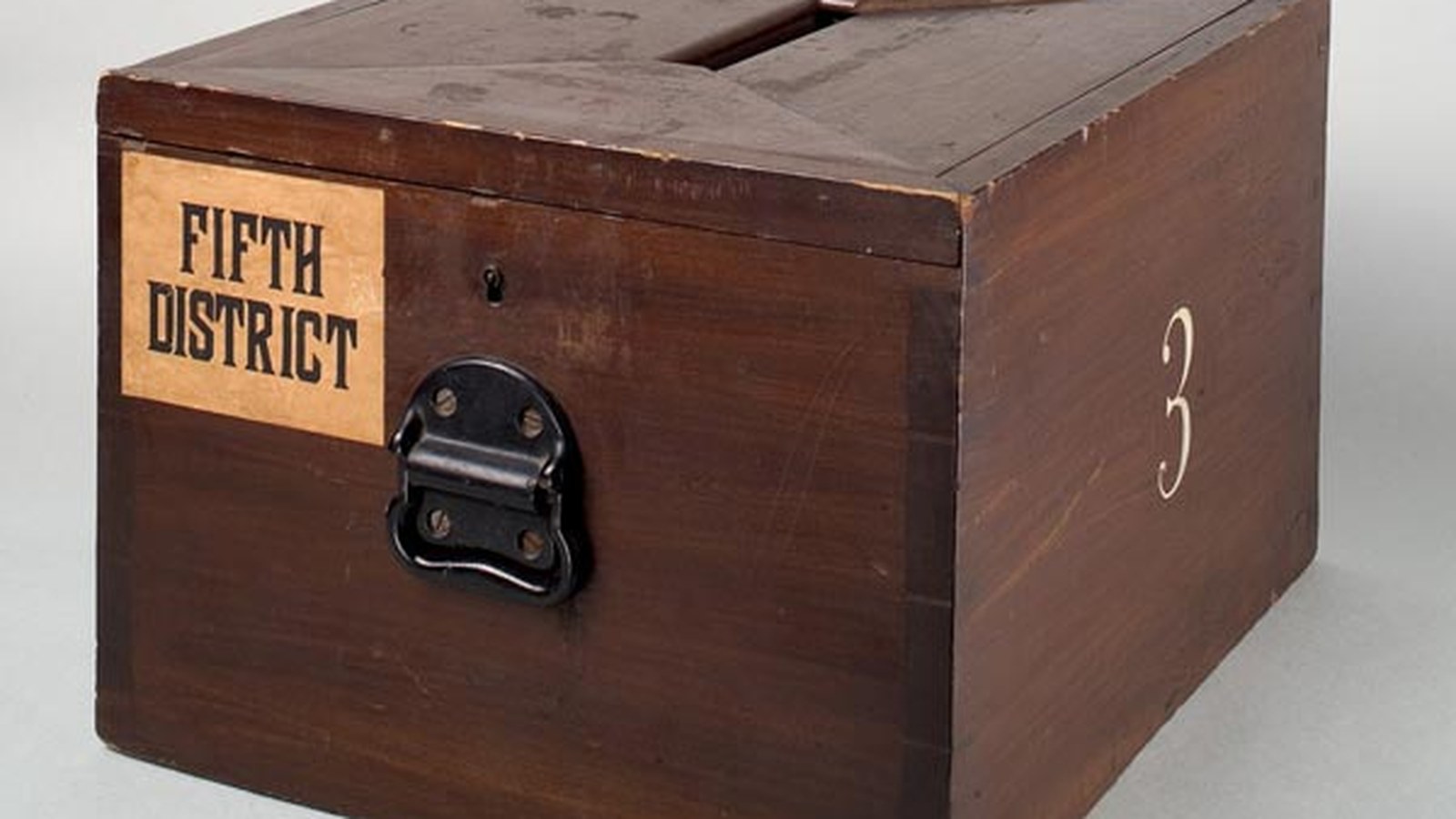
Image: wooden ballot box, National Museum of American History, public domain, Wikimedia Commons; archive object, not an AEP polling station.
Source consulted: Țuțuianu (AEP): Avem de reglat problema finanțării campaniilor electorale prin mecanisme mai oculte — AGERPRES.











0 Comments
No comments on this article yet. Be the first!