


The Treaty for the Limitation of Naval Armament was signed at London on 25 March 1936 by the United States, France, the United Kingdom, Canada, Australia, New Zealand and India. Two texts, French and English, equally authentic. Depositary: the British Government. The conference had opened on 9 December 1935; Japan withdrew on 15 January 1936, and Italy did not then sign. It is not the London Protocol of 6 November 1936 on submarine warfare, a distinct instrument. A Protocol of Signature and an Additional Protocol bear the same date; the Protocol of Signature entered into force at once.
Parts I–II: after the forthcoming expiry of the Washington Treaty of 1922 and the London Treaty of 1930 (save Part IV), qualitative ceilings, not a quantitative fleet cap — Japan’s absence blocked agreement on numbers. Article 4: capital ships, 35,000 tons standard displacement and 14-inch guns, with an escalator to 16-inch if a Washington signatory did not adhere by 1 April 1937. Article 5: aircraft-carriers, 23,000 tons. Article 7: submarines, 2,000 tons. Category tables are not reproduced as a construction handbook.
Part III: advance notification and an annual exchange of construction programmes, confidential until published by the supplying State. Articles 22–23: no transfer of warships into a foreign navy; replacement after accidental loss. Article 24: suspension in the event of war, after notice and consultation. Article 25: a right to depart if a non-party builds above the ceilings; three months of consultation. This is not a naval-operations handbook.
Article 27: in force until 31 December 1942. Article 28: consultation in 1940 for a conference in 1941. Article 30: ratification; entry into force on 1 January 1937 if all instruments are deposited, otherwise as soon as they are all received. The United States ratified on 2 July 1936, France on 24 June 1937, the British group on 29 July 1937 — the general entry-into-force date. Italy acceded on 2 December 1938. The Additional Protocol hopes the exchange of information will continue after expiry.
The escalator clause was later invoked for calibre; the treaty was in practice suspended with the war in 1939. Part IV of the 1930 treaty on submarine-warfare rules remains a separate text, reconfirmed in November 1936, not in this instrument.
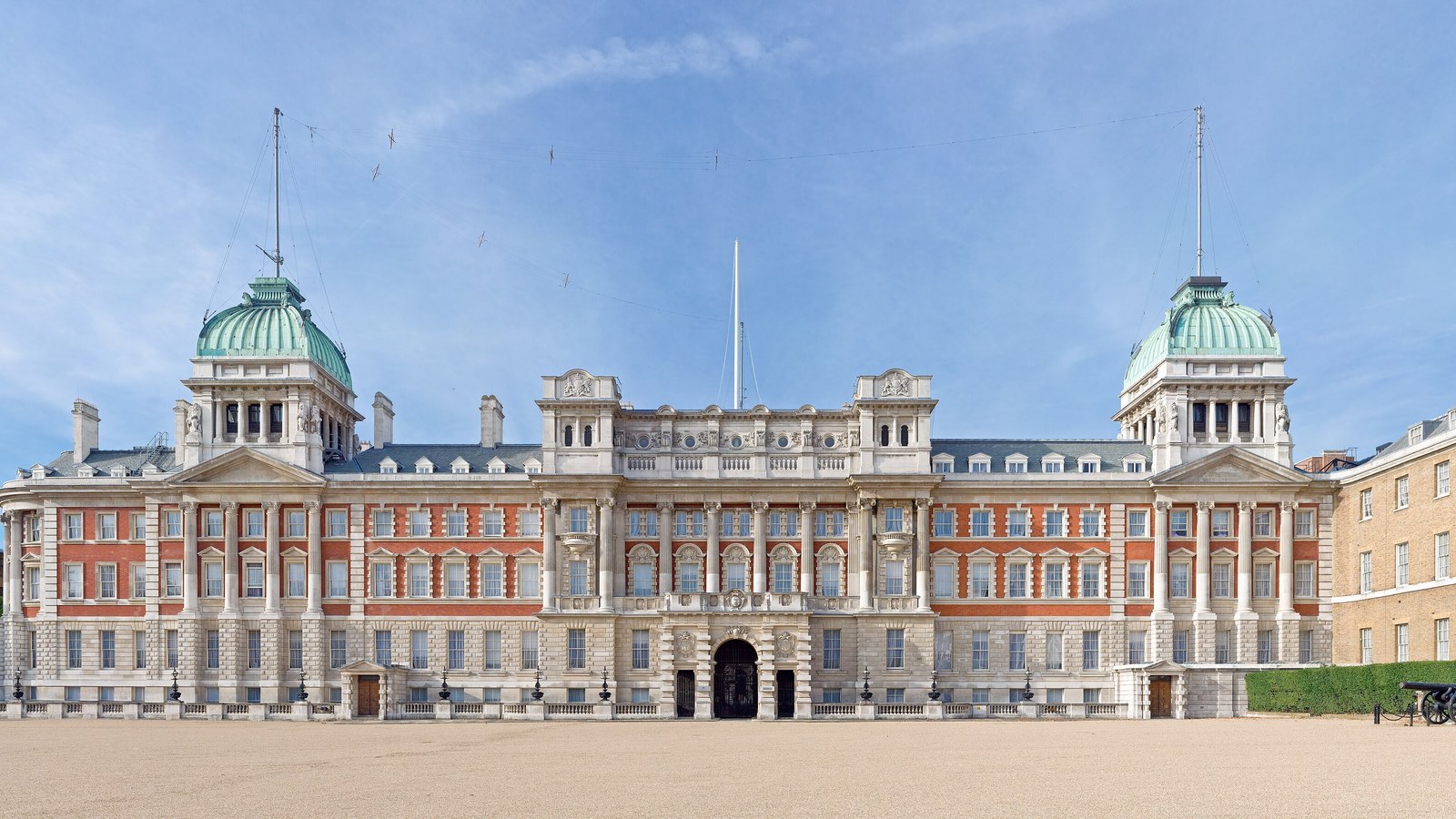
Cover: the Admiralty building on Whitehall, London; not the conference hall. Wikimedia Commons, free licence.
Sources consulted: Second London Naval Treaty; Treaty for the Limitation of Naval Armament (Australian Treaty Series 1937 No. 15).











0 Comments
No comments on this article yet. Be the first!