


In October 2026, Spixiana 49(1) published “Neglected but still alive: Further evidence for the continued existence of the Bangka Slow Loris (Nycticebus bancanus) on Bangka Island, Indonesia”, pages 119–128. The last scientific record, on the IUCN list: 1937. Status: Critically Endangered (Possibly Extinct). The paper is a confirmation in the literature, not a field find in the forest today.
The Alobi Wildlife Rescue Center, in Pangkal Pinang, rescued more than 90 animals between 2015 and August 2025; 86 were released, at seven sites. Re:wild, on 20 October: it was never lost to local people. The Jakarta Post, on 21 October, carried the Reuters wire. The rewrite rests on Spixiana and Re:wild.
For 43 animals, all since 2021, there are details. Sixteen in houses or gardens, seven with electrical burns, six on roads, five from trade or captivity, three in plantations, one in a fence, one attacked by a dog, four with no data. At least three died. The concentration on the north-east coast, near the city, is Alobi’s working area, not a density map.
Rescues in all four regencies of Bangka Island and in the city of Pangkal Pinang. That suggests, in the paper, that the species may still live across much of the island. It is not an updated IUCN review. Belitung remains “possibly”.
Authors: Langka Sani, Endi Riadi, Andre Septian (Alobi); Jochen Menner (Taman Safari Prigen); Timon Glaw (Haus des Meeres, Vienna), corresponding author. Sani: habitat has shrunk because of illegal tin mining and oil palm. Glaw: the first step is the scientific radar, not a strategy already in force as law.
Recommendations: an in situ programme, monitored releases under IUCN SSC guidelines, an ex situ breeding programme. Recommendations, not a law. Next steps: surveys, genetics, tracking the animals released. Nobody has censused the population today.
The species was scientifically described in 1906 and recognised as a separate species in 2013. Slow lorises are the venomous primates — licking a gland on the arm plus saliva. The pet trade is a cited threat, not a sentence. Nobody “found” the species on an October expedition. The rescue records entered the literature.
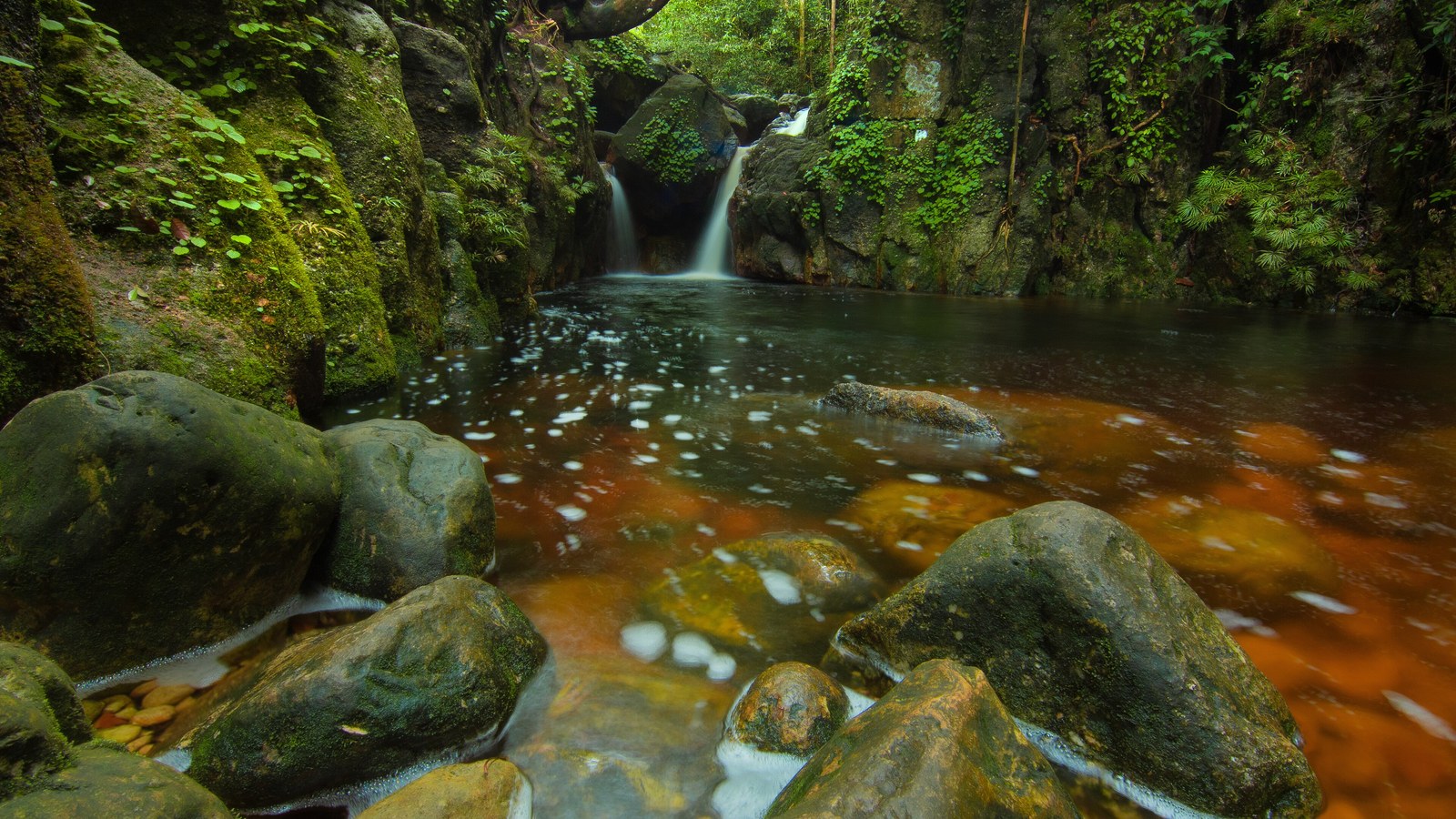
Image: Menjang Merah waterfall, Gunung Maras National Park, 25 May 2022, Roni hendrawan, CC BY-SA 4.0, Wikimedia Commons. The waterfall in 2022, not an October field photograph.
Sources consulted: Neglected but still alive: Further evidence for the continued existence of the Bangka Slow Loris — Spixiana 49(1); Bangka Slow Loris Rediscovered After Nearly 100 Years — Re:wild.











0 Comments
No comments on this article yet. Be the first!