
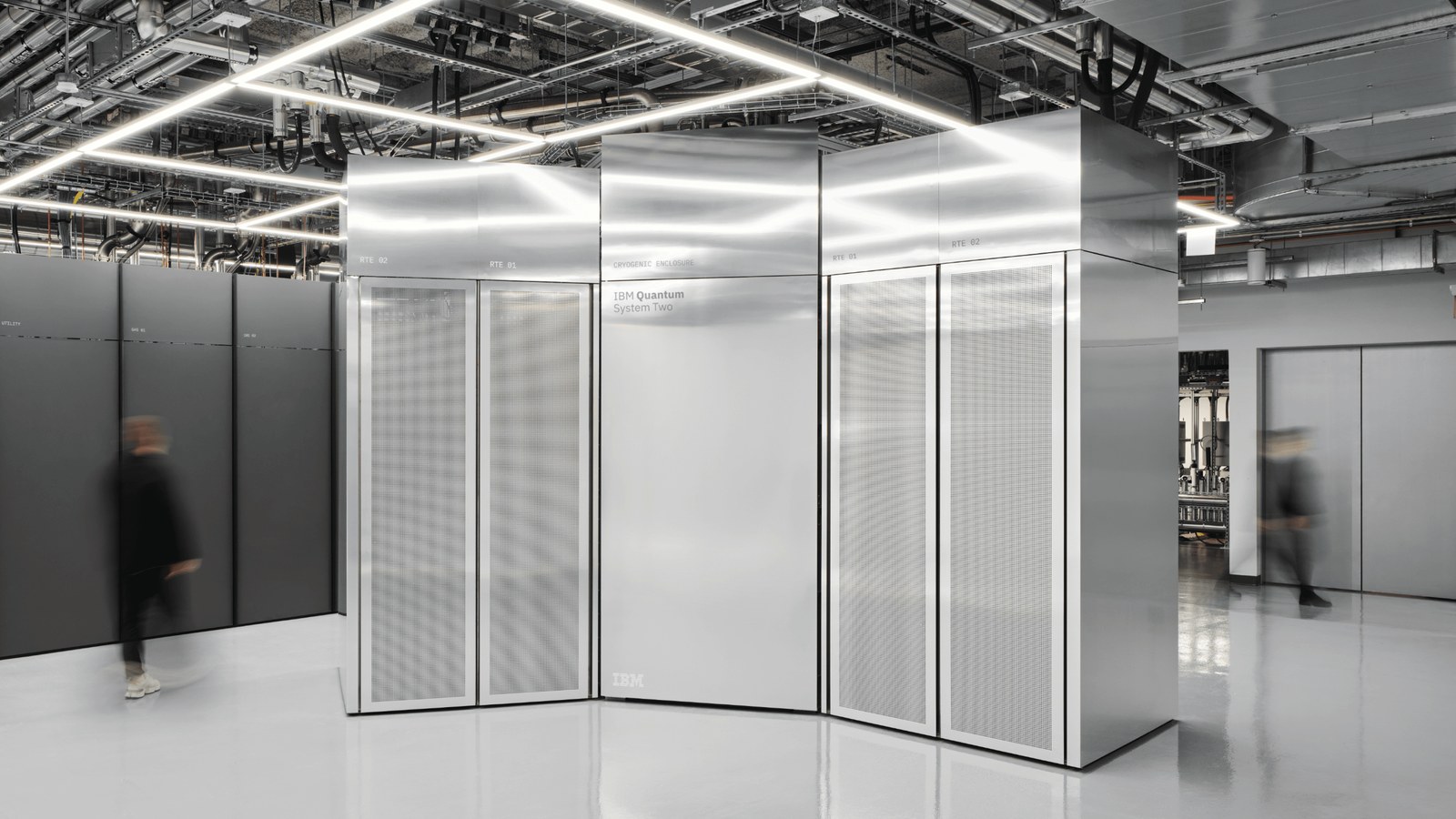
Switzerland is preparing to host its first IBM quantum computing system as part of a new innovation hub bringing together academic research, industry and advanced computing. The machine is not yet installed and is not operational: the 10 September 2026 announcement marks the launch of the project.
IBM and Lockheed Martin announced the creation of the Swiss Quantum Innovation Hub at ETH Zurich, in collaboration with the Swiss Federal Office for Defence Procurement, armasuisse. A central element of the initiative will be the installation of an IBM Quantum System Two in Switzerland, planned to be hosted at the Swiss National Supercomputing Centre (CSCS) in Lugano.
According to IBM and ETH Zurich, the system is expected to enter operation by the end of 2026. IBM will install, maintain and operate the quantum computer. ETH Zurich and CSCS will provide the technical infrastructure — power, cooling and security — and will manage the allocation of computing resources. The initial agreement to install and operate the system runs through 2029.
IBM Quantum System Two is the modular architecture developed by IBM for its advanced generations of quantum computing technology. The platform combines quantum processors with classical computing infrastructure and the software systems required to run quantum workloads. The Swiss system is planned to be powered by an IBM Quantum Nighthawk processor, which IBM describes as among the most advanced processors it has made available to users.
The choice of CSCS is significant because the centre already operates high-performance computing infrastructure used for scientific research, including the Alps supercomputer. Hosting a quantum system in the same facility could allow researchers to combine traditional high-performance computing with quantum technologies in hybrid workflows.
The Swiss Quantum Innovation Hub is intended to create an ecosystem where universities, researchers, companies and public institutions can develop and test quantum-computing applications. ETH Zurich will coordinate access, including for researchers in the ETH Domain, other Swiss universities and selected Swiss companies. Organisations that join the hub will also have cloud access to IBM’s fleet of quantum computers during the installation period.
Lockheed Martin will become a founding member of the hub and contribute research expertise. According to the announcement, Lockheed Martin and IBM plan initial projects on quantum sensing for navigation and additive manufacturing of metallic alloys. The involvement of armasuisse, through an offset agreement, also highlights Switzerland’s institutional interest in building quantum-technology skills.
Quantum computers operate differently from conventional computers. Instead of classical bits representing either 0 or 1, quantum systems use qubits and properties of quantum mechanics to perform certain types of computation. This does not mean that a quantum computer is simply faster than a conventional computer for every task. Its potential advantage lies in particular categories of problems — such as simulations of materials and molecules, optimisation or chemistry research — where quantum methods may eventually provide more efficient approaches than classical computing.
The project strengthens Switzerland’s position in a field attracting growing international competition. For ETH Zurich, CSCS and the project’s partners, the next stage is to develop the hub and prepare for the installation of IBM Quantum System Two. If the announced schedule holds, Switzerland would have IBM quantum infrastructure hosted in the country by the end of 2026, connected to an established European research and supercomputing ecosystem.
Photo: IBM. The image shows an IBM Quantum System Two, the architecture planned for installation at CSCS in Lugano; the Swiss system is not yet operational.
Sources consulted: IBM, Lockheed Martin Announce Swiss Quantum Innovation Hub at ETH Zurich | IBM Newsroom; Switzerland will soon get its first IBM Quantum System Two | IBM Quantum; ETH Zurich to host a new IBM quantum computer | ETH Zurich.









0 Comments
No comments on this article yet. Be the first!