


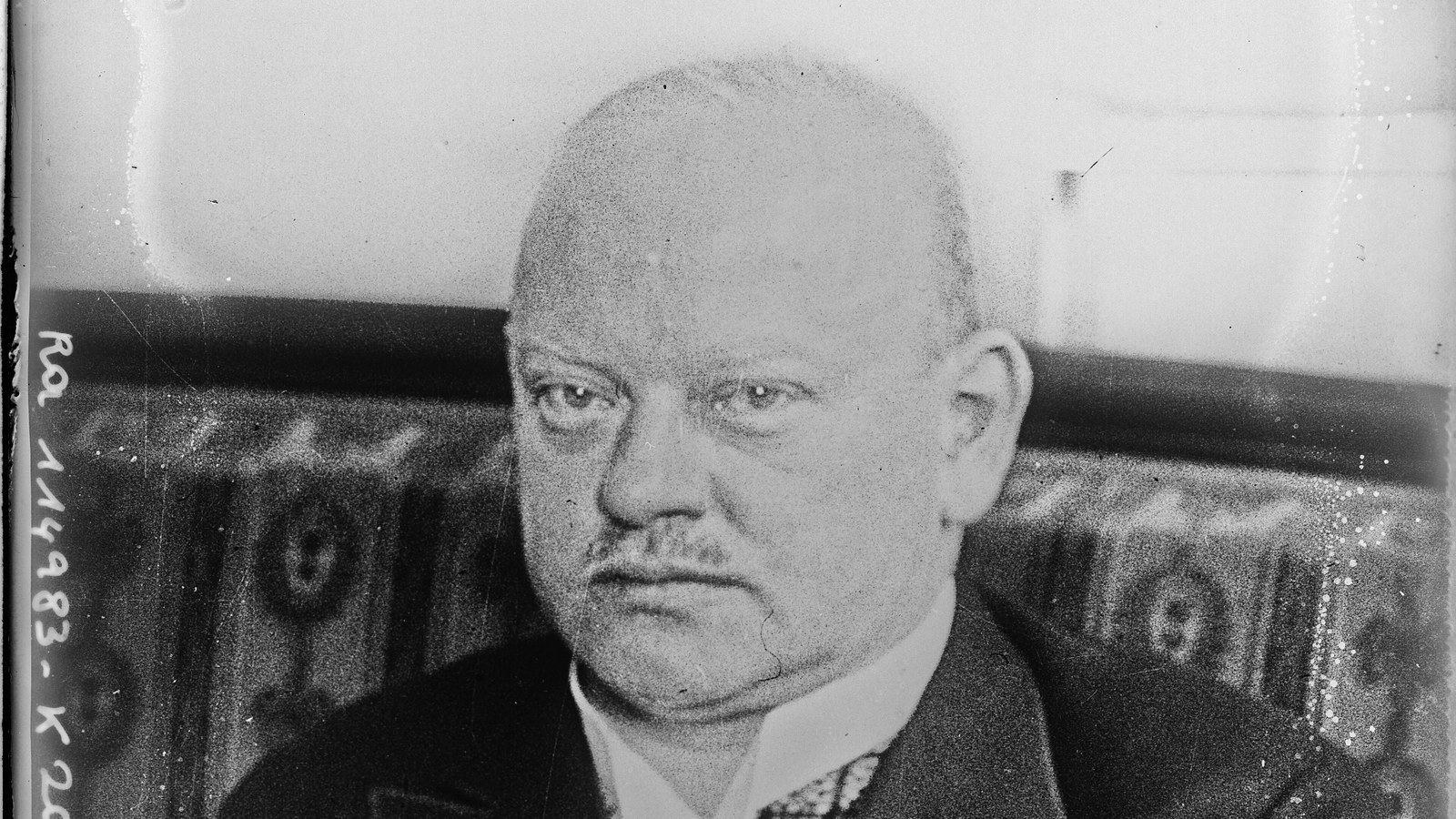
Locarno, in 1925, bound Germany to France, Belgium and the British guarantors. Moscow feared Rapallo would empty out and that the Reich, once in the League of Nations, would join an anti-Soviet bloc. The German–Soviet neutrality treaty, four articles, was signed on 24 April 1926, in Berlin. For the Reich: Gustav Stresemann, foreign minister. For the USSR: Nikolai Krestinsky, ambassador. The original, deposited in Berlin at the exchange of ratifications.
Article 1: relations remain based on the 1922 Treaty of Rapallo; the parties keep friendly contact on all political and economic questions jointly affecting them. Article 2: if one, despite a peaceful attitude, is attacked by one or more third Powers, the other observes neutrality for the whole conflict. Article 3: in such a conflict, or when neither is at war, if a coalition of third Powers aims at an economic or financial boycott, the other party will not join it.
Article 4: ratification, instruments exchanged at Berlin; it enters into force that day and holds for five years. The parties confer in good time on the future. The exchange, on 29 June 1926. Registration with the League of Nations, on 3 August, series 53. Wilhelm Marx said it was a matter of fitting Rapallo to Locarno; Stresemann, of keeping Russia too; Maxim Litvinov, of an amplification of Rapallo. The Reichstag Foreign Committee voted unanimously, a Weimar first.
In June 1926 German banks granted the Soviets credits of 300 million marks, at 9.4 per cent a year, with the government’s help. In October, Reichstag deputies were invited to Moscow. In December Georgy Chicherin came to Berlin and noted the improvement against 1925.
The additional protocol, signed on 24 June 1931, prolonged the treaty; ratified on 5 May 1933, registered with the League on 15 February 1935, series 157. Also in 1931, another 300 million marks for German industrial goods. After Hitler’s rise, relations broke down within months. Krestinsky was executed on 15 March 1938, at the Trial of the Twenty-One. The cover is Stresemann, the German plenipotentiary; the dinner group photograph is too small on Commons. This is not the 1878 Treaty of Berlin.
Sources: Treaty of Berlin (1926); Avalon Project, Treaty of Berlin Between the Soviet Union and Germany; April 24, 1926.











0 Comments
No comments on this article yet. Be the first!