
The UK government deferred, on 11 September 2026, a decision on the export licence for Stanley Spencer’s painting The Resurrection of the Good and the Bad, painted in 1915. A statement from the Department for Digital, Culture, Media and Sport, Arts Council England and the Reviewing Committee on the Export of Works of Art and Objects of Cultural Interest (RCEWA) describes a temporary step: museums and galleries in the United Kingdom are given time to raise funds for a possible purchase. Export is not banned permanently.
Spencer, who lived from 1891 to 1959, is regarded as one of the leading British painters of the twentieth century. The work is a diptych, two oil-on-canvas panels, each 635 × 787 mm. Figures on the left represent the Good rising on the Day of Judgement; those on the right represent the Bad. It was painted before Spencer began his First World War service, and so before his direct experience of the conflict.
The painting’s importance is not only its date. It is Spencer’s first serious treatment of the Resurrection, a subject that would remain central to his work. Among the best-known later pictures is The Resurrection, Cookham (1924–1927), in the Tate collection. In those works, biblical subjects are often set in recognisably British, contemporary surroundings. The RCEWA regards the 1915 diptych as essential to the study of that strand of his practice.
The export-licence decision is deferred, in the first stage, until 10 December 2026 inclusive. During that period, expressions of interest are invited from eligible purchasers. The recommended price is £450,000. After the first period, the owners have 15 business days to consider offers. If an Option Agreement is signed, a second deferral of four months can begin. The procedure is meant to give a UK gallery, museum or other eligible buyer a chance to raise the sum.
Arts Minister Ruth Mackenzie acted on the RCEWA’s advice. The independent committee, serviced by Arts Council England, concluded that the painting meets the third Waverley criterion: outstanding significance for the study of a particular branch of art, learning or history — here, Spencer’s work and his development of the Resurrection theme. Committee member Mark Hallett said the diptych deserves further research and that it is imperative to try to keep it in the UK.
The painting is now in a private collection. If a UK museum or gallery acquires it, the government says it would become the earliest publicly held example of Spencer’s Resurrection pictures. It would then be available to the public and to researchers.
Provenance published by the authorities shows that James Wood bought the work directly from Spencer in 1915. It later passed through Elizabeth Wood, the London gallery Browse and Darby and, from 1980, a private UK collection, then by descent. The current owner bought it in 2026.
The painting’s future depends on an eligible offer and on raising the £450,000. If the procedure succeeds, an important early work of British Modernism could remain in the United Kingdom and enter a public collection for the first time. If it does not, the deferral ends and the licence can be considered again; at this stage there is no permanent export ban.
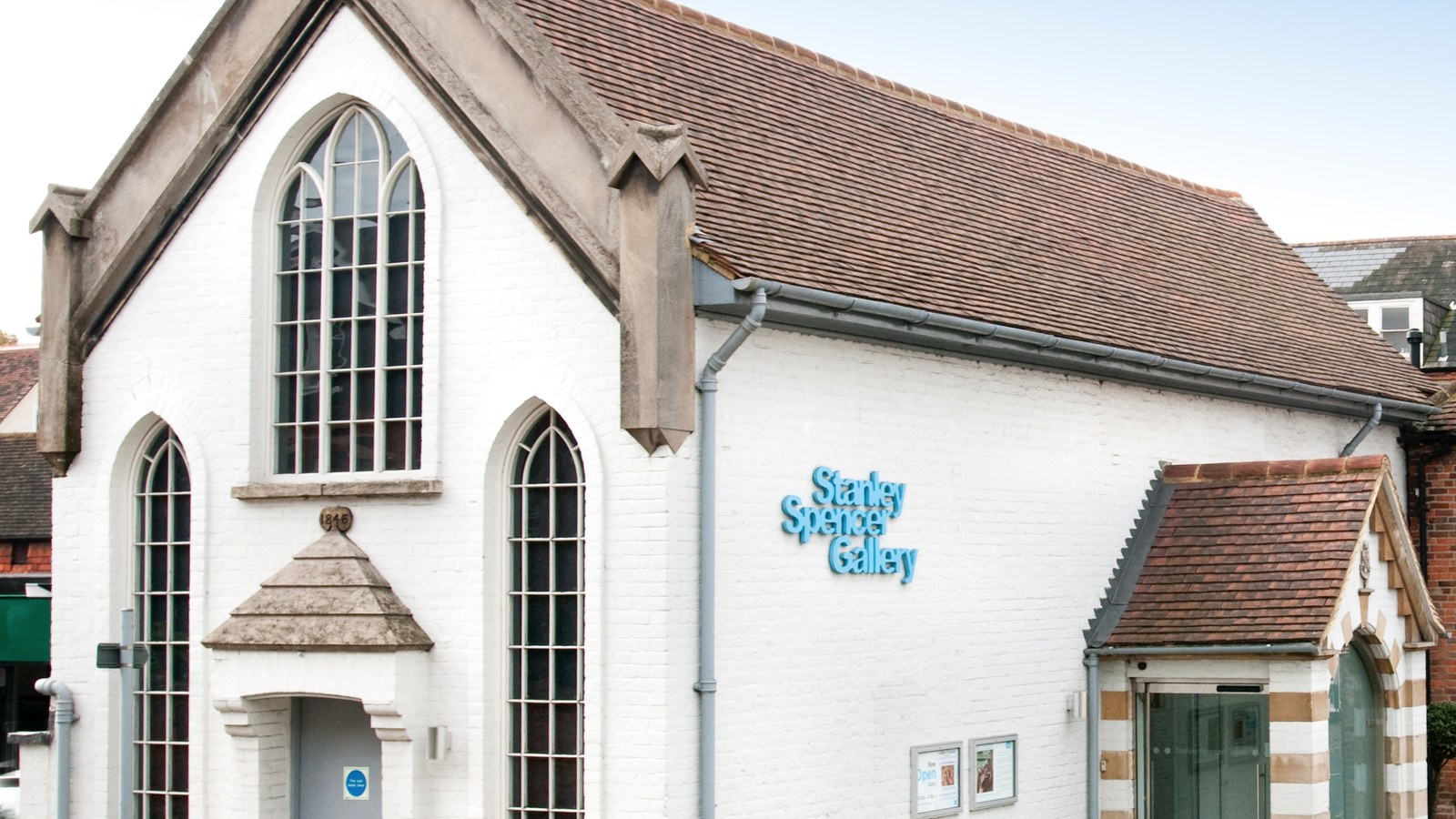
Photo: Lagosman / Wikimedia Commons, CC BY-SA 3.0. The Stanley Spencer Gallery in Cookham, photographed on 20 October 2013. This is not the painting “The Resurrection of the Good and the Bad” (1915); that work remains in copyright with the artist’s estate, and the GOV.UK press image could not be reused legally. The image was cropped to 16:9.
Source consulted: Minister acts to stop pivotal British Modernist painting from leaving the UK | Department for Digital, Culture, Media and Sport, Arts Council England and RCEWA.


0 Comments
No comments on this article yet. Be the first!