
The United Nations Environment Programme warns in “Limiting Overshoot”, published on 2 September 2026, that global temperature is likely to exceed 1.5°C above pre-industrial levels within the next few years. The threshold is a long-term climate average, not the reading of a single month or year.
UNEP describes an “overshoot, peak and decline” pathway: keep peak warming as low as possible, shorten the period of exceedance, then try to return below 1.5°C. The report’s most optimistic scenario places the peak at 1.8°C; other scenarios point to higher peaks.
The scale and duration of additional warming shape risks for ecosystems, health, agriculture and exposed communities. The report links a longer overshoot with a greater chance of hard-to-reverse thresholds, without presenting those thresholds as events that have already occurred.
Rapid emission cuts remain the central response. Removing carbon dioxide from the atmosphere may play a role, but it does not replace cuts at source. UNEP says such techniques are credible for a return below 1.5°C only if the peak stays well below 2°C.
A later return below the threshold does not guarantee that every effect would be reversible. Some losses may be permanent, and adaptation must accelerate in parallel. The report calls for immediate action, not deferral to a later generation.
Decisions in this decade will shape both peak warming and how long the world may remain above the Paris Agreement target.
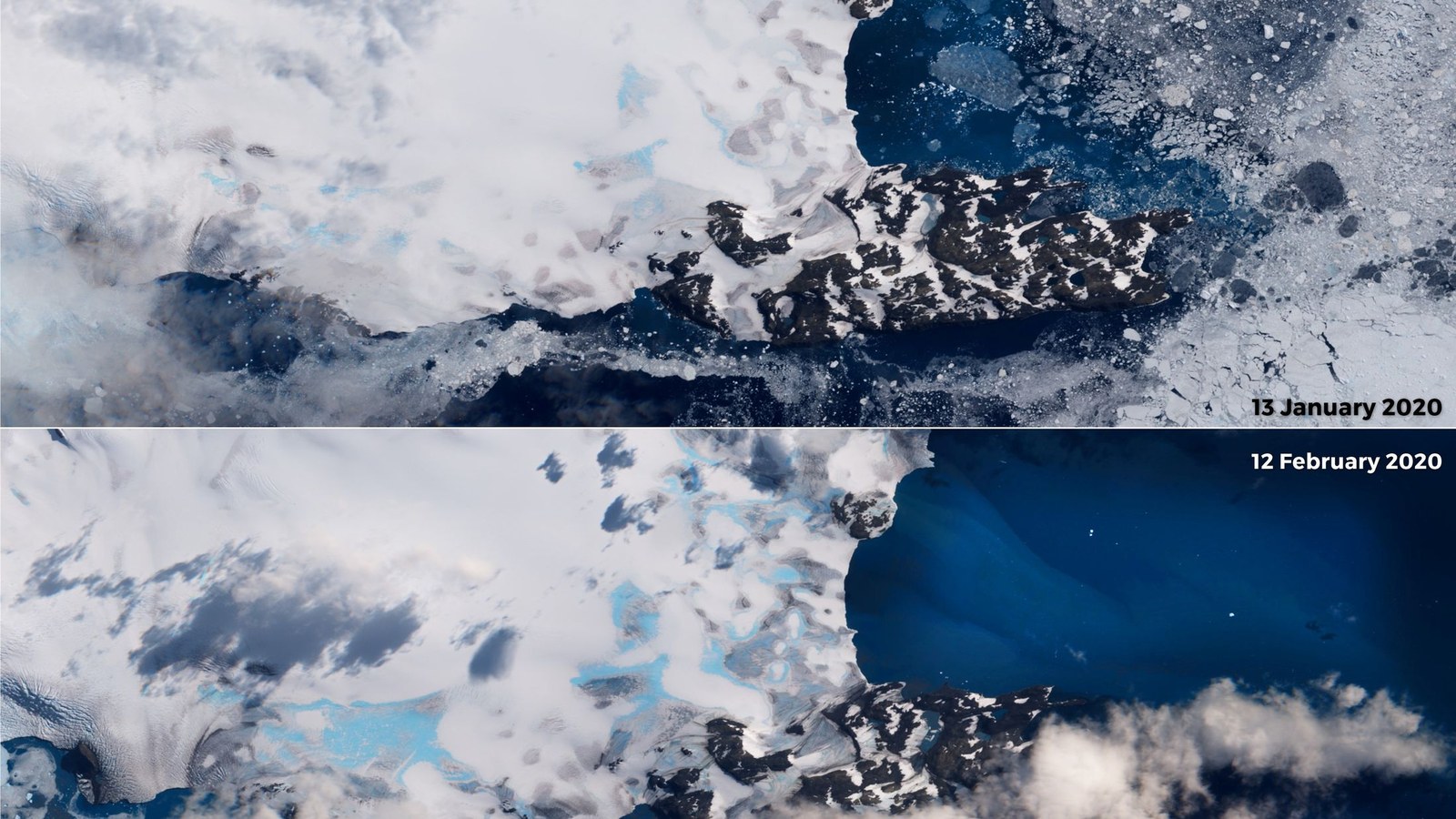
Image: European Union / Copernicus Sentinel-2, ice melting in Antarctica, January–February 2020, Wikimedia Commons. Not a 2026 reading of the 1.5°C threshold. Cropped to 16:9.
Source consulted: Limiting Overshoot — UN Environment Programme.





0 Comments
No comments on this article yet. Be the first!