
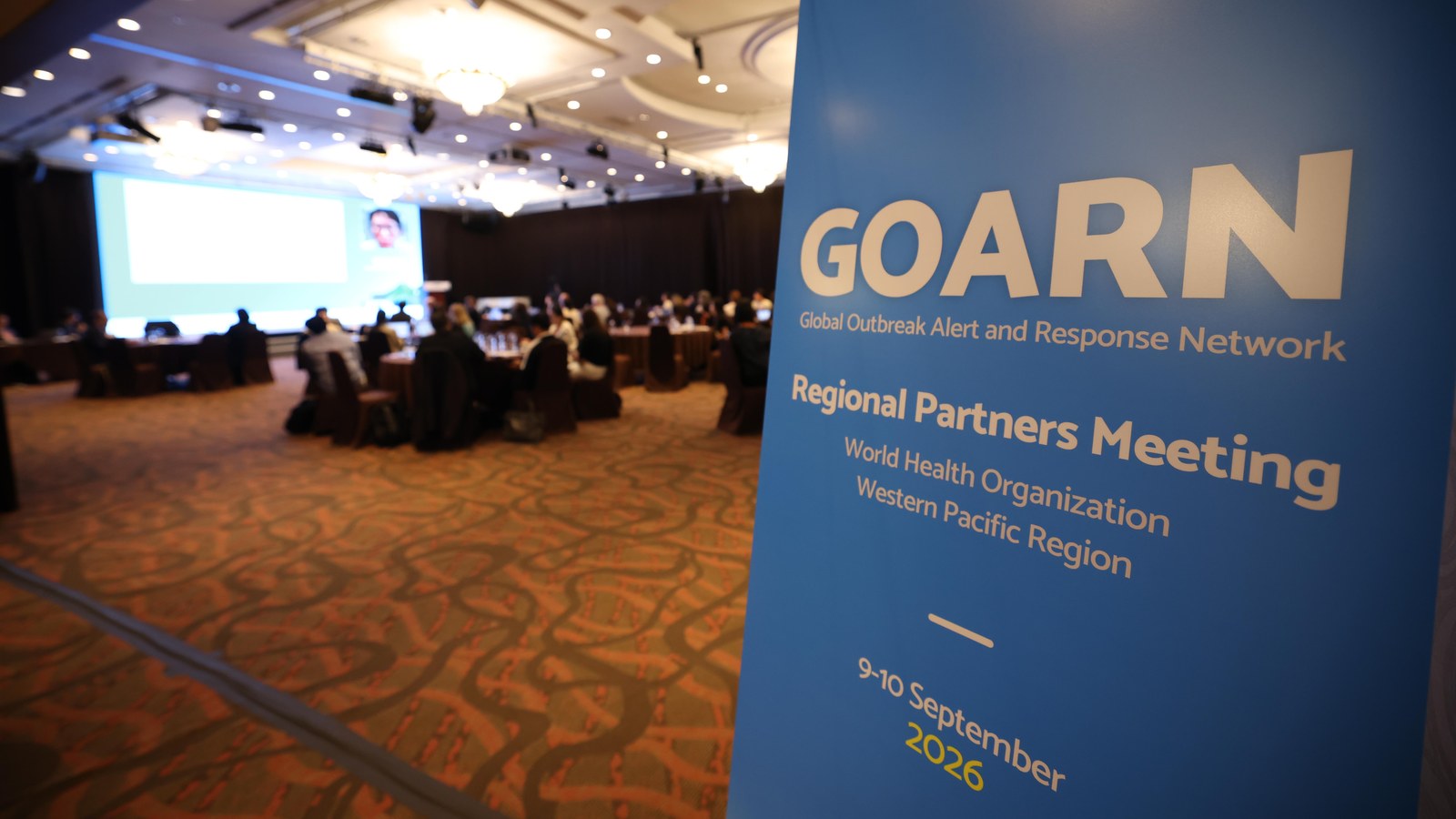
More than 100 health emergency experts representing 56 institutions across 21 countries have concluded a regional meeting in the Republic of Korea with a commitment to strengthen the Western Pacific’s ability to detect and respond to outbreaks and other public health emergencies. The World Health Organization announced the outcome on 10 September 2026. The announcement concerns preparedness, not a newly detected epidemic.
The participants belong to the Global Outbreak Alert and Response Network (GOARN), the international network coordinated by WHO to mobilise specialists and institutions during outbreaks and other public health emergencies. The two-day meeting, held on 9–10 September 2026 in Seoul, was co-hosted by WHO and the Korea Disease Control and Prevention Agency (KDCA).
A central aim was to map existing capacities and the areas where the region still needs staff, expertise or closer cooperation. The 21 countries cited by WHO are those represented at the meeting, not countries described as being affected by outbreaks.
Discussions went beyond infectious diseases. Experts also reviewed gaps in cybersecurity and critical infrastructure resilience, water, sanitation and hygiene, environmental health, biological emergencies, nuclear emergencies, and nuclear and radiological security. A public health crisis can start with a pathogen, but health systems can also be disrupted by infrastructure failures, water and sanitation problems, or disasters.
A core feature of GOARN is the ability to deploy specialists quickly when a country requests help. WHO says that in 2026 alone, Western Pacific partners supported nine experts across six missions, including measles outbreak responses in Viet Nam and support for an HIV outbreak response in Fiji, with expertise in epidemiology, surveillance and clinical case management.
GOARN has operated since 2000. Globally it now brings together more than 390 institutions, including national public health agencies, technical organisations and nongovernmental partners. In the Western Pacific, as of August 2026, there were 94 partner institutions across 19 countries — about 25% of GOARN’s global partners. Those 94 institutions are the region’s existing partners; the 56 institutions are those represented at this particular meeting.
The Seoul meeting also contributed to the development of the Global Health Emergency Corps (GHEC), a WHO initiative intended to connect leaders and personnel who can be mobilised during emergencies. The point is to have relationships, skills and procedures in place before a crisis begins, rather than assembling them after an outbreak starts.
Dr Gina Samaan, WHO Regional Emergency Director for the Western Pacific, emphasised that partnerships and shared expertise are essential to building a regional workforce that can respond quickly. Dr Seung-kwan Lim, commissioner of KDCA, described GOARN as a way of turning national expertise into collective regional preparedness.
The outcome in Seoul should not be read as the announcement of a new epidemic. It is about strengthening the human and institutional infrastructure required before the next emergency, in a region whose countries and territories are exposed to outbreaks, natural disasters and other health threats.
Photo: KDCA / Shin Dong Myoung. Banner and meeting hall at the 2026 GOARN Partners Meeting in Seoul.
Source consulted: Closing health workforce gaps for emergency response: the Western Pacific steps up | WHO Western Pacific.








0 Comments
No comments on this article yet. Be the first!