
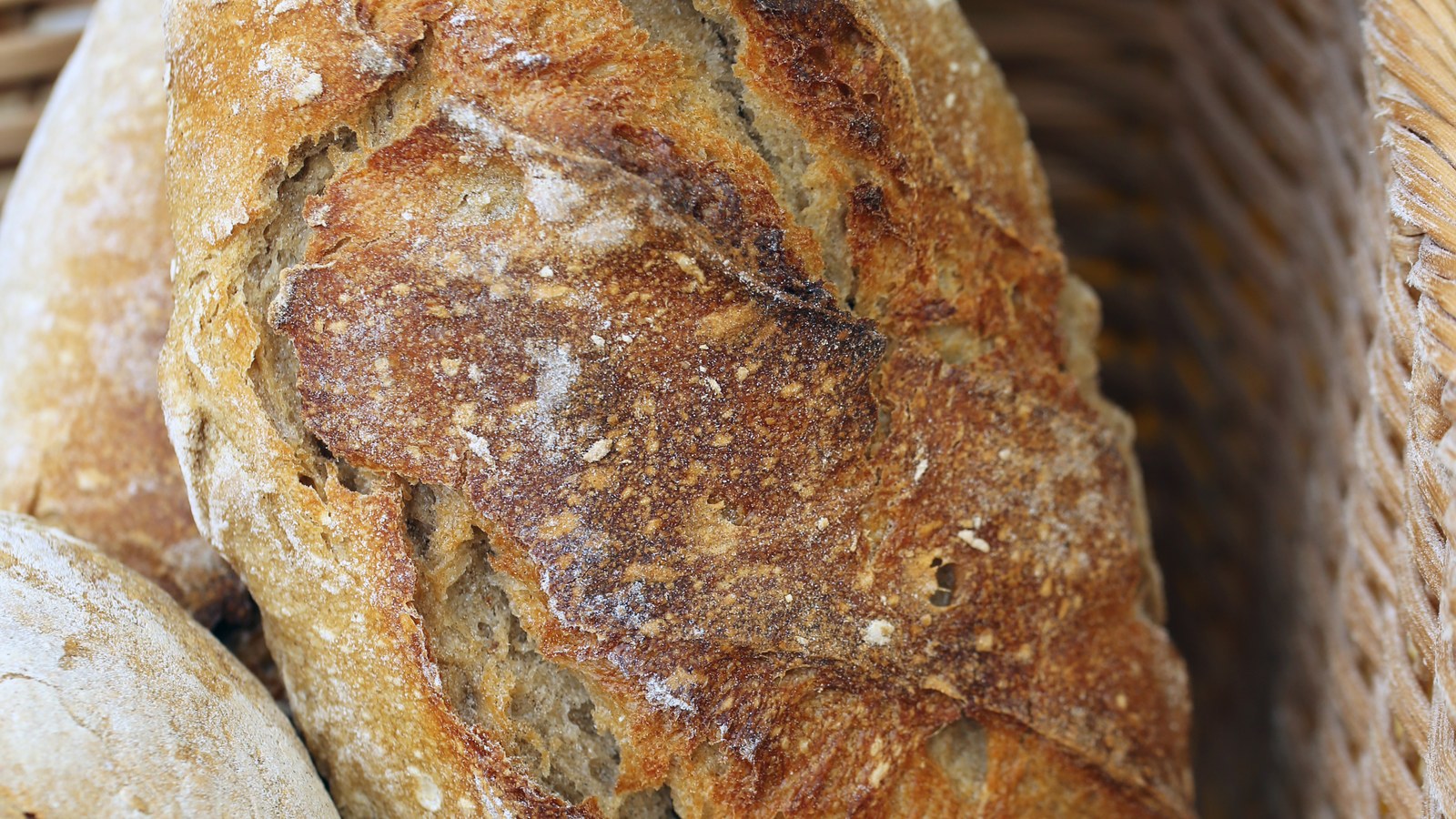
A slice left on the table dries out. Bread can still firm inside a closed bag, where it loses little water. A hard crumb is not only dehydration: starch reorganises after baking.
In the oven, starch granules take up water, swell and lose some of their original order — gelatinisation. After cooling, the chains, especially amylopectin, rearrange into more ordered structures. The process is called retrogradation.
That rearrangement moves water in the crumb and makes it crumbly. At the same time a crisp crust may take moisture from inside and soften. The same loaf can have a firmer crumb and a less crisp crust.
The fridge slows many microbes, but its temperature range can speed retrogradation. For a few days, a sealed bag at room temperature is often better. For longer storage, freezing slows the changes sharply.
Heating can temporarily disrupt the ordered structures and restore some softness. The effect does not last: after cooling, the bread firms again. Soaking it before the oven can make an unpleasant texture.
Staling is not mould. Firm bread without spots can become croutons or crumbs. If visible mould appears, the whole product should be discarded: filaments can extend beyond the surface spot, and some moulds produce toxins.
Storage depends on the loaf and the wrapping. A mouldy corner is not saved by cutting off the visible bit.
Image: Isasza, pain de campagne. Wikimedia Commons, CC BY 3.0. Cropped to 16:9. Licence. Original file.
Sources consulted: American Chemical Society — Starch gelatinization, retrogradation, and bread; USDA FSIS — Molds on Food: Are They Dangerous?.






0 Comments
No comments on this article yet. Be the first!