
Salt on ice does not burn like a flame. Its main effect is freezing-point depression: water with dissolved ions must be cooled further before it forms crystals.
Under some conditions, ice has a very thin liquid film on its surface. Sodium chloride dissolves there and makes brine. The ions disrupt the lattice water molecules build in ice, so the solution stays liquid below zero, down to a temperature that depends on concentration.
As ice melts, more water appears to dissolve and spread the salt. Traffic breaks crusts and mixes the layer. Preventive brine, applied before ice bonds hard to the pavement, is used by road authorities precisely to weaken that bond.
Sodium chloride is the most common de-icer, but it is not effective in every freeze. When temperature falls far, melting slows and the dose required rises. Calcium or magnesium salts can work in colder conditions, with different costs and impacts.
Salt does not replace the plough. Quantity, timing, pavement temperature and precipitation decide the outcome. An excessive dose does not bring proportionally more safety.
Chlorides speed corrosion, harm vegetation and enter soil and water. The chloride ion is not well retained by soil and can be toxic to freshwater life at high concentrations. That is why agencies seek calibrated doses, anti-icing before a storm and covered storage.
Practical thresholds differ by concentration, salt type and pavement temperature. The material should be used responsibly, by local guidance, not by a single rule of “as much as possible”.
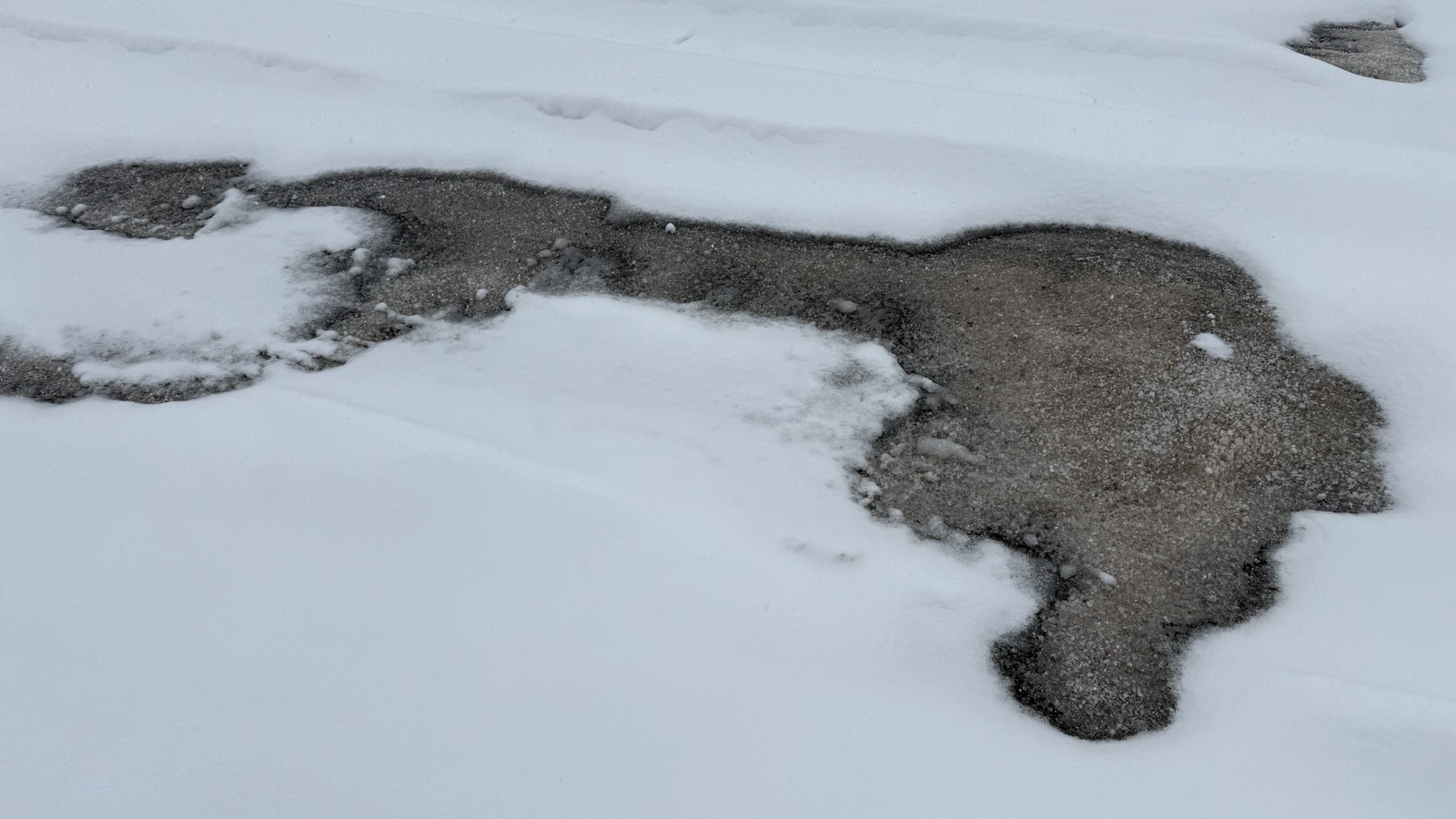
Image: Famartin, snow and a thawed stretch of road, Ewing Township, New Jersey. Not a close-up of granules. Wikimedia Commons, CC BY-SA 4.0. Cropped to 16:9. Licence. Original file.
Sources consulted: USGS — Deicing New England’s roads, parking areas, and walkways; FHWA — Manual of Practice for an Effective Anti-Icing Program.









0 Comments
No comments on this article yet. Be the first!