
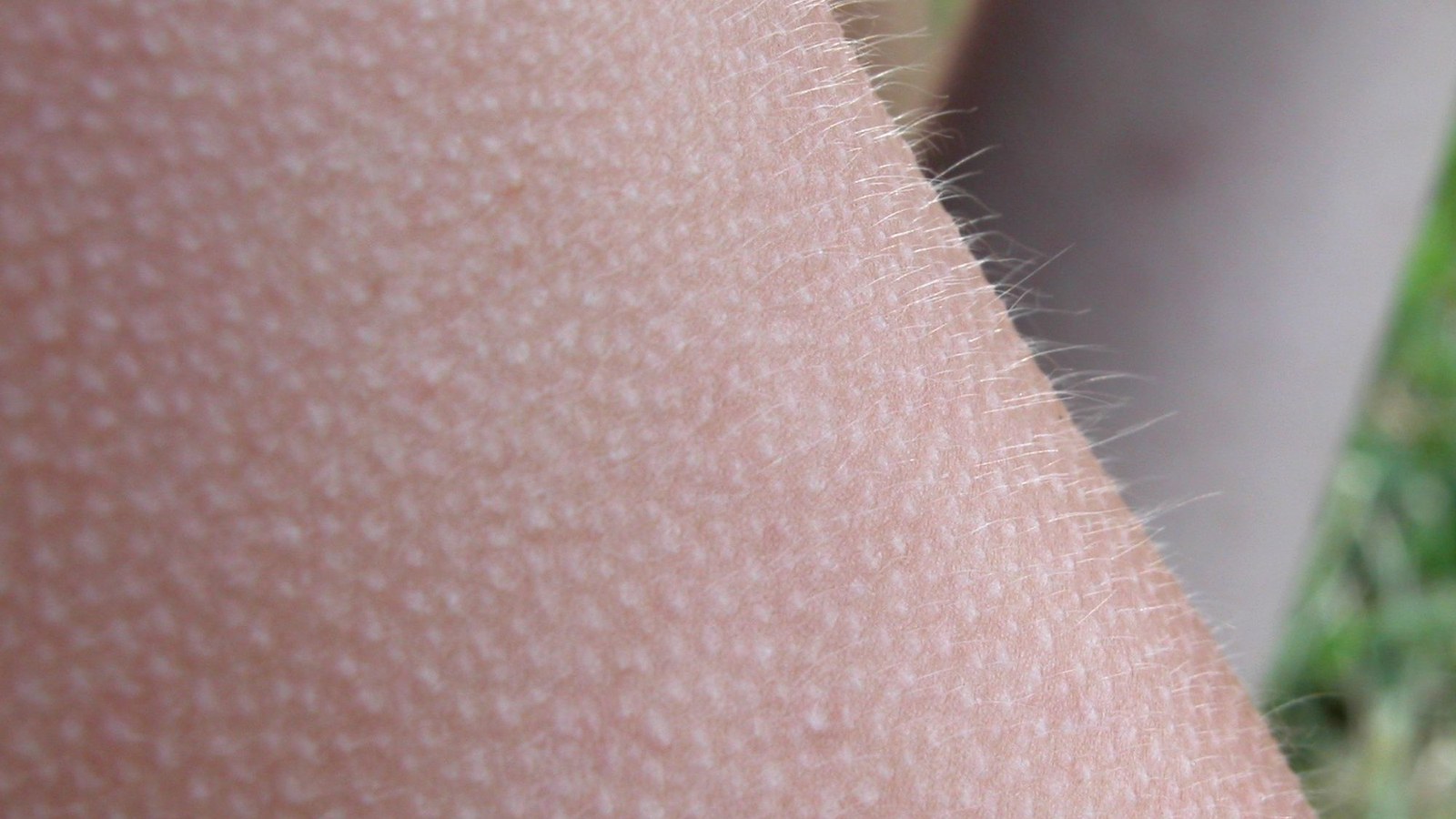
A cold draft, a tense scene or a musical chord can raise the same bumps on the skin. The phenomenon is piloerection — popularly, goosebumps. The tiny arrector pili muscle, at the base of the follicle, contracts, pulls the hair and puckers the surface.
The command comes from the sympathetic nervous system, not from will. In animals with dense fur, raised hairs trap a layer of air and, in a threat, enlarge the silhouette. In humans, with less body hair, the thermal effect is weak; the biological circuit remains.
Cold is not the only trigger. Fear, surprise and an intense aesthetic experience can start the same reflex. The brain reacts to the meaning of the moment; the body answers before a detailed analysis. Smithsonian Human Origins and Harvard Health describe this reuse of an old pathway.
We cannot easily contract each arrector pili on command. Some people still evoke the reaction through memories or music. That is an exception, not an exercise in control.
The episode is usually brief and normal. Persistent piloerection or piloerection with other symptoms falls outside an explainer and belongs with a doctor.
The apparently useless detail is a window onto evolution: a reflex useful to fur, kept in a body that has less of it, but that still links temperature, emotion and the nervous system.
Image: goosebumps on an arm, 17 September 2003 / Wikimedia Commons. A photograph of the reflex, not a medical illustration. Cropped to 16:9.
Source consulted: Why Do We Get Goose Bumps? | Smithsonian Human Origins; Wondering about goosebumps? | Harvard Health.









0 Comments
No comments on this article yet. Be the first!