
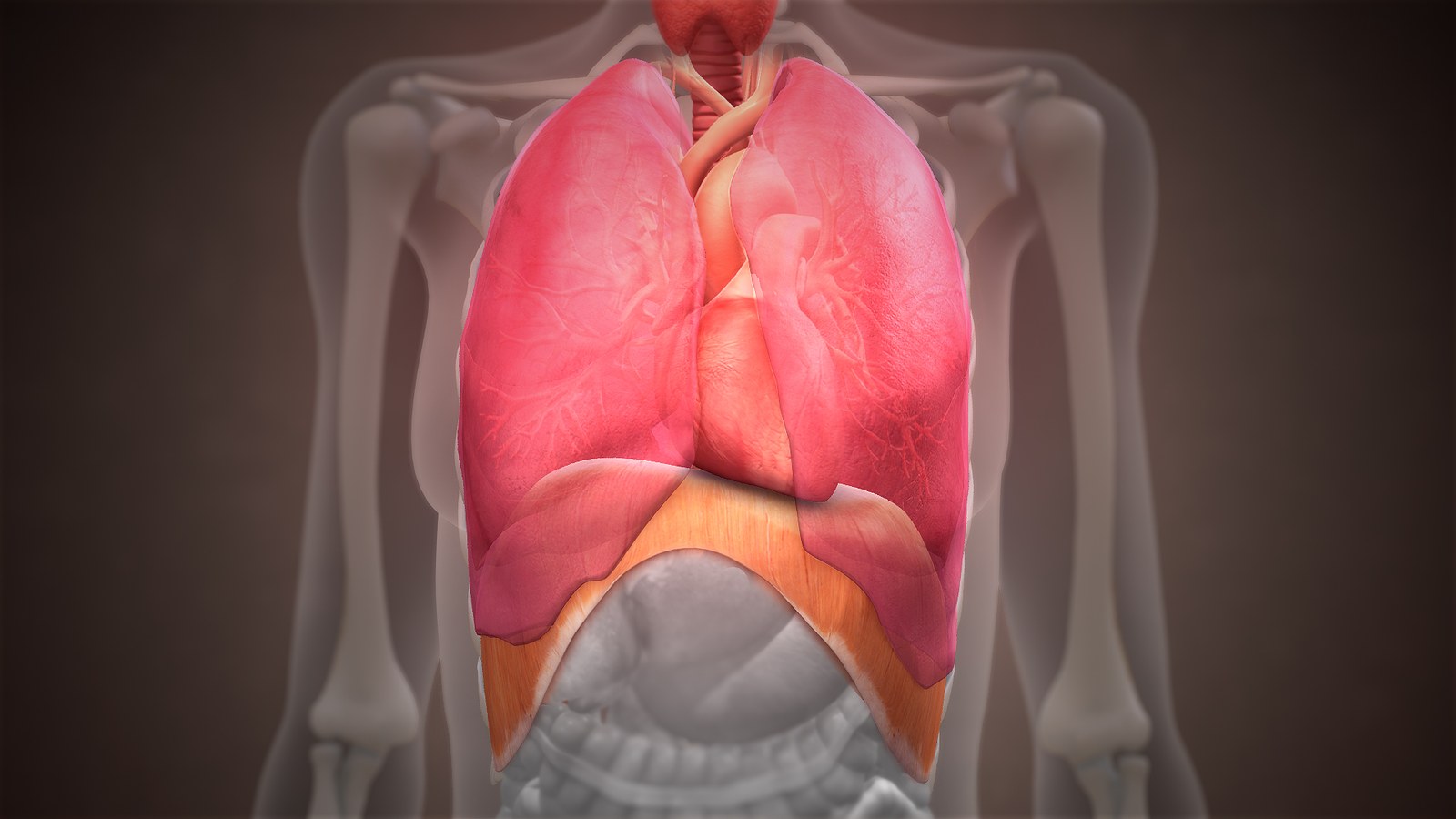
The “hic” sound is the last step of a reflex, not a speech tic. The diaphragm, the main breathing muscle, contracts suddenly and involuntarily. Air is drawn quickly toward the lungs; the glottis closes and cuts the flow. That closure makes the noise.
The circuit involves the phrenic nerve, the vagus nerve and regions of the central nervous system. Irritation along the path may contribute, but the cause of a short episode often stays unidentified. It is not a diagnosis.
Fast eating, large meals, fizzy drinks, alcohol, sudden temperature changes, laughter or emotion can precede hiccups. They may expand the stomach or briefly alter signals near the diaphragm.
Most episodes pass on their own within minutes. Briefly holding the breath, slowly swallowing water or controlled breathing sometimes interrupt the rhythm. Evidence for many folk “cures” is weak. Methods involving choking, dangerous shocks or swallowing objects should be avoided.
Hiccups lasting more than 48 hours are considered persistent and need medical assessment. Nerve irritation, nervous-system conditions, metabolic disorders or medicine effects may be involved. Treatment depends on the cause, not on a universal trick.
Medical help matters sooner if hiccups block breathing, sleep or eating, or come with chest pain, weakness, confusion or other severe signs. This is general information; it does not replace a consultation.
The image is an anatomical illustration of the diaphragm, not an emergency scene. It shows the muscle involved in the reflex, not a treatment.
Image: Scientific Animations, 3D medical animation of the diaphragm. Wikimedia Commons, CC BY-SA 4.0. Anatomical illustration, not a clinical scene. Cropped to 16:9. Licence. Original file.
Sources consulted: NHS — Hiccups; Mayo Clinic — Hiccups: symptoms and causes; Merck Manual — Hiccups.








0 Comments
No comments on this article yet. Be the first!