
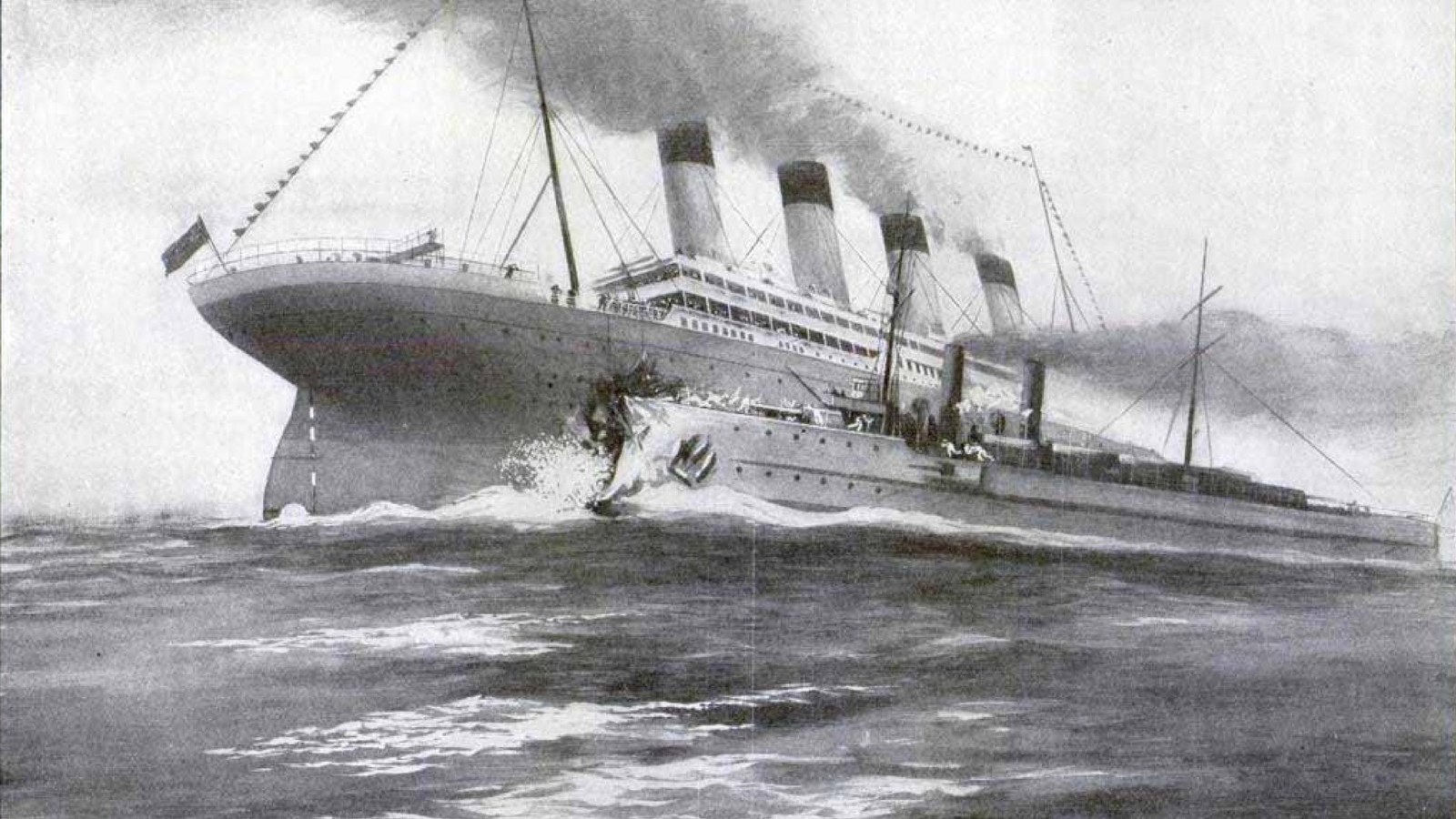
On 20 September 1911, RMS Olympic and the protected cruiser HMS Hawke collided in the Solent, off the Isle of Wight. The White Star liner was leaving Southampton on her fifth crossing. 20 September 2026 marks 115 years since the incident. No deaths were reported.
Olympic, commanded by Captain Edward J. Smith, was then one of the world’s largest passenger ships and the sister of the future Titanic. Hawke, an Edgar-class cruiser, had a ram bow designed in an era when warships might strike an enemy vessel. The ships were running nearly parallel; Hawke struck Olympic’s starboard side near the stern.
Two of Olympic’s watertight compartments flooded and a propeller shaft was twisted. Hawke lost part of her bow. Both ships remained afloat. Olympic returned towards Southampton under her own power. The transatlantic voyage was cancelled.
Repairs at Harland and Wolff disrupted the yard’s schedule and temporarily delayed work on Titanic. The later inquiry and litigation examined right of way, manoeuvres and the hydrodynamic effect of a much larger ship on a smaller one. White Star contested fault; the courts held the liner liable. Coverage should not claim a single, unverified cause.
The collision belongs to the history of the Olympic class and of navigation in narrow channels. It is not a simplistic omen of the 1912 sinking. Each ship, inquiry and later “unsinkable” claim belongs in its own context.
Period photographs of the damage, where they exist, are documents after the collision, not film stills. The anniversary recalls a collision without fatalities, followed by costly repairs and a legal dispute, not a myth of destiny.
Image: Popular Mechanics, November 1911 / Wikimedia Commons, public domain. Contemporary illustration of the RMS Olympic–HMS Hawke collision. Not a deck photograph and not Titanic. Cropped to 16:9.
Source consulted: Collision at Spithead | U.S. Naval Institute; Collision between HMS Hawke and SS Olympic | The National Archives.






0 Comments
No comments on this article yet. Be the first!