
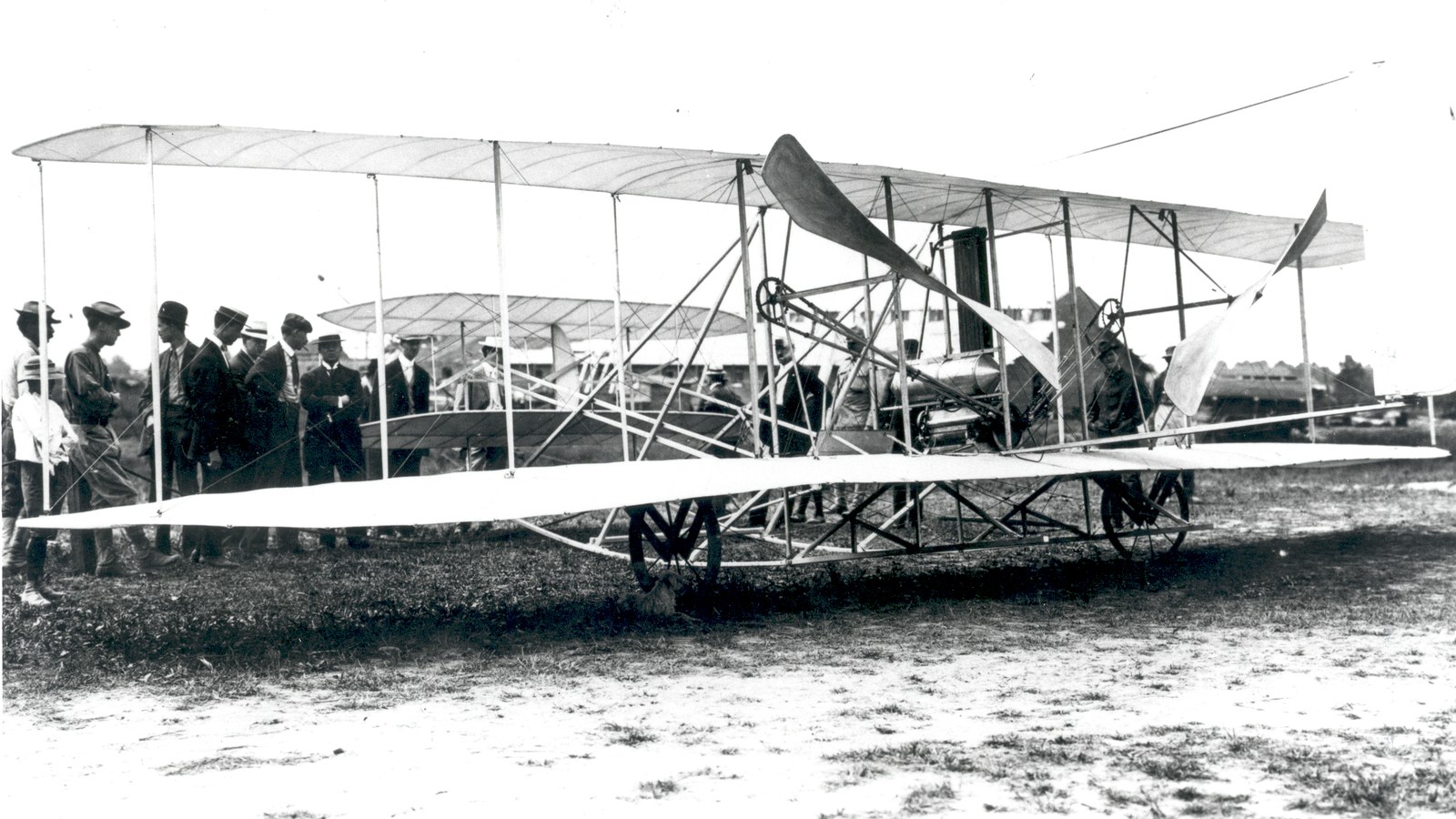
17 September 2026 marks 118 years since the Fort Myer crash that killed Lieutenant Thomas E. Selfridge, an event recorded in aviation history as the first fatal accident involving a passenger aboard a powered aeroplane.
In 1908 the Wright brothers were demonstrating their aircraft to the United States Army. Orville Wright was flying at Fort Myer, Virginia, in trials meant to evaluate the machine for military use. The Smithsonian National Air and Space Museum notes that the US Army Signal Corps had advertised for a two-seat observation aircraft, and Orville had come to Fort Myer to meet the performance requirements.
On the afternoon of 17 September, Thomas Selfridge joined Orville as a passenger. He was the Army’s official observer. During the flight the aircraft suffered a mechanical failure associated with its propeller system. Orville tried to keep control, but the machine crashed.
Selfridge suffered severe head injuries and died that evening. Orville Wright survived but was seriously injured. The officer’s death became one of the first public, dramatic demonstrations of the risks of powered flight, in front of the Army and the press.
Selfridge was a US Army officer who had already been involved in early aviation work, including experiments with heavier-than-air machines. The crash did not stop the development of military aviation. The Wright brothers returned to Fort Myer in 1909, and the US Army later purchased the Wright Military Flyer.
One hundred and eighteen years later, the episode shows how experimental aviation remained at the beginning of the twentieth century, and how rapidly aircraft design and flight-safety practices later evolved — from the absence of protective helmets to the standards of today.
Photo: Wright Flyer test flights at Fort Myer, Virginia. NASA Great Images in NASA photograph (GPN-2002-000124), public domain via Wikimedia Commons.
Source consulted: Smithsonian National Air and Space Museum — World’s First Military Airplane; collection object Wright Military Flyer.









0 Comments
No comments on this article yet. Be the first!