
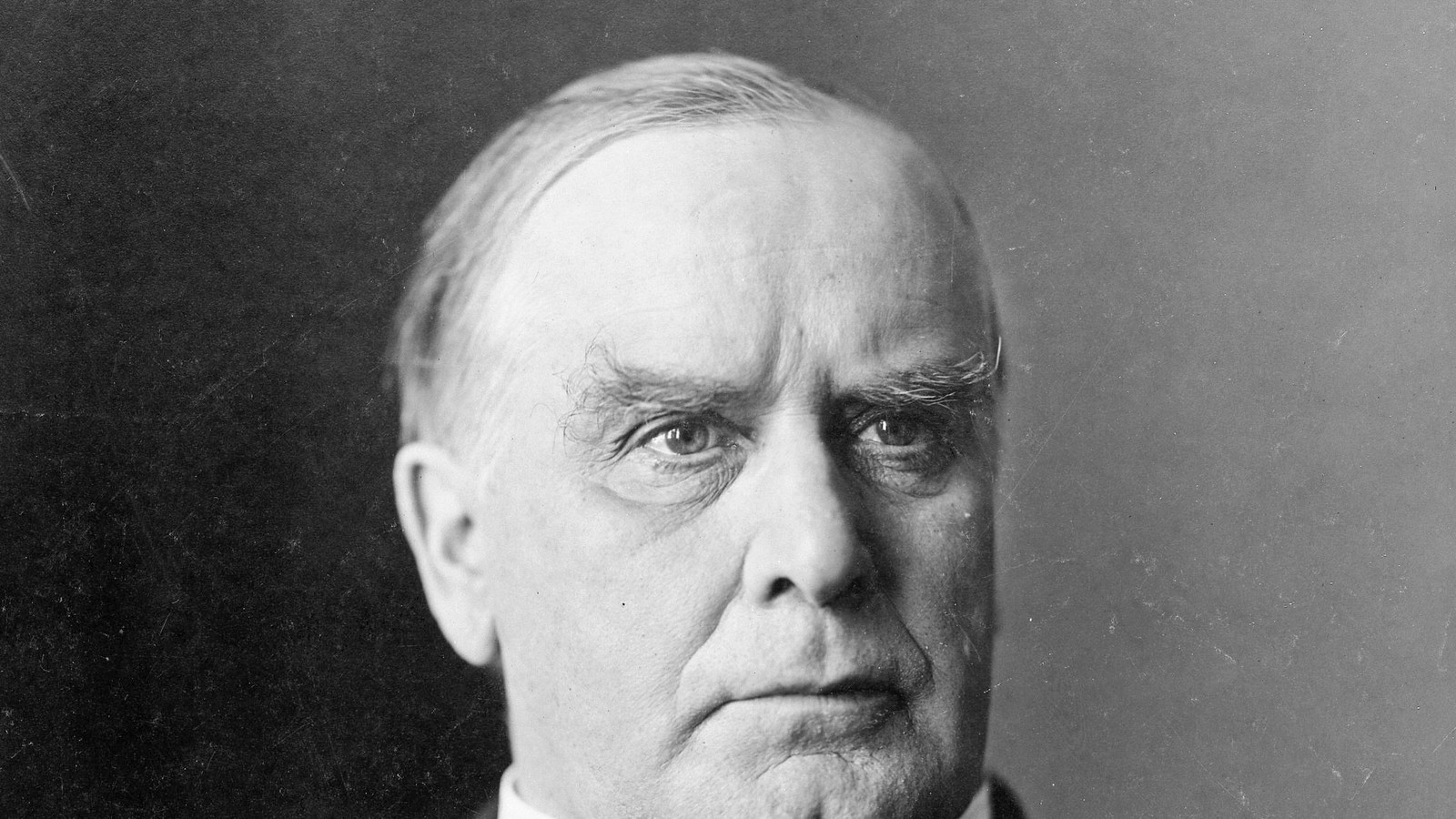
In the early hours of 14 September 1901, William McKinley, the 25th president of the United States, died in Buffalo, New York. Eight days earlier he had been shot while attending the Pan-American Exposition. For a time, doctors and the American public hoped the president would survive. His condition then deteriorated rapidly. McKinley died on 14 September 1901. Today marks exactly 125 years since his death.
Who was William McKinley
William McKinley was born on 29 January 1843, in Niles, Ohio. He served in the American Civil War in the Union army. The National Park Service describes him as the fifth and last Civil War veteran to occupy the presidency. He enlisted as a private in the 23rd Ohio Infantry in June 1861 and ended the war as a brevet major.
From soldier to politician
After the war McKinley became a lawyer and settled in Canton, Ohio. He later entered politics. He was elected to the House of Representatives, served two terms as governor of Ohio between 1891 and 1895, and won the presidential election of 1896. He took office in March 1897.
The 25th president
McKinley became the 25th president of the United States. His administration coincided with a major transformation. During his presidency came the Spanish–American War, the annexation of Hawaii, the expansion of American influence in the Pacific and the Caribbean, and the Philippine–American War. This was not simply an age of “liberation”: American expansion in the McKinley years also included colonial imperialism, with lasting consequences for territories taken from Spanish control.
The Spanish–American War
In 1898 the United States went to war with Spain. The conflict lasted only a few months, but its geopolitical consequences were enormous. After Spain’s defeat, the United States gained control of territories including Puerto Rico, Guam and the Philippines. The NPS notes that the United States thereby acquired its first overseas colonies. In the Philippines, American occupation was followed by the Philippine–American War, a bloody conflict against the independence movement. Expansion in the McKinley period remains controversial for precisely this reason: victory over Spain also opened a colonial policy, not merely a diplomatic rearrangement.
The 1900 election
McKinley ran for a second term in 1900. His vice-presidential running mate was Theodore Roosevelt, who had become a national figure after the Spanish–American War and later served as governor of New York. McKinley and Roosevelt won. The second term began in March 1901. It would last only a few months.
The Pan-American Exposition
In September 1901 McKinley was in Buffalo, New York, for the Pan-American Exposition, one of the great international events of the period. On 5 September he delivered a speech there on trade and international relations. The next day he was scheduled to meet the public.
6 September 1901
On 6 September 1901 McKinley was attending a public reception in the Temple of Music, on the exposition grounds. People filed past the president and shook his hand. Among them was Leon Czolgosz, an American with anarchist convictions. He carried a concealed revolver. When he approached the president, he shot him twice. The Library of Congress confirms the date, the place — the Pan-American Exposition in Buffalo — and the attacker’s identity. Czolgosz was arrested at once.
Two bullets
One projectile caused a relatively superficial wound. The other entered the president’s abdomen. McKinley was taken quickly for medical treatment. Doctors operated; the abdominal bullet was not found. The wound was treated and, for a time, McKinley appeared to be recovering. The Library of Congress notes that doctors initially believed the president would survive. The William McKinley Papers collection preserves, among other items, medical reports from the period between the shooting and his death.
An irony of the technological age
The Pan-American Exposition also celebrated electricity, technology and industrial progress. X-ray technology already existed. The National Library of Medicine records that an aide asked Thomas Edison to send an X-ray machine to Buffalo to locate the bullet; the apparatus arrived but was not used. This secondary episode is not an explanation of the death: at the time, doctors considered that the president was moving towards recovery.
Then his condition changed
Around 13 September McKinley’s condition deteriorated severely. Complications associated with the wounds set in. The National Park Service, at Theodore Roosevelt Inaugural National Historic Site, records that death was attributed to “gangrene of both walls of the stomach and pancreas” — the wording of the period’s death records, not a diagnosis recast in modern medical terms. The Erie County coroner’s certificate gives the same cause and the time: about 2:15 a.m.
14 September 1901
William McKinley died on 14 September 1901, at the home of John G. Milburn in Buffalo. He was 58. He did not die on the day of the attack and he did not die immediately: eight days passed between the shooting and his death.
Theodore Roosevelt and the race to Buffalo
The president’s death meant that Vice President Theodore Roosevelt had to assume the office at once. Roosevelt was in the Adirondacks when McKinley’s condition became critical. He began the journey to Buffalo. He learned officially that McKinley had died before he reached the city. The National Park Service places his arrival in Buffalo at 1:30 p.m. on 14 September. He was met by Ansley Wilcox and taken to Wilcox’s house. After a visit to the McKinley family, he returned for the ceremony.
The oath of office
The ceremony did not take place at the Capitol, at the White House or in a government building. Theodore Roosevelt took the oath in a private home: Ansley Wilcox’s house in Buffalo, in the library. The National Park Service places the ceremony at approximately 3:30 p.m. on 14 September 1901. The oath was administered by federal judge John R. Hazel. Roosevelt thereby became the 26th president of the United States. He was not elected president in 1901: he reached the office by constitutional succession.
The youngest president — not the youngest elected
Roosevelt was 42. He became the youngest person ever to hold the office of president of the United States. The distinction matters: John F. Kennedy would become the youngest person elected president. Roosevelt became president by succession, not by popular election to the highest office at that moment.
The third assassination of a president
McKinley was the third American president to be assassinated. Before him came Abraham Lincoln in 1865 and James A. Garfield in 1881. Later, John F. Kennedy in 1963 would become the fourth.
What happened to Czolgosz
Leon Czolgosz was arrested immediately after the attack. The Library of Congress records that his trial began on 23 September 1901; a few days later he was found guilty and sentenced to death. He was executed on 29 October 1901.
Protecting the president
McKinley’s assassination also had consequences for how the United States protected the president. The United States Secret Service was not created after the attack. The agency had existed since 5 July 1865, as a Treasury division, with the principal mission of suppressing counterfeit currency. The Secret Service’s official timeline shows that, after McKinley’s assassination, Congress requested protection of US presidents; in 1902 the agency assumed full-time responsibility for presidential protection, with two agents assigned permanently to the White House Detail. Protection thus became a central mission, not the origin of the institution.
A presidency between two eras
McKinley’s legacy is complex. His administration is associated with economic growth, commercial protectionism, the Gold Standard Act, victory in the Spanish–American War and the territorial expansion of the United States. It is also associated with American imperialism, the Philippine–American War and the transformation of the United States into a colonial and global power. It is neither an exclusively domestic success story nor merely an indictment: it is the moment when the United States left a continental logic and began to administer territories overseas.
The change produced by his death
McKinley’s assassination did not mean only the death of a president. It changed the direction of American leadership. Theodore Roosevelt would transform the presidential office and become one of the dominant figures of the early twentieth century. His administration would be associated with Progressive Era reforms, the regulation of large corporations, consumer protection, conservation of nature and the expansion of the United States’ international role.
125 years later
Today, 14 September 2026, exactly 125 years have passed since the death of William McKinley. In only eight days a president had been shot, had appeared to recover, his condition had worsened, he had died, and the United States had a new president. At 2:15 on the morning of 14 September 1901, William McKinley’s presidency ended. A few hours later, in a library in a house in Buffalo, Theodore Roosevelt’s presidency began.
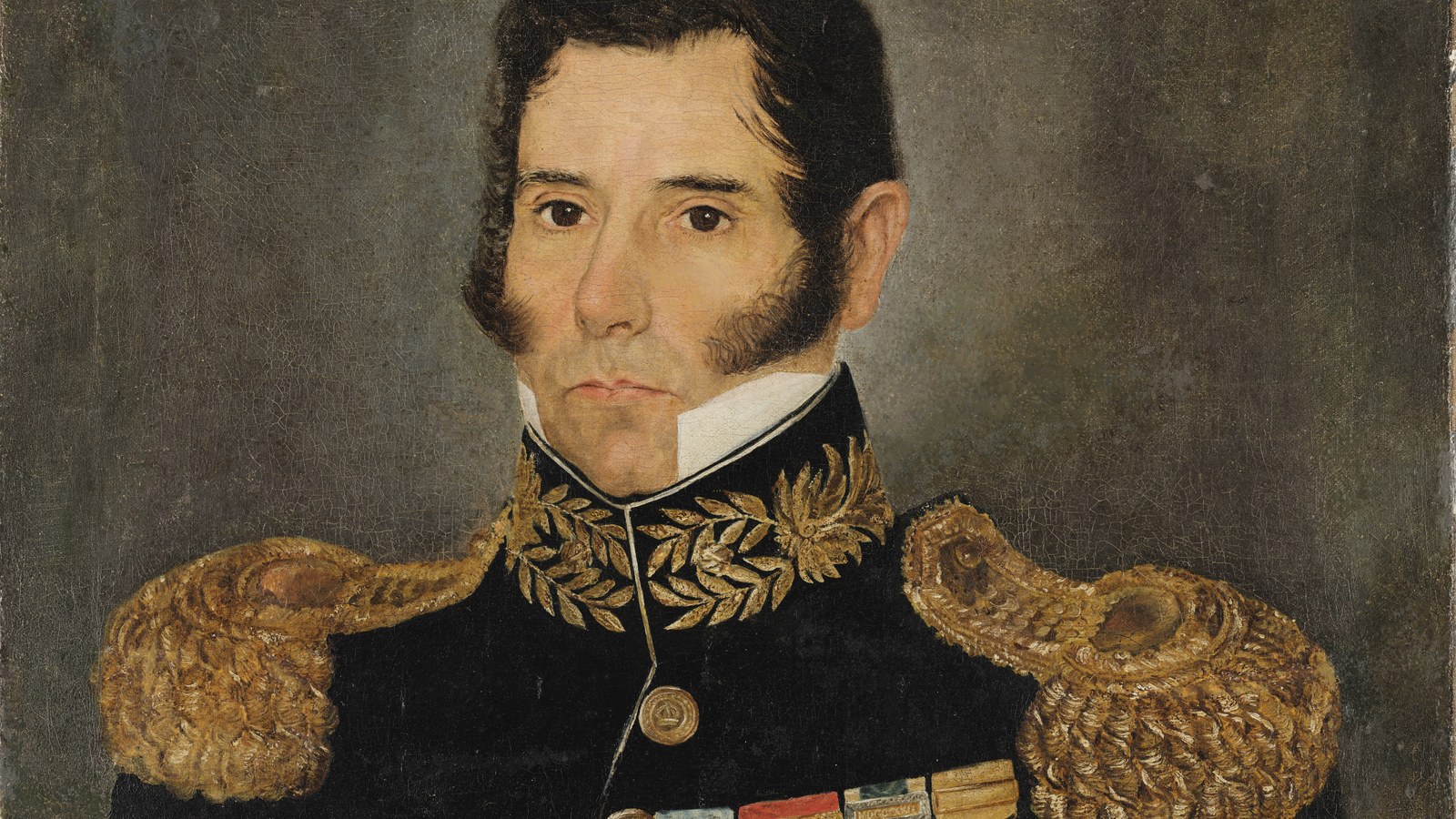
Image: portrait of William McKinley, circa 1900. Library of Congress, Prints and Photographs Division; no known restrictions on publication. This is not a photograph of the Buffalo shooting. The portrait was cropped to 16:9.
Sources consulted: William McKinley Assassination: Topics in Chronicling America (Library of Congress); William McKinley (National Park Service); September 14, 1901 (Theodore Roosevelt Inaugural National Historic Site); William McKinley Papers (Library of Congress); Timeline of Our History (United States Secret Service); Could X-rays Have Saved President William McKinley? (National Library of Medicine).


0 Comments
No comments on this article yet. Be the first!