
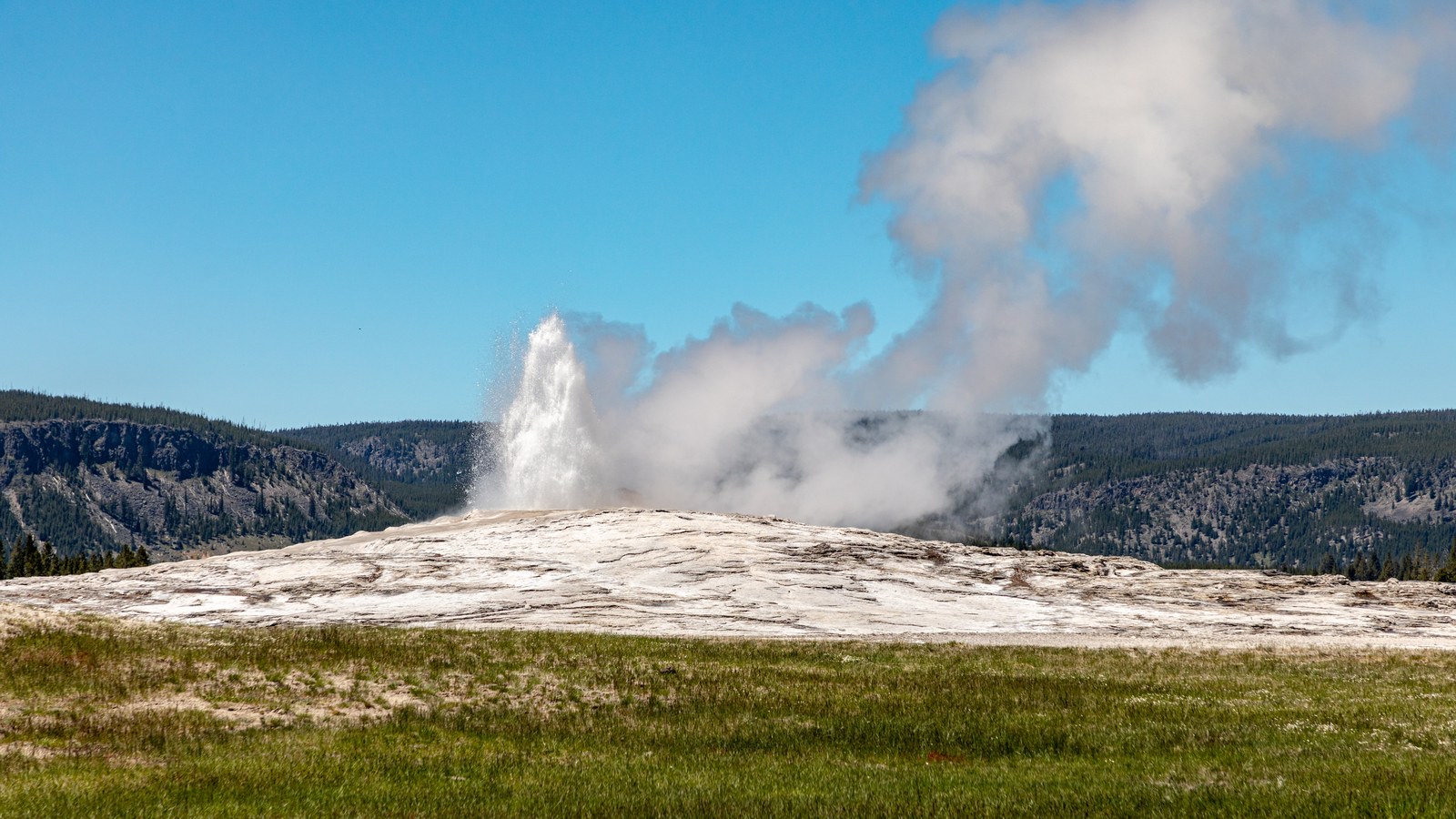
18 September 2026 marks 156 years since members of the Washburn–Langford–Doane expedition named Old Faithful, the geyser in what is now Yellowstone National Park. Nathaniel Pitt Langford’s account ties the date to the sight of a jet returning often enough to seem “faithful”.
The 1870 expedition documented canyons, lakes and hydrothermal fields still little known to the wider American public. Old Faithful is not Yellowstone’s largest geyser and does not erupt on a fixed timetable. The National Park Service notes that the average interval has lengthened over time; predictions rest on the duration and character of the previous eruption, not on an unchanging clock.
An eruption typically lasts between one and a half and five minutes and sends hot water and steam tens of metres into the air. The system is fed by rain and snowmelt, heated by rocks associated with the Yellowstone volcano, then forced through a network of fractures to the surface.
Yellowstone became the first US national park in 1872. The geyser’s fame grew with tourism, but the crust in thermal basins can be thin. The park tells visitors to stay on boardwalks: water below can cause severe burns, and objects thrown into vents have occasionally been ejected by eruptions.
The Upper Geyser Basin holds a rare concentration of geysers. Only a few, including Old Faithful, Castle, Grand, Daisy and Riverside, are regularly predicted by park staff. The rest remain unpredictable.
The naming anniversary recalls the 1870 exploration and, at the same time, an active geothermal system. Old Faithful’s relative regularity helps observers; it is not an invitation to leave designated paths.
Image: Dietmar Rabich, Old Faithful, Yellowstone, 2022. Wikimedia Commons, CC BY-SA 4.0. Cropped to 16:9. Licence. Original file.
Sources consulted: National Park Service — Old Faithful Geyser; National Park Service — Explore Old Faithful.







0 Comments
No comments on this article yet. Be the first!