
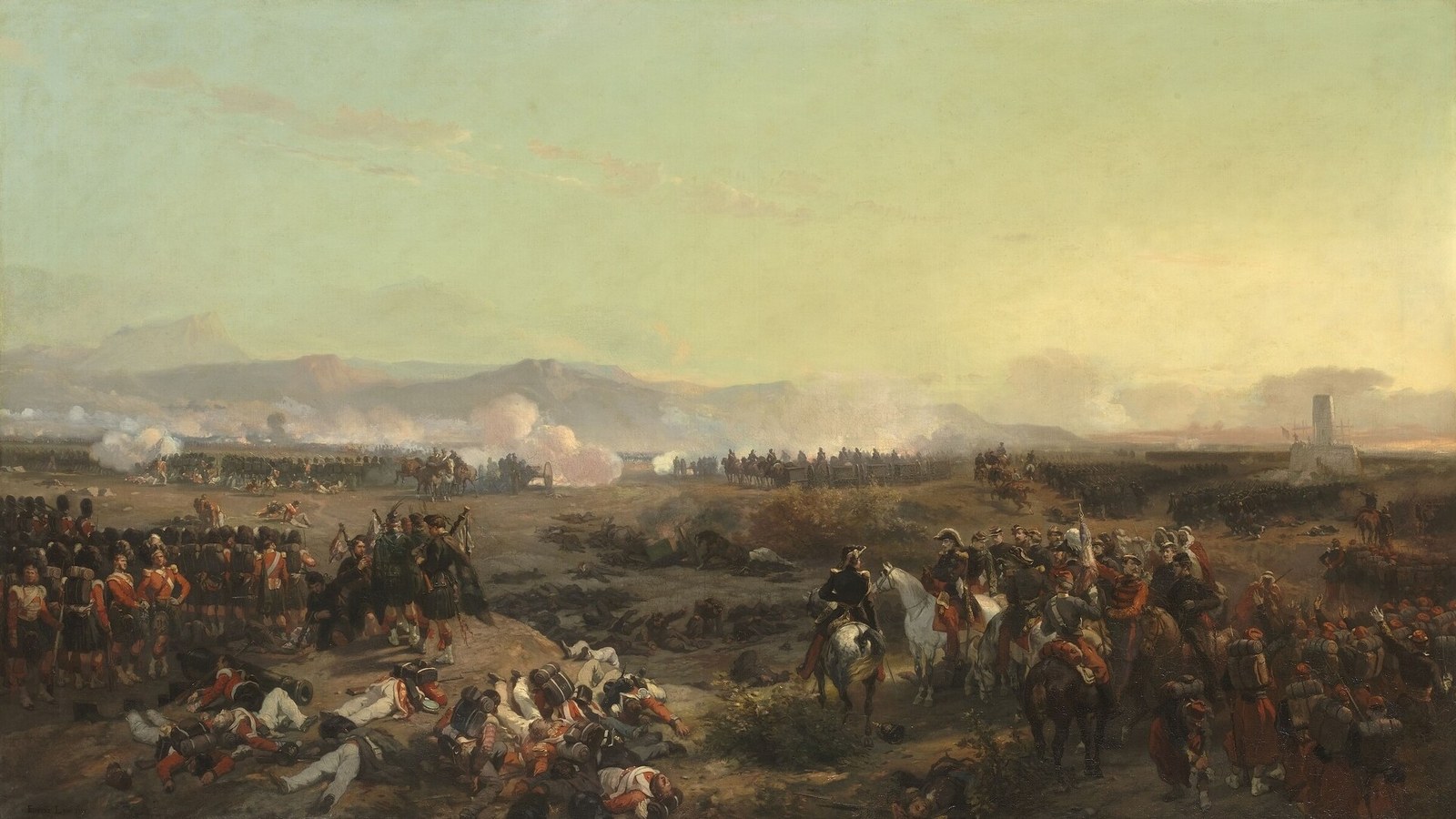
On 20 September 1854, on the heights south of the River Alma, British, French and Ottoman armies drove back Russian forces commanded by Prince Alexander Menshikov. It was the first major land battle after the Allied landing in Crimea, not the siege of Sevastopol, which came later.
The war pitted the Russian Empire against a coalition formed mainly by the Ottoman Empire, France and Britain; Sardinia joined later. The target was the naval base at Sevastopol. Menshikov held the last natural barrier before the city: the high ground of the Alma.
The Allies crossed the river and climbed the slope under fire. Command was confused and the units did not attack at the same moment. The Russian line nevertheless gave way. Pursuit was not decisive: the Russians had time to strengthen Sevastopol.
Losses were heavy on both sides. British museums give differing estimates — thousands killed and wounded, not a single inventory. Figures from period chronicles are not presented here as certain.
The battle showed the courage of the troops and the gaps in command, transport and medical care that would mark the campaign. Alma remained a name for streets and monuments, not a lesson in glory without cost.
The National Army Museum describes the attack of 20 September and the Russian withdrawal. Encyclopaedia Britannica places the clash in the war’s first year. This account does not turn victory into a celebration of suffering.
The 172nd anniversary is military history. Crimea, the river, Menshikov, Raglan and Saint-Arnaud are enough names. The rest — exact strengths — remains an estimate.
Image: Eugène Lami, “La bataille de l'Alma, le 20 septembre 1854”, public domain, Wikimedia Commons.
Source consulted: The Crimean War — National Army Museum.



0 Comments
No comments on this article yet. Be the first!