
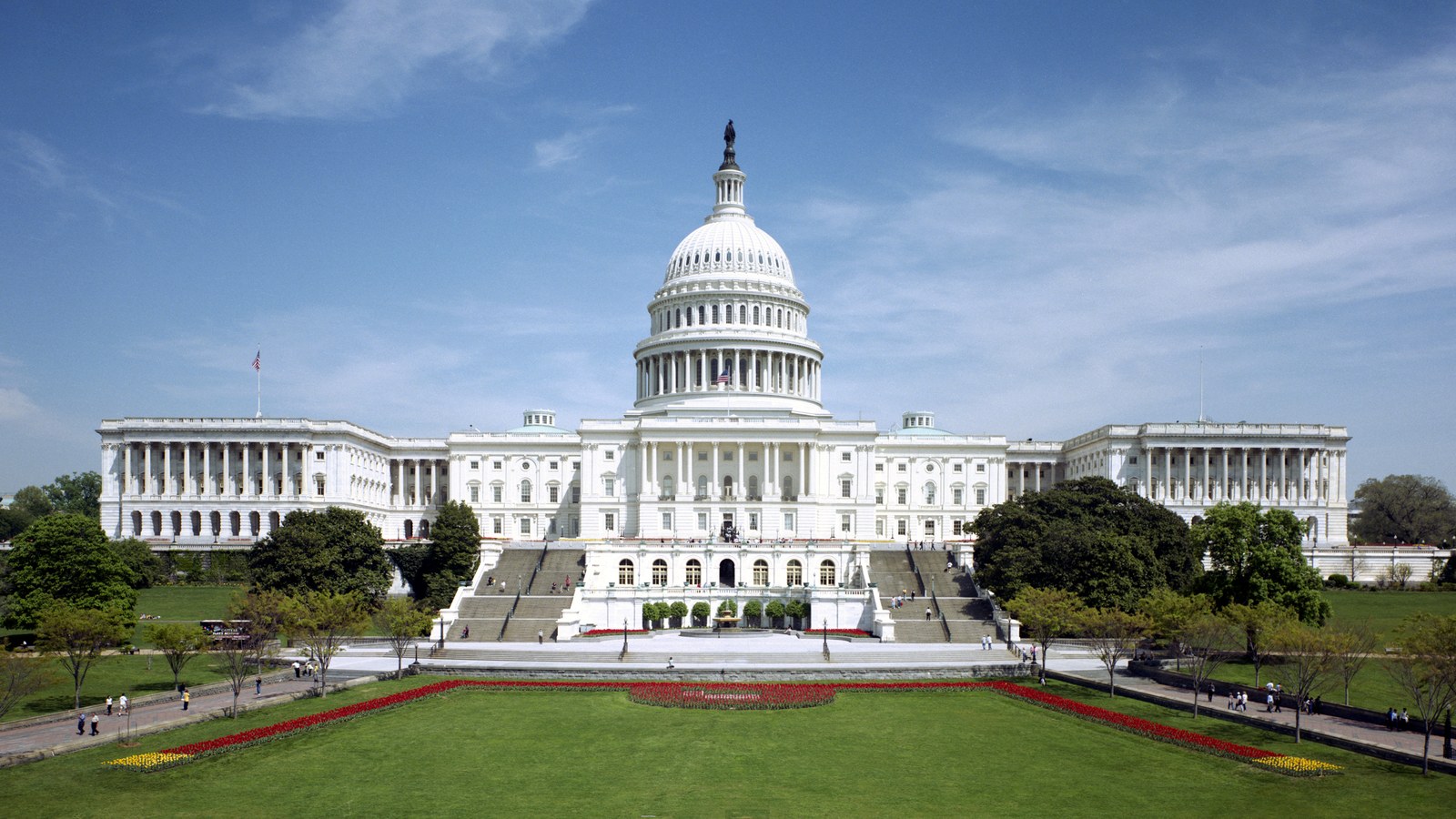
18 September 2026 marks 233 years since the cornerstone ceremony for the United States Capitol, the building intended as the home of Congress. The 1793 event took place on Capitol Hill in a federal city that was then only beginning to take shape.
President George Washington took part alongside Masonic delegations and residents of the new capital. Contemporary accounts describe a procession from the White House construction site to Capitol Hill, followed by rituals typical of the period and a public celebration.
The building’s design had been chosen through a competition. Physician and architect William Thornton submitted the accepted plan, which Washington praised for its simplicity and scale. Early construction was directed in turn by Stephen Hallet, George Hadfield and James Hoban.
Washington placed an engraved silver plate beneath the stone. The precise location of the original cornerstone is still uncertain: it is not known whether it was laid at the southeast corner of the Senate wing, the first part completed, or at the southeast corner of the whole building, on the House side. Metal detectors have not found the silver plate.
The Senate wing was finished first, and Congress moved to Washington in 1800, shortly after Washington’s death. British troops burned the building in 1814. Reconstruction, the nineteenth-century wings and the present cast-iron dome gradually changed the Capitol’s form.
Today the building is both a working legislature and an architectural symbol. 18 September 1793 remains the ceremonial beginning of construction, not the date of a finished Capitol and not proof of a stone whose position has been established beyond doubt.
Image: Architect of the Capitol, west front of the Capitol. Wikimedia Commons, U.S. government public domain. Not a photograph of the 1793 ceremony. Cropped to 16:9. Original file.
Sources consulted: U.S. Senate — George Washington Lays the Cornerstone of the Capitol; Architect of the Capitol — First Cornerstone.




0 Comments
No comments on this article yet. Be the first!