
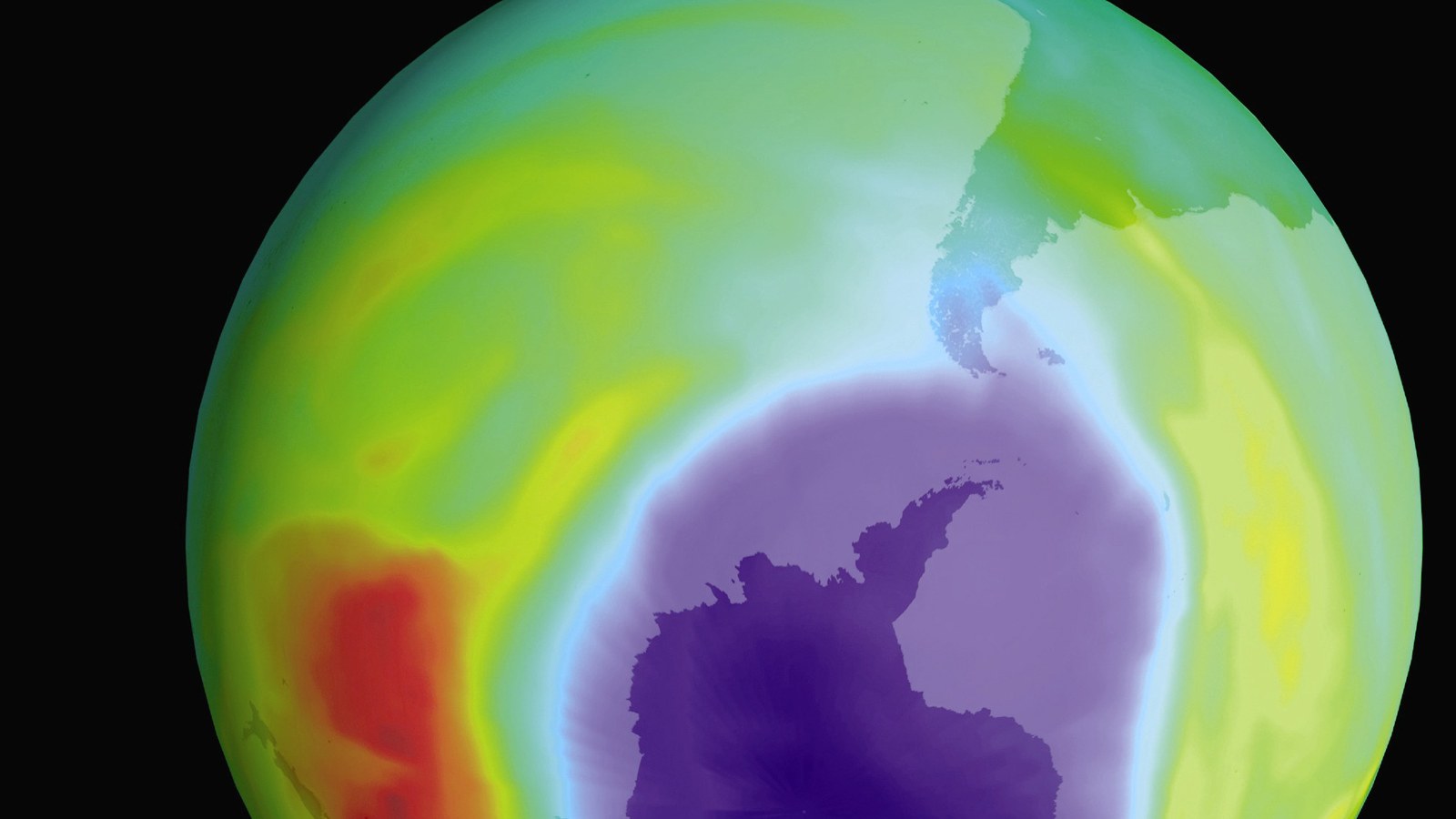
On 16 September 1987, governments meeting in Montreal adopted the Montreal Protocol on Substances that Deplete the Ozone Layer. Today, 16 September 2026, marks 39 years since its adoption, while the same date is observed by the United Nations as the International Day for the Preservation of the Ozone Layer.
The official 2026 theme is “Global action for a cooler planet”. This year also marks ten years since the adoption of the Kigali Amendment, which expanded the Protocol’s impact by phasing down hydrofluorocarbons, powerful greenhouse gases.
The story of the Montreal Protocol begins with a problem invisible to the naked eye. The ozone layer in the stratosphere absorbs a significant share of harmful ultraviolet radiation from the Sun. During the second half of the twentieth century, scientists found that certain human-made chemicals, particularly chlorofluorocarbons or CFCs, could reach the stratosphere and contribute to ozone destruction.
CFCs had been widely used in refrigeration, air conditioning, aerosols, foams and other applications. Their stability, which made them industrially useful, also allowed some of the molecules to survive long enough to reach the upper atmosphere.
In the stratosphere, ultraviolet radiation can break the molecules apart and release chlorine atoms. Those atoms take part in catalytic reactions that destroy ozone molecules.
During the 1980s, observations of severe ozone loss above Antarctica transformed the issue into an international scientific and political emergency. The phrase “ozone hole” entered public vocabulary.
The Vienna Convention for the Protection of the Ozone Layer had been adopted in 1985, creating a framework for international cooperation. The Montreal Protocol of 1987 added concrete controls on the production and consumption of ozone-depleting substances.
The Protocol was adopted in Montreal on 16 September 1987 and entered into force on 1 January 1989. The United Nations treaty record lists 198 parties, giving it universal participation.
The agreement did not remain static. Governments repeatedly strengthened controls and added substances as scientific knowledge developed. This ability to adjust in response to evidence is one of the defining features of the ozone-protection regime.
The result is widely regarded as one of the major successes of international environmental cooperation. Production and consumption of many ozone-depleting substances have been eliminated or drastically reduced.
Recovery of the ozone layer is nevertheless slow. Many historical chemicals remain in the atmosphere for decades, meaning that the effects of policies adopted years ago are still unfolding.
The Protocol also has a climate dimension. Some ozone-depleting substances are powerful greenhouse gases. Eliminating them avoided a substantial amount of additional warming.
In 2016, governments adopted the Kigali Amendment. It targets a phasedown of hydrofluorocarbons, or HFCs. HFCs do not damage the ozone layer in the same way as CFCs, but many have very high global-warming potential.
The year 2026 marks the tenth anniversary of Kigali. That is why this year’s UN theme, “Global action for a cooler planet”, focuses on the relationship between society’s growing need for cooling, energy efficiency and greenhouse-gas reductions.
The United Nations says full implementation of the Kigali Amendment alone could avoid up to about 0.5°C of global warming by the end of the century. Benefits can be larger when the transition to lower-impact refrigerants is combined with more energy-efficient cooling equipment.
This is increasingly important in a world where rising temperatures are driving demand for air conditioning and refrigeration. Cooling is essential for health, food, medicines and economic activity, but the way it is provided can affect the climate.
The Montreal Protocol also demonstrates the importance of finance and technology transfer. Developing countries received differentiated timetables and support to move towards alternative technologies.
The date of 16 September became the International Day for the Preservation of the Ozone Layer specifically to commemorate the adoption of the Protocol.
It would be wrong to say the ozone problem has been completely “solved”. Recovery is still under way and monitoring remains essential. Unexpected or illegal emissions, atmospheric changes and interactions with climate continue to be studied.
Thirty-nine years after adoption, the Montreal Protocol remains a rare example of a global problem in which scientific warning, political agreement, financing and technological change were connected through a durable international system.
In 1987, the central objective was to protect ozone. In 2026, the same system is also contributing to a broader challenge: reducing the climate impact of a world that needs more cooling.
The anniversary therefore carries a double message: the ozone layer shows that environmental damage can be slowed and reversed through coordinated action, but success depends on sustained implementation and adaptation over the long term.
Image: NASA / Goddard Space Flight Center, GPN-2002-000117, public domain. Image of the Antarctic ozone hole, not a photograph of the 1987 Montreal conference. Cropped to 16:9.
Source consulted: International Day for the Preservation of the Ozone Layer | United Nations; The Montreal Protocol | UNEP Ozone Secretariat.





0 Comments
No comments on this article yet. Be the first!