
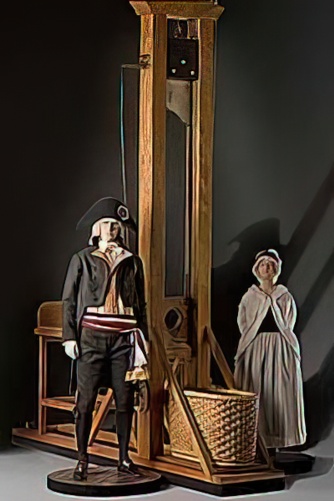
September 10, 2026 marks 49 years since the last execution carried out by guillotine in France and, at the same time, the country's final use of capital punishment. On the morning of September 10, 1977, Hamida Djandoubi, a 28-year-old Tunisian man, was executed at Baumettes Prison in Marseille.
His death would become a landmark moment in the history of French justice. Nobody could know with certainty at the time that the execution would be the last, but France would execute no other prisoner before abolishing the death penalty four years later. Djandoubi had been sentenced to death for the kidnapping, torture and murder of 21-year-old Élisabeth Bousquet. His trial took place in 1977, and the death sentence was handed down in February. After his appeals and request for clemency were rejected, his execution was scheduled for September.
In the early hours of September 10, Djandoubi was guillotined inside Baumettes Prison. The execution brought to an end, although this was not officially known at the time, a tradition spanning almost two centuries and strongly associated with French history. The guillotine had become one of the best-known symbols of the French Revolution.
The device was adopted in the late eighteenth century as a standardised method of execution by decapitation. Its name became associated with French physician and politician Joseph-Ignace Guillotin, who had advocated an identical method of execution for condemned people regardless of their social status. Guillotin did not actually invent the device, and similar mechanisms had previously existed elsewhere in Europe. Nevertheless, his name became permanently associated with it. The first execution in France using the new device took place in April 1792.
During the French Revolution, particularly during the period known as the Reign of Terror, the guillotine became a symbol of public executions. Its famous victims included King Louis XVI and Queen Marie Antoinette. The instrument continued to be used long after the Revolution ended. France used the guillotine for civilian executions for almost two centuries. Executions were public for much of that period until the practice was ended in 1939. Death sentences were subsequently carried out inside prisons.
By the 1970s, capital punishment had become an increasingly controversial subject in French society. Death penalty cases fuelled intense debate between supporters of capital punishment and those who argued that the state should not have the power to take a person's life, regardless of the severity of the crime committed. One of the most prominent opponents of the death penalty was lawyer Robert Badinter.
Following the election of François Mitterrand as President of France in 1981, Badinter became Minister of Justice and argued before Parliament for the permanent abolition of capital punishment. In September 1981, the French National Assembly voted in favour of abolition. The law was promulgated on October 9, 1981.
As a result, the execution of Hamida Djandoubi on September 10, 1977 remained the final judicial execution in modern French history. It also carried a broader historical significance: Djandoubi is regarded as the last person to have been executed by guillotine by a state. Forty-nine years after that moment, the guillotine belongs to museums and history, while France is among the countries advocating the universal abolition of the death penalty.
September 10, 1977 therefore marks not only the final use of one of history's most recognisable instruments of execution, but also the approaching end of capital punishment in a country where the guillotine had, for generations, become a symbol recognised around the world.
Source consulted: Hamida Djandoubi | Wikipedia






0 Comments
No comments on this article yet. Be the first!