
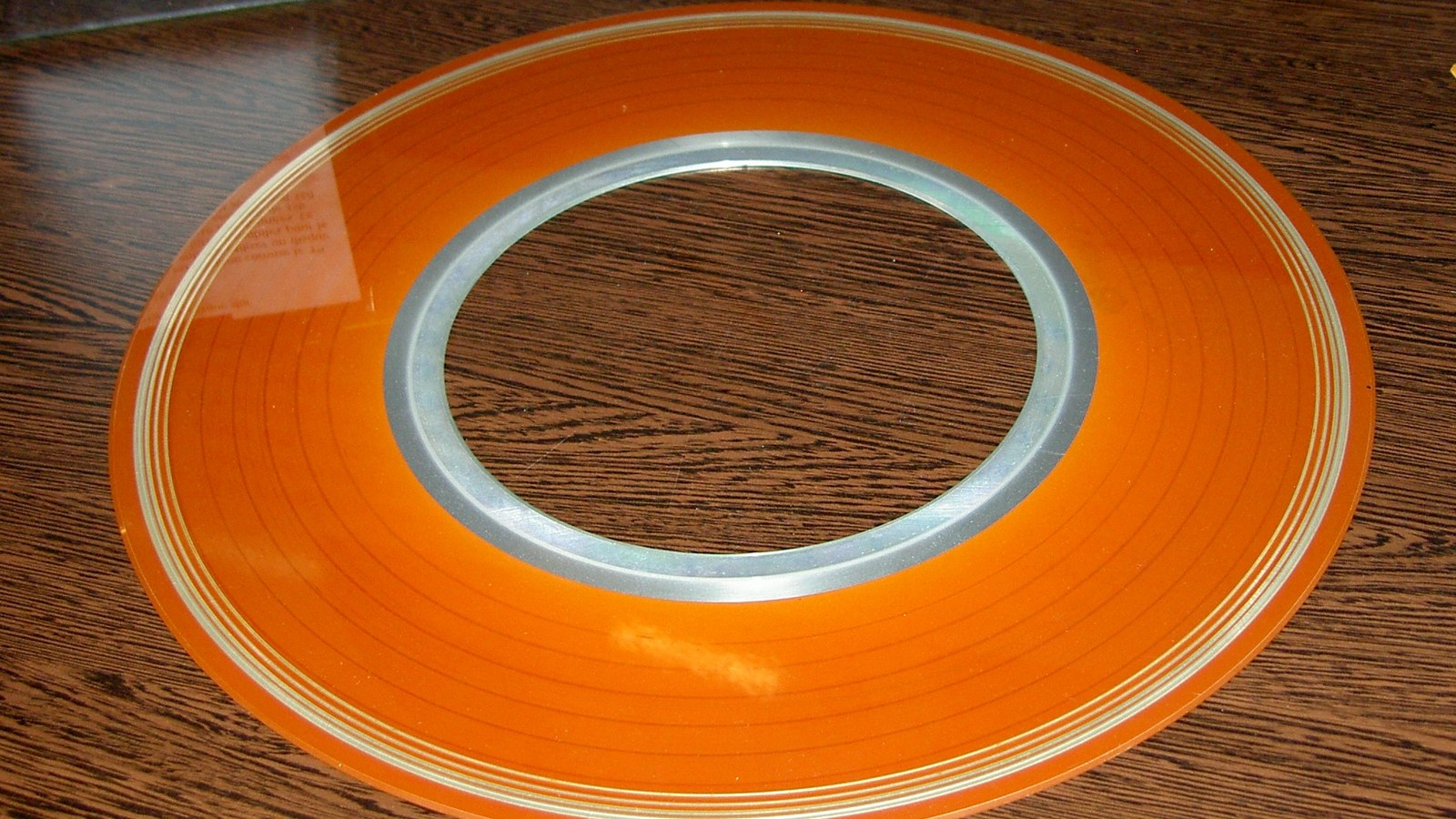
A telephone today can hold hundreds of gigabytes of photographs, video, documents and apps. Seventy years ago, storing a few million characters required an enormous machine with dozens of metal disks. On 14 September 1956 IBM announced RAMAC systems built around a technology that would change how computers store and find information. The IBM 305 RAMAC became the first computer to use a random-access magnetic disk storage unit. At its heart was the IBM 350 Disk Storage Unit, recognised as the first commercial hard disk drive.
What RAMAC meant
RAMAC stood for Random Access Method of Accounting and Control. The idea was radical for its time: the computer could go straight to the record it needed. Until then much information lived on punched cards, paper tape or magnetic tape — systems that were largely sequential. To find a particular set of data on tape, the machine had to run through the records until it reached the right place. Magnetic disk made a far more direct search possible. Hence random access.
Fifty disks and a few million characters
According to the Computer History Museum, the IBM 350 used 50 metal disks, each about 24 inches in diameter — roughly 61 centimetres. The magnetically coated disks were mounted vertically and spun at about 1,200 revolutions per minute. A mechanism moved the read/write heads to the surface that held the data. The museum cites an average access time of under a second. That sounds slow today; in 1956 it was a spectacular change. IBM writes that, before RAMAC, finding and processing records could take hours or even days; RAMAC could access and alter data in seconds.
Capacity needs a careful wording. IBM describes the storage as about five million characters and, in recent material, often presents it in a simplified comparison as about 5 MB. The Computer History Museum explains that those five million 6-bit characters correspond to about 3.75 MB when converted strictly into modern bytes. The unit therefore stored five million characters — about 3.75 MB in binary equivalent, though IBM now describes it, in a simplified comparison, as about 5 MB.
The assembly was huge. The museum gives the storage system as about 5 feet high and 6 feet wide — roughly 1.5 by 1.8 metres — and a weight of more than a ton, including the separate compressor required to run it. A 1 TB memory card holds nearly 280,000 times as much data as the IBM 350’s 3.75 MB equivalent (1 tebibyte versus 3.75 mebibytes). Today’s SSDs use flash memory, with no spinning disks, but the problem remains the same: how to keep a great deal of information and find quickly the data you need. Hard disk drives have not vanished: they remain widely used where capacity, cost per terabyte and bulk storage matter.
The 14 September announcement is not the first shipment
Today’s anniversary marks 70 years since IBM announced the RAMAC systems, not 70 years since a hard disk was first used. The Computer History Museum records that the first commercial IBM 350 hard disk had already been shipped in June 1956 to Zellerbach Paper in San Francisco, as part of an IBM 305 RAMAC system. 14 September 1956 is tied to IBM’s commercial announcements of the RAMAC family, including the IBM 650 RAMAC. American newspapers reported the announcement the same day.
A business problem, a team in San Jose
The story begins a few years earlier. In 1952 IBM sent a group of engineers to a new laboratory in San Jose, California, led by Reynold B. Johnson. The company describes the area then as still dominated by orchards; the phrase Silicon Valley had not yet been coined. The problem sounded mundane: how could large volumes of information be stored and found quickly, when computers depended on punched cards and magnetic tape? The team tried rods, tapes and plates, then settled on rotating magnetic disks.
IBM describes Johnson as the “father of the hard disk drive system” because he led the team that developed RAMAC. The project was not the invention of one person. Louis D. Stevens Jr. became manager of the project; among those who worked with him were William Goddard and John Lynott, who later appear together on a patent for the data storage machine. Laboratory photographs also show R. Manning Hermes, Arthur J. Critchlow and John W. Haanstra.
From bookkeeping to digital infrastructure
RAMAC was conceived chiefly for business information. The principle of disk storage nonetheless allowed computers to keep ever larger quantities of data and reach them directly. In later decades hard disks became fundamental parts of personal computers, servers, data centres, banking systems and databases. IBM says, as its own historical assessment, that RAMAC technology helped lay foundations for fields that would later include ATMs, databases, search engines and e-commerce. That is not a claim that RAMAC “invented the internet” or created today’s search engines.
The Computer History Museum in Mountain View, California, keeps a restored RAMAC assembly and holds public demonstrations of the mechanism. The institution describes it as the world’s only live demonstration of a RAMAC hard disk. RAMAC looks almost absurdly large today for the amount of information it could hold. The comparison risks hiding its real importance: before RAMAC the problem was not only how much information would fit, but how quickly it could be found. By introducing random access on magnetic disk, IBM’s engineers changed the relationship between the computer and its data. And it began with a machine that filled a good part of a room and could store only a few million characters.
Source consulted: RAMAC (IBM History). Team: Reynold B. Johnson (IBM History); Louis D. Stevens Jr. (IBM History). Specifications and shipment: 1956: First commercial hard disk drive shipped (Computer History Museum).








0 Comments
No comments on this article yet. Be the first!