
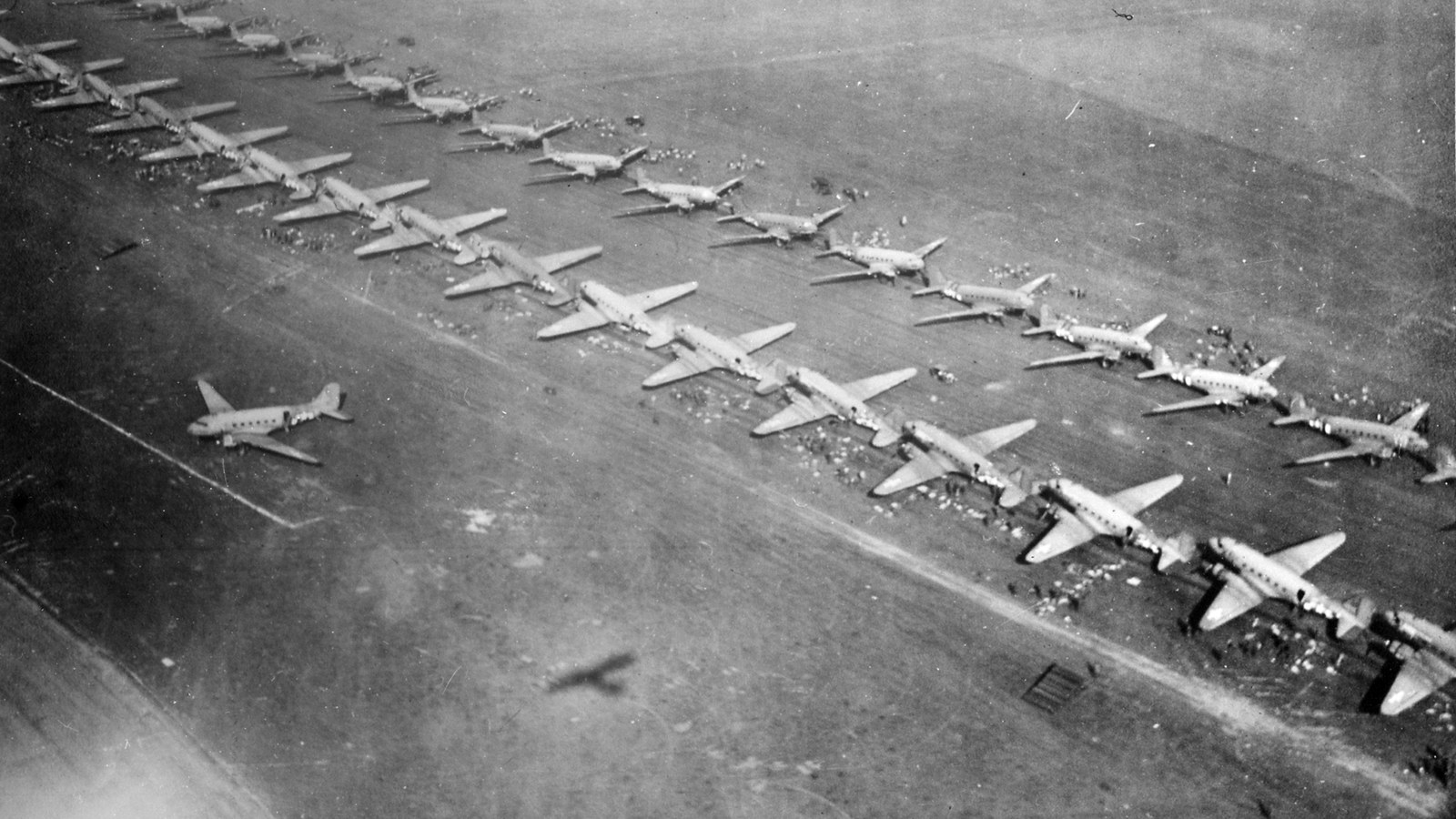
17 September 2026 marks 82 years since Operation Market Garden began, one of the most ambitious Allied operations of the final phase of the Second World War in Europe. The offensive was launched in the Netherlands on 17 September 1944.
The plan had two parts. “Market” was the airborne assault. “Garden” was the ground advance. The aim was to seize a chain of bridges and strategic points so Allied troops could move quickly and cross the Rhine, shortening the route into Germany.
British, American and Polish airborne troops were dropped or landed by glider in key areas. Ground forces were expected to advance along a narrow corridor and link up with them. Arnhem became the place most closely associated with the operation. There, British forces met stronger German resistance than planners had anticipated.
Delays, communication and supply problems, and the German response prevented the decisive objective: securing a Rhine crossing at Arnhem. Some bridges and towns were nevertheless taken. Taken as a whole, the operation did not achieve its final goal.
Imperial War Museums collections preserve photographs, objects and testimony from the September 1944 fighting, including the Arnhem area. Memorials in the Netherlands and Britain continue to mark the losses suffered by the airborne units and by the ground forces that tried to reach them.
Eighty-two years later, Market Garden remains a case study in the scale of an air-ground plan and in the difficulty of coordinating, on a narrow axis, troops dropped from the air with a ground column that had to arrive on time. 17 September 1944 marks the start of that offensive, not its outcome.
Photo: National Archives / US Army Air Forces. C-47s over the Netherlands, 17 September 1944. Public domain. Cropped to 16:9.
Source consulted: IWM Collections — Market Garden photograph; IWM War Memorials Register — memorial 46459.





0 Comments
No comments on this article yet. Be the first!