
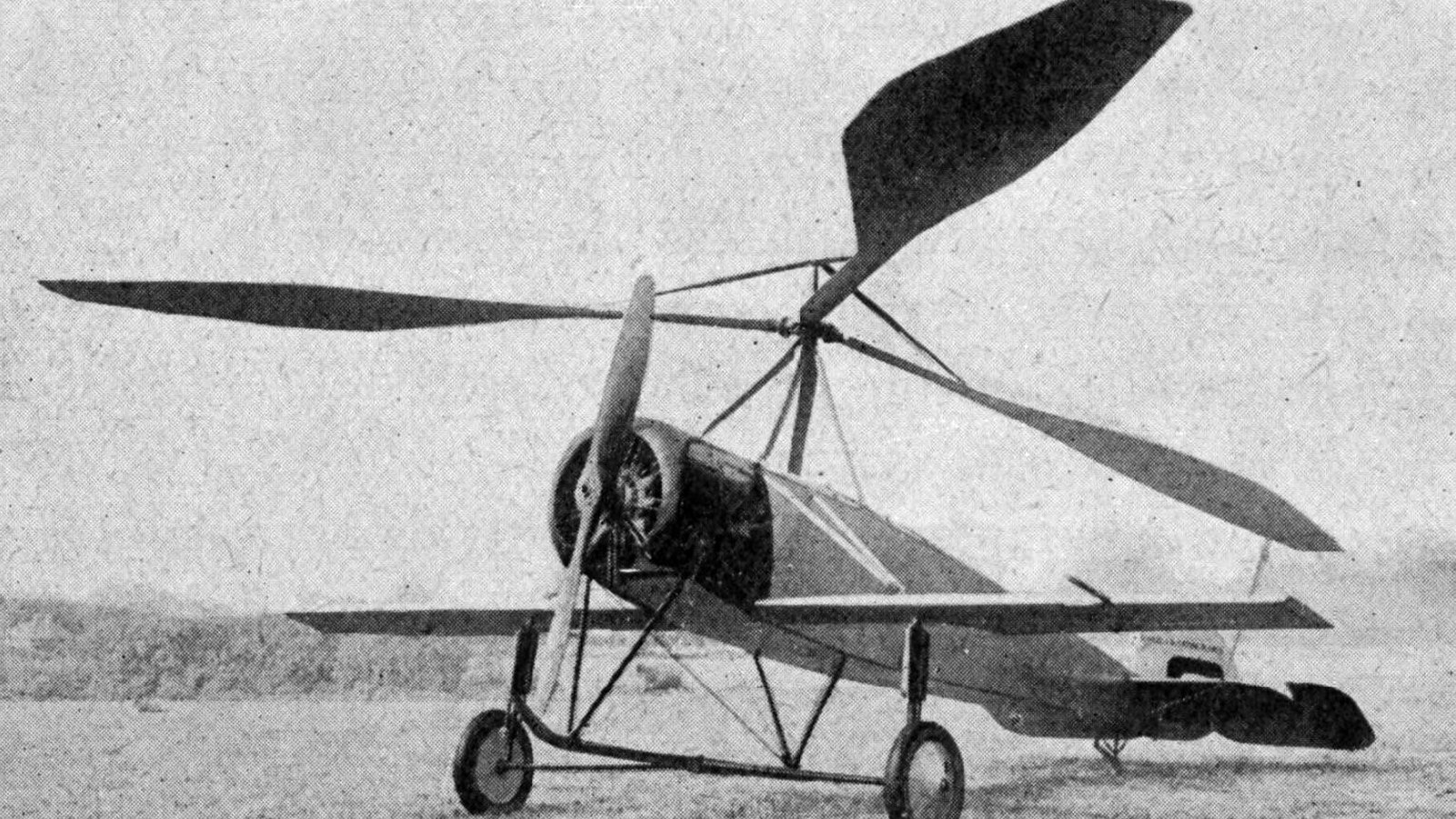
18 September 2026 marks 98 years since the first English Channel crossing by a rotorcraft. The Vertical Flight Society dates the flight to Tuesday 18 September 1928: Juan de la Cierva in a Cierva C.8L Mk II autogyro, with the French journalist Bouché aboard.
An autogyro looks like a helicopter, but the main rotor is not engine-driven in cruising flight. It turns by autorotation in the airflow; a propeller supplies forward thrust. The machine should not be called a helicopter.
De la Cierva, a Spanish engineer, wanted safe flight at low speed after an earlier aeroplane of his stalled. His first controllable autogyro flew in 1923. The 1928 crossing showed that the formula could pass a water barrier, not only a local circuit. The British press had announced a departure from Croydon for Paris.
Autogyros cannot hover like a modern helicopter. They can descend under control in autorotation if the engine stops. Research on articulated rotors later fed the helicopter, without erasing the distinct autogyro class, still used in sport flying and some specialised roles.
The Smithsonian holds Pitcairn-Cierva autogyros that show how quickly the technology crossed the Atlantic under American licences. They are not the C.8L of 18 September, but aircraft of the same line.
This article does not invent a speed record or a minute-by-minute route. It records the date, the C.8L Mk II type and the difference of principle from the helicopter.
Ninety-eight years on, the flight remains a landmark in the rotorcraft family: the first Channel crossing, not “the first helicopter”.
Image: L’Aéronautique, November 1928, Cierva C.6D. Wikimedia Commons, public domain. Not the C.8L of the Channel flight. Cropped to 16:9.
Source consulted: Vertical Flight Society — First Channel crossing by a rotorcraft; Smithsonian National Air and Space Museum — Pitcairn-Cierva Autogiro.







0 Comments
No comments on this article yet. Be the first!