
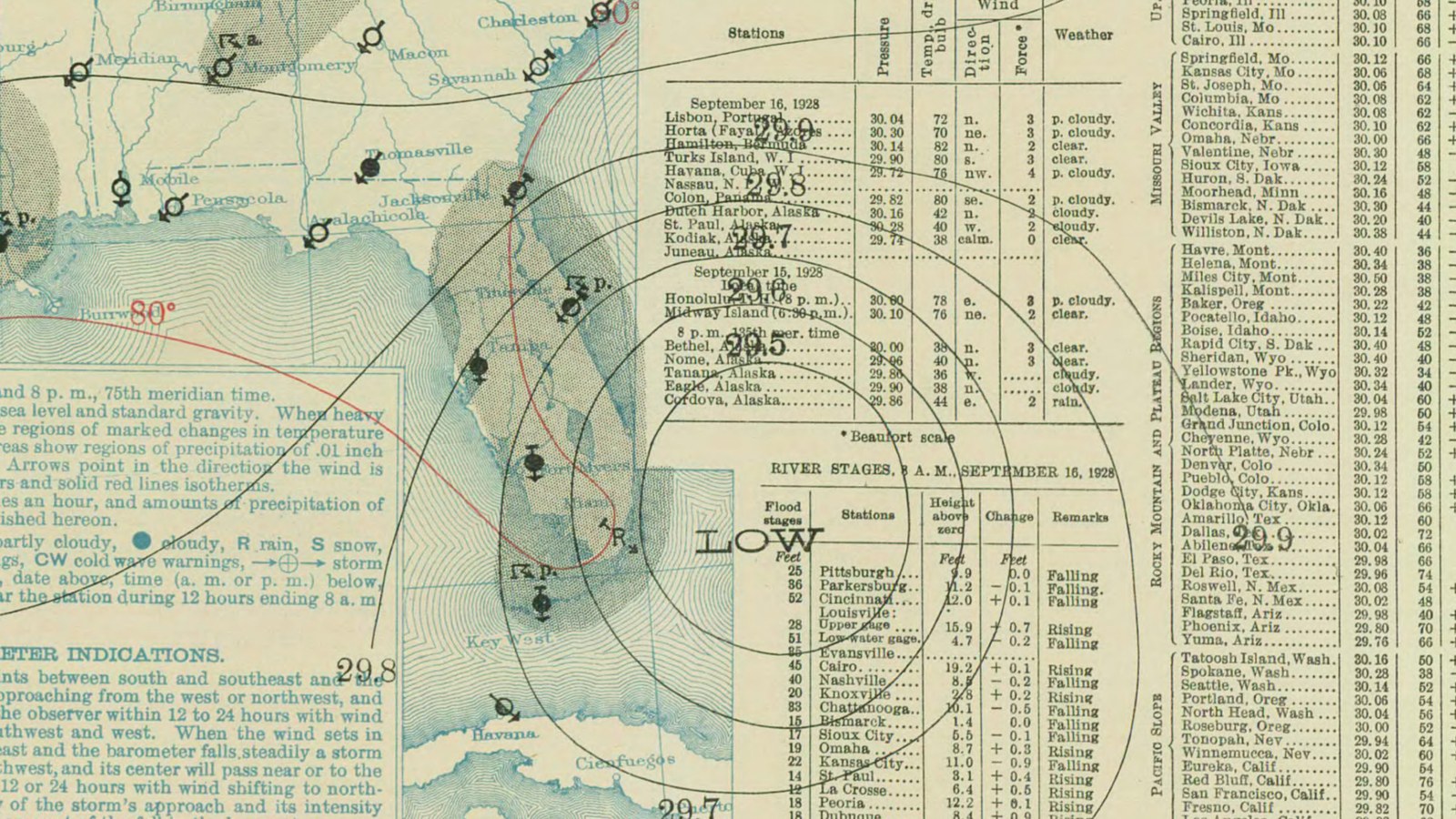
17 September 2026 marks 98 years since the Florida disaster linked to the 1928 Okeechobee hurricane. National Weather Service Miami records that the storm drove Lake Okeechobee over communities such as Belle Glade, Pahokee and South Bay. NOAA now uses a Florida death toll of “at least 2,500”; the exact figure will never be known.
Some NOAA histories date landfall near West Palm Beach to the evening of 16 September, with the storm crossing the peninsula on the 17th. The NWS Miami memorial page ties the catastrophic lake flood to that passage. The hurricane had already struck Puerto Rico, where it is known as San Felipe II.
Low earthen dikes around the lake failed. Homes in farming communities south of the lake were swept away. Many victims were African American agricultural workers and Caribbean migrants whose deaths were not fully recorded. Burials were racially segregated; many Black residents were placed in unmarked mass graves.
The Red Cross estimate of 1,836 deaths was used for a long time. Later reassessments, adopted by the National Hurricane Center, use “at least 2,500”. The catastrophe led to a larger protective system, the Herbert Hoover Dike, later reinforced in stages by the US Army Corps of Engineers.
The hurricane should not be described only as weather. The death toll and the memory of the dead show how poverty, weak infrastructure and inequality increased the number who died.
Ninety-eight years later, Okeechobee 1928 remains one of the deadliest natural disasters in United States history, with a casualty figure that official accounts still treat as incomplete.
Image: NOAA Library, map of the Okeechobee hurricane, 16 September 1928. U.S. government public domain. Cropped to 16:9.
Source consulted: NOAA National Weather Service Miami — Memorial Web Page for the 1928 Okeechobee Hurricane; U.S. Army Corps of Engineers — Herbert Hoover Dike.





0 Comments
No comments on this article yet. Be the first!