


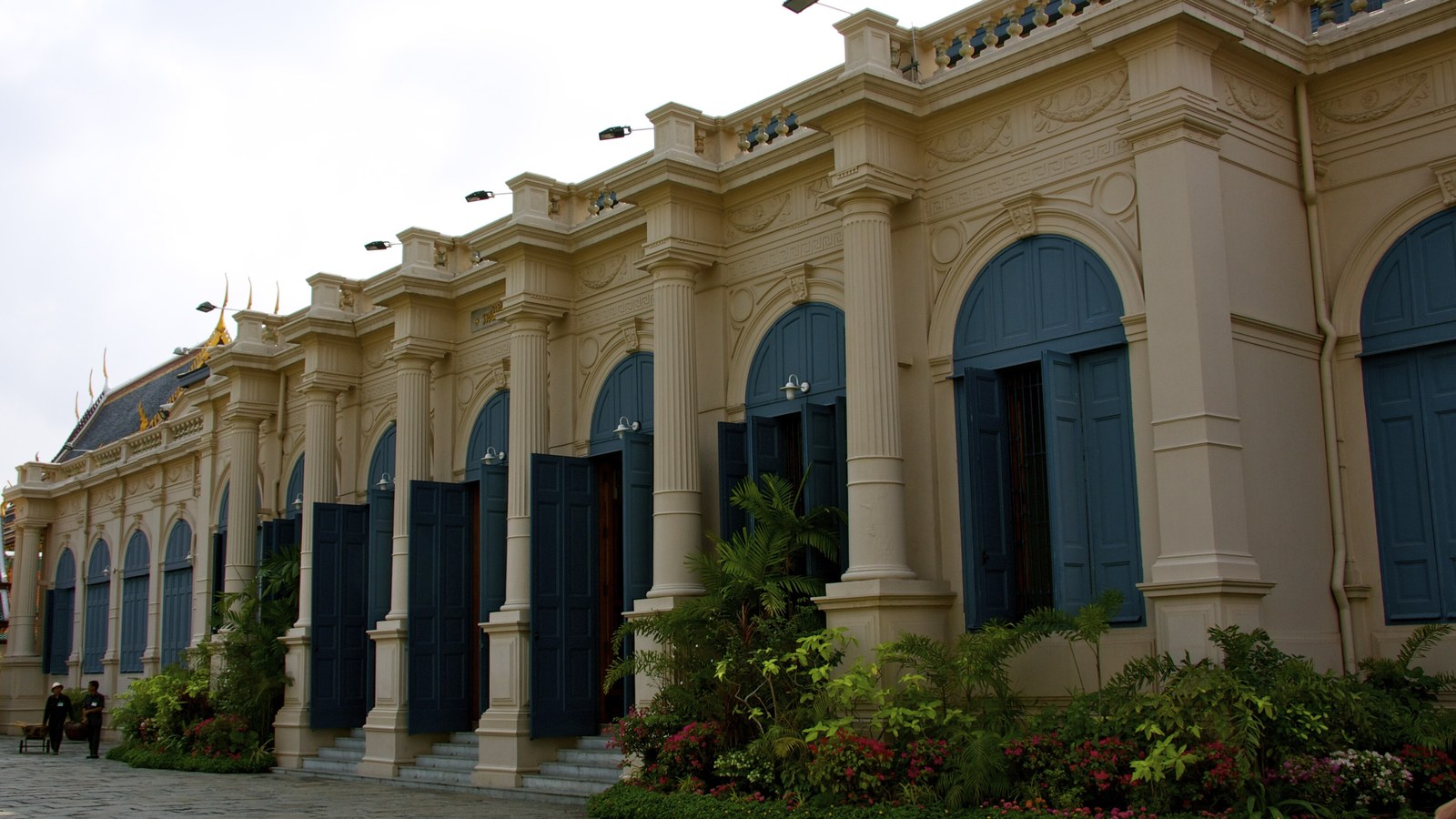
On 27 November 1931, in Bangkok, in the Sahadaya Smagom Hall, the Agreement concerning the Suppression of Opium Smoking was signed. The Conference, convened under Article XII of the Geneva Agreement of 11 February 1925, met at the invitation of the Siamese Government from 9 to 27 November. The parties were the United Kingdom, France, India, Japan, the Netherlands, Portugal and Siam. A single original in English and French was deposited in the archives of the Secretariat of the League of Nations. It is not the Geneva Convention of 13 July 1931 for limiting the manufacture of narcotic drugs.
The plenipotentiaries, having examined the situation in the Far East and the conclusions of the League Commission appointed to enquire into the control of opium-smoking, agreed to supplement the Geneva Agreement. Article I: retail sale and distribution of opium shall take place only from Government shops — shops owned and managed by the Government — or, where local circumstances make such a shop difficult, from shops managed under Government supervision by persons appointed by the Government and paid a fixed remuneration only, not a commission on sales. That provision need not be applied if a system of licensing and rationing of smokers affords equivalent or more effective guarantees, or during the continuance, as a strictly temporary measure, of selling-establishments controlled by the Monopoly.
Article II: persons under twenty-one years of age shall be prohibited from smoking opium and from entering any smoking-establishment; anyone inducing such a person to smoke, to enter or to procure opium, or facilitating any such act, shall be guilty of an offence for which severe penalties, including imprisonment, shall be provided. Article III: the Parties agree to give a legal basis to the practice, already generally in operation, of selling prepared opium for cash only. Article IV: a Government Monopoly may be supplied with prepared opium from the factory of a Government Monopoly in another territory of the same Power.
Article V: the Agreement applies only to the Far-Eastern possessions or territories of the High Contracting Parties, including leased or protected territories, in which the use of prepared opium is temporarily authorised. At ratification a Party may declare that its acceptance does not include any territory over which it exercises only a protectorate; it may accede later by a notification deposited with the Secretary-General of the League. The Delegate of India signed subject to the understanding that the Agreement does not apply at present to the Shan States and that, so far as India is concerned, it applies only to the Province of Burma excluding the Shan States. The Siamese Delegation reserved Article I.
Article VI: the French and English texts are both authentic; instruments of ratification shall be deposited with the Secretary-General of the League as soon as possible. The Agreement shall not come into force until it has been ratified by all the High Contracting Parties; the date of coming into force shall be the ninetieth day after receipt of the last ratification, on 22 April 1937. The Secretary-General shall register it on that day. Article VII: denunciation, notified in writing to the Secretary-General, shall take effect only as regards the Party which notified it, and one year after the notification has reached him.
It is not the Hague Convention of 23 January 1912, not the Geneva Agreement of 11 February 1925, which it supplements, not the Convention of 26 June 1936 on illicit traffic, not the Lake Success Protocol of 11 December 1946, and not the Single Convention on Narcotic Drugs of 1961.
Image: Sala Sahathai Samakhom, Grand Palace, Bangkok; Sodacan, 11 January 2010; CC BY-SA 3.0, Wikimedia Commons. Cropped to 16:9.
Source consulted: Agreement for the Control of Opium Smoking in the Far East. Treaty text: Agreement concerning the Suppression of Opium Smoking, Bangkok, 27 November 1931.











0 Comments
No comments on this article yet. Be the first!