


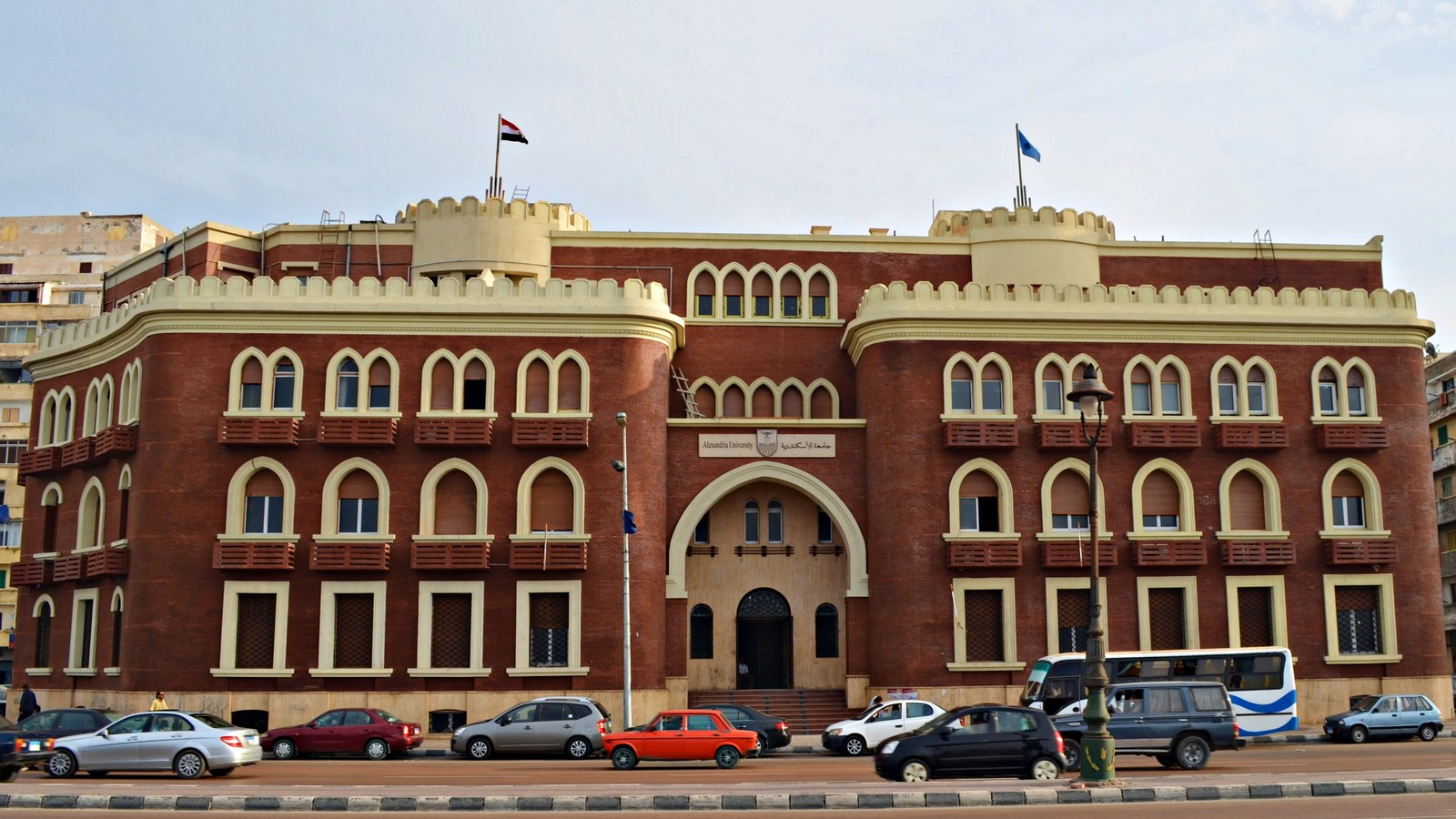
The Alexandria Protocol was signed at Faruq I University in Alexandria on 7 October 1944 by the chiefs and members of the Arab delegations at the Preliminary Committee of the General Arab Conference. The signatories are Egypt, Syria, Transjordan, Iraq and Lebanon, with Nahhas Pasha as president of the Committee. The text is the official communiqué of the conference, collated with the Arabic version in al-Ahram. It is not the Pact of the League of Arab States, concluded later in Cairo.
The delegations met from 25 September in the form of the Preliminary Committee. Point 1: a League will be formed of the independent Arab States which consent to join it, with a Council in which all participating states are represented on an equal footing. The object of the League will be to control the execution of the agreements those states conclude, to hold periodic meetings, to coordinate their political plans so as to ensure cooperation, to protect their independence and sovereignty against every aggression by suitable means, and to supervise in a general way the affairs and interests of the Arab countries.
Decisions of the Council are binding on those who have accepted them, except where a disagreement between two member states is referred to the Council, in which case the Council’s decision is binding. Resort to force to settle a dispute between member states is not allowed. Every state remains free to conclude special agreements which do not contradict the protocol. Adoption of a foreign policy prejudicial to the League or to a member state is not allowed. The Council will intervene in every dispute which may lead to war, so as to reconcile the parties. A subcommittee of the Preliminary Committee is to prepare a draft of the statutes of the Council.
Point 2: the states represented shall cooperate closely in economic and financial matters (commercial exchange, customs, currency, agriculture and industry), communications, cultural matters, nationality, passports, visas, execution of judgments, extradition, social questions and public health. For each subject a subcommittee of experts will prepare drafts of cooperation; a coordination committee will control that work and prepare drafts of agreement for the governments. When the subcommittees have finished, the Preliminary Committee will meet as a step toward the General Arab Conference. Point 3 expresses the hope that Arab States will later consolidate the step, especially if postwar institutions bind the Powers more closely.
Point 4, a special resolution concerning Lebanon: the states emphasize their respect for the independence and sovereignty of Lebanon in its then frontiers, already recognized after that country’s government announced, in its programme of 7 October 1943, an independent policy unanimously approved by the Lebanese Chamber of Deputies. Point 5, a special resolution concerning Palestine, holds that the rights of the Arabs of Palestine cannot be touched without prejudice to peace in the Arab world, declares support for their cause, and distinguishes the woes of the Jews of Europe from Zionism; the proposal of an Arab National Fund is referred to the financial committee. The clauses remain a political framework, not an operational programme.
The signatories included, among others, Nahhas Pasha, Saadallah al-Jabiri, Tawfiq Abu al-Huda, Hamdi al-Pachachi, Nuri al-Said, Riad al-Solh and Salim Taqla. Saudi Arabia and Yemen were not at the table; the eight-member League was constituted the following year by the Pact. The cover shows the University of Alexandria, then Faruq I University, the place of signature, not a particular hall.
The protocol was published in the United States Department of State Bulletin, from the translation of the American Legation in Cairo. It remains the preparatory instrument; the statutes of the Council and the cooperation agreements were to be drafted by subcommittees and submitted to the governments.
Sources consulted: Alexandria Protocol; Avalon text, The Alexandria Protocol.











0 Comments
No comments on this article yet. Be the first!