


The Allianz Center for Technology says distraction at the wheel stands, in Germany, behind at least 30 percent of crashes: either as the immediate trigger or as a decisive contributing factor. The figure was presented on 21 October at the 14th Allianz Motor Day. This is not a new law and not the official police statistic.
Older estimates spoke of about 10 percent. In the police cause statistics, distraction appears in about 1.5 percent of cases. Christian Sahr, head of AZT, told Spiegel that figure does not match reality: after a crash, distraction is hard to prove unless the driver admits it.
The analyses combine cognitive modelling with cogniBIT, glance data from a vehicle study, a simulation with the Technical University of Munich, more than 34,000 accident files and more than 80 published studies. The report is titled “SWIPE. TAP. CRASH. Ablenkung am Steuer im digitalen Auto”.
In a simulated motorway emergency stop, the share of rear-end crashes rose from 18.2 percent for attentive drivers to 54.3 percent for distracted ones. If a child steps suddenly into the road, the crash risk rose from 3.9 to 11.2 percent. In 39 percent of those cases, distracted drivers did not react at all, Allianz wrote.
Frank Sommerfeld, chief executive of Allianz Versicherungs-AG, said that in some situations distracted drivers did worse than a model with 0.8 per mille blood alcohol. He asked that distraction be as socially taboo as drink-driving. That is a research judgment, not a change to the highway code.
Klaus-Peter Röhler, on the Allianz SE board, said the same on-screen action can take up to 25 percent more visual attention, about three seconds, depending on how the menu is built. “A car is not a smartphone.” Sahr wants physical switches or always-visible zones for wipers, indicators, low and high beam, hazard lights and demisting.
In Allianz’s survey of drivers in Germany, 77 percent see the car’s digitalisation as a driver of distraction, and 70 percent want classic buttons, not nested screen menus. 87 percent still put the main responsibility on the driver. Using a phone at the wheel is already banned; Spiegel recalls a 100-euro fine and one point in Flensburg, rules already in force, not proposed today.
Allianz asks manufacturers for safer cockpits, authorities for a uniform record of distraction, and drivers for attention. Those are demands from a research day, not an adopted European regulation. Until a law exists, the closed fact is AZT’s assessment: at least one crash in three with distraction as a factor, not 1.5 percent from the police statistic.
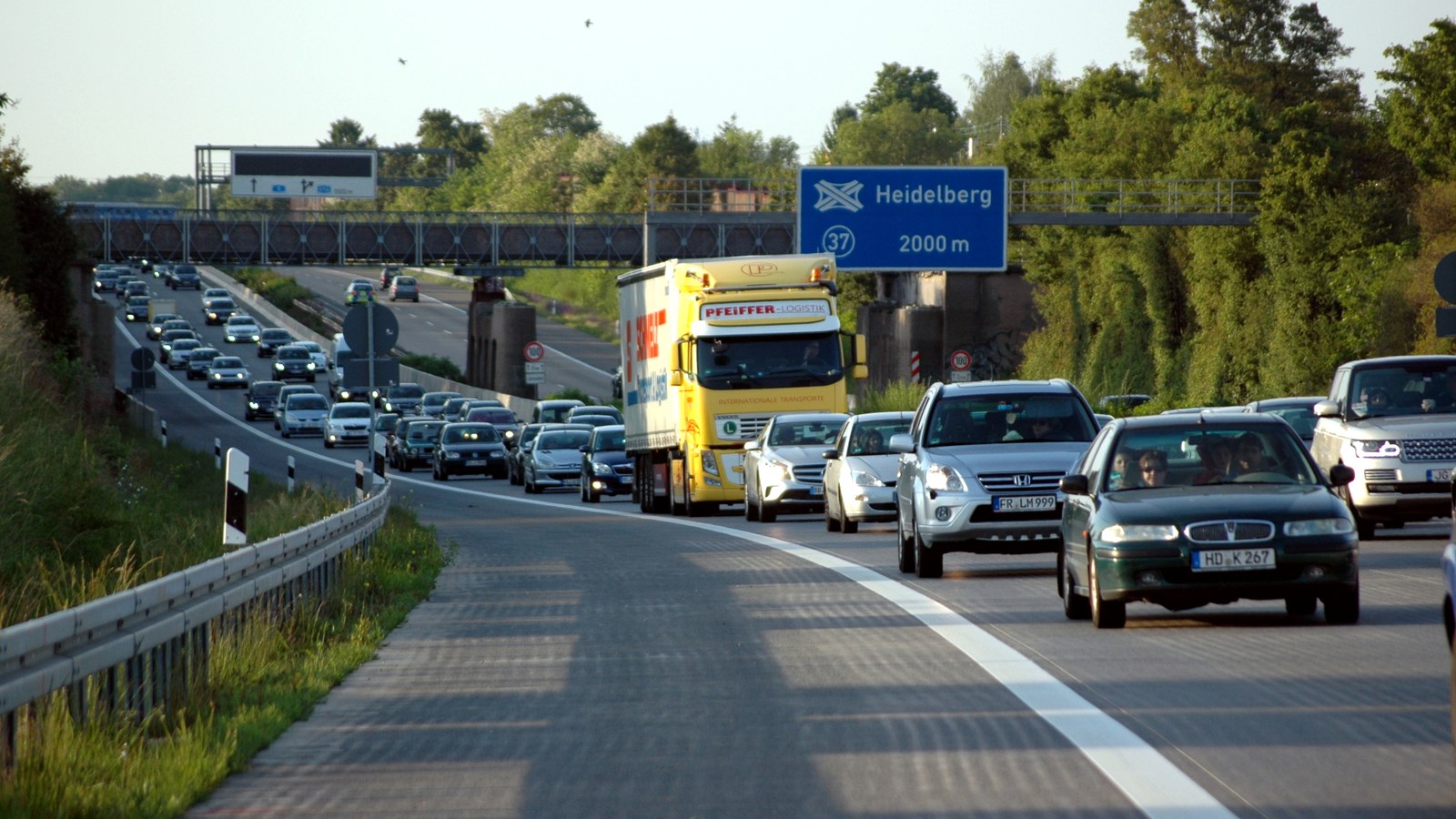
Image: Radoslaw Drozdzewski (Zwiadowca21), A5 near Heidelberg, 4 May 2014, CC BY-SA 3.0, Wikimedia Commons; illustration of German traffic, not a crash from the study.
Sources consulted: Autounfaelle in Deutschland: Mindestens 30 Prozent der Unfaelle werden durch Ablenkung verursacht - DER SPIEGEL; Allianz Motor Day 2026: Ablenkung am Steuer ist Ursache fuer jeden dritten Unfall - Allianz.











0 Comments
No comments on this article yet. Be the first!