


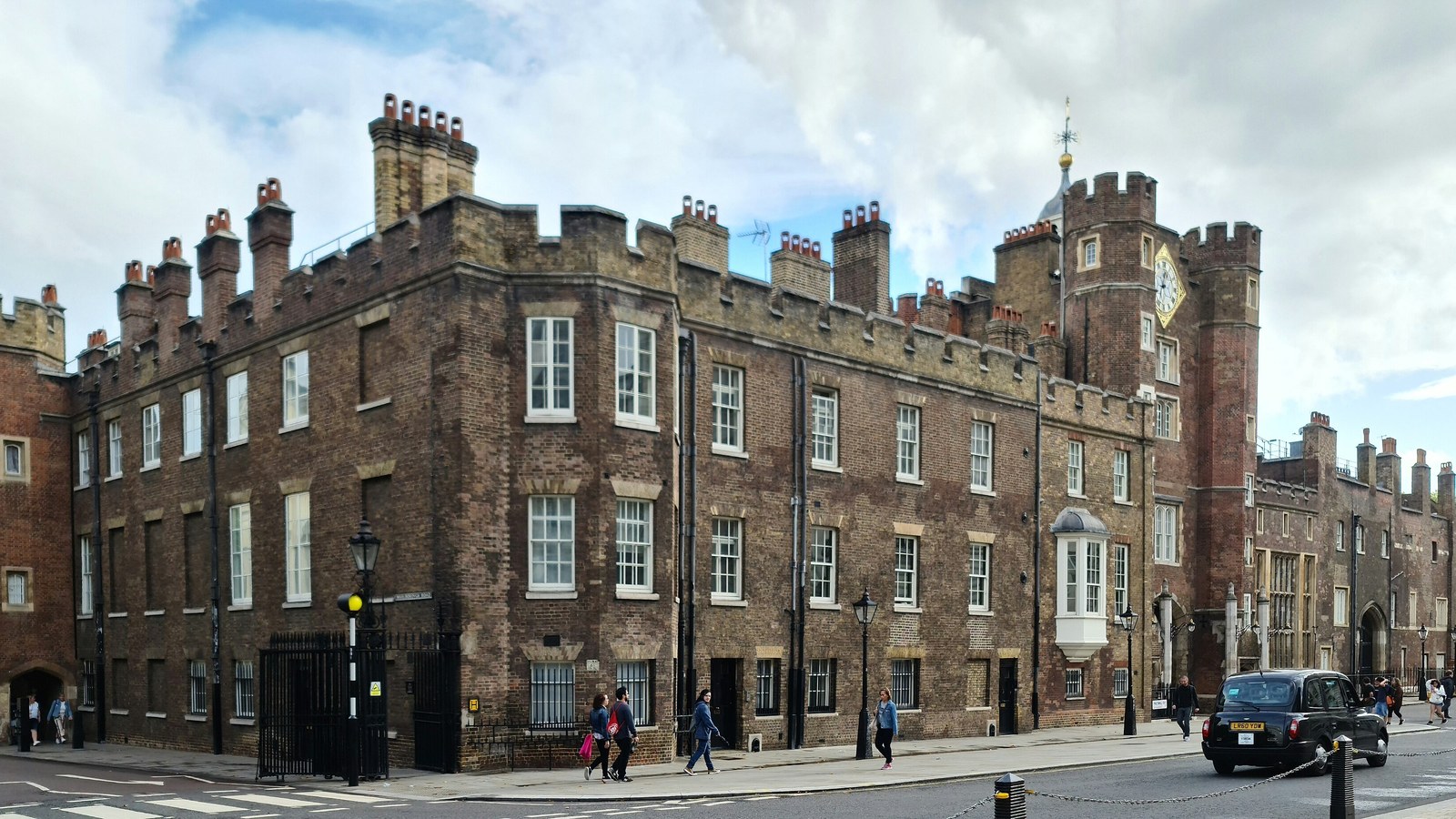
On 20 November 1902, at the Court of St James, Edward VII, King of the United Kingdom of Great Britain and Ireland, gave in triplicate, under his hand and seal, the award in the boundary case between the Argentine Republic and the Republic of Chile. It is not the Boundary Treaty of 23 July 1881 and not the Protocol of 1 May 1893. The compromis signed at Santiago on 17 April 1896 by Adolfo Guerrero and Norberto Quirno Costa had entrusted the British Government to apply those two instruments strictly, after examination of the locality by a commission named by the Arbitrator. The tribunal appointed — Lord Macnaghten, Major-General John C. Ardagh, Colonel T. Hungerford Holdich, with Major E. H. Hills as secretary — signed its report at the Foreign Office the day before.
The award lists four questions: the region of the San Francisco Pass; the Lake Lacar basin; the region from the vicinity of Lake Nahuel Huapi to that of Lake Viedma; and the region adjacent to Last Hope Inlet. Article I: in the region of the San Francisco Pass the boundary shall be formed by the line of water-parting from the pillar already erected on that Pass to the summit of the mountain named Tres Cruces.
Article II: the basin of Lake Lacar is awarded to Argentina. Article III: from Perez Rosales Pass near the north of Lake Nahuel Huapi to the vicinity of Lake Viedma, the boundary shall pass by Mount Tronador, and thence to the River Palena by the lines of water-parting determined by obligatory points on the Rivers Manso, Puelo, Futaleufu and Palena (or Carrenleufu). Argentina receives the upper basins above those points, including the valleys of Villegas, Nuevo, Cholila, Colonia de 16 Octubre, Frio, Huemules and Corcovado; Chile receives the lower basins. From the fixed point on the Palena the boundary shall follow the River Encuentro to the peak called Virgen, cross Lake General Paz, ascend to the principal water-parting of the continent at Loma Baguales and, by tributaries of the Simpson (southern Aisen) and the peak Ap Ywan, reach a promontory on the northern shore of Lake Buenos Aires. The upper basin of the Pico is awarded to Argentina and the lower to Chile; the whole Cisnes (Frias) basin and almost the whole Aisen to Chile, except a tract at the head-waters of the southern branch including the settlement called Koslowsky, awarded to Argentina. The further line is fixed across Lakes Buenos Aires, Pueyrredon (or Cochrane) and San Martin: western portions to Chile, eastern to Argentina, on the ranges carrying San Lorenzo and Fitzroy. From Mount Fitzroy to Mount Stokes the frontier had already been determined.
Article IV: from the vicinity of Mount Stokes to the 52nd parallel of south latitude the boundary shall first follow the continental water-parting of the Sierra Baguales, diverging southwards across the River Vizcachas to Mount Cazador, crossing the River Guillermo and rejoining the water-parting east of Mount Solitario, to the 52nd parallel, from which the remaining frontier had already been defined by mutual agreement. Article V: a more detailed definition is in the Report of the Tribunal and on the maps furnished by the experts of the two Republics, on which the Tribunal delineated the boundary approved by the King.
The award is given in the second year of the reign. It does not open a list of ratifications and does not provide for a third-party depositary: it is a decision of the arbitrator appointed by the 1896 agreement.
It is not the agreement of 17 April 1896, not the British award of 1966 on Palena–Encuentro and not the 1994 award on Laguna del Desierto.
Image: St James Palace, London, place of the award; Ricardalovesmonuments, 7 September 2022; CC BY-SA 4.0, Wikimedia Commons. Cropped to 16:9.
Source consulted: 1902 Arbitral award of the Andes between Argentina and Chile. Treaty text: Award by His Majesty King Edward VII in the Argentine-Chile Boundary Case, London, 20 November 1902.











0 Comments
No comments on this article yet. Be the first!