


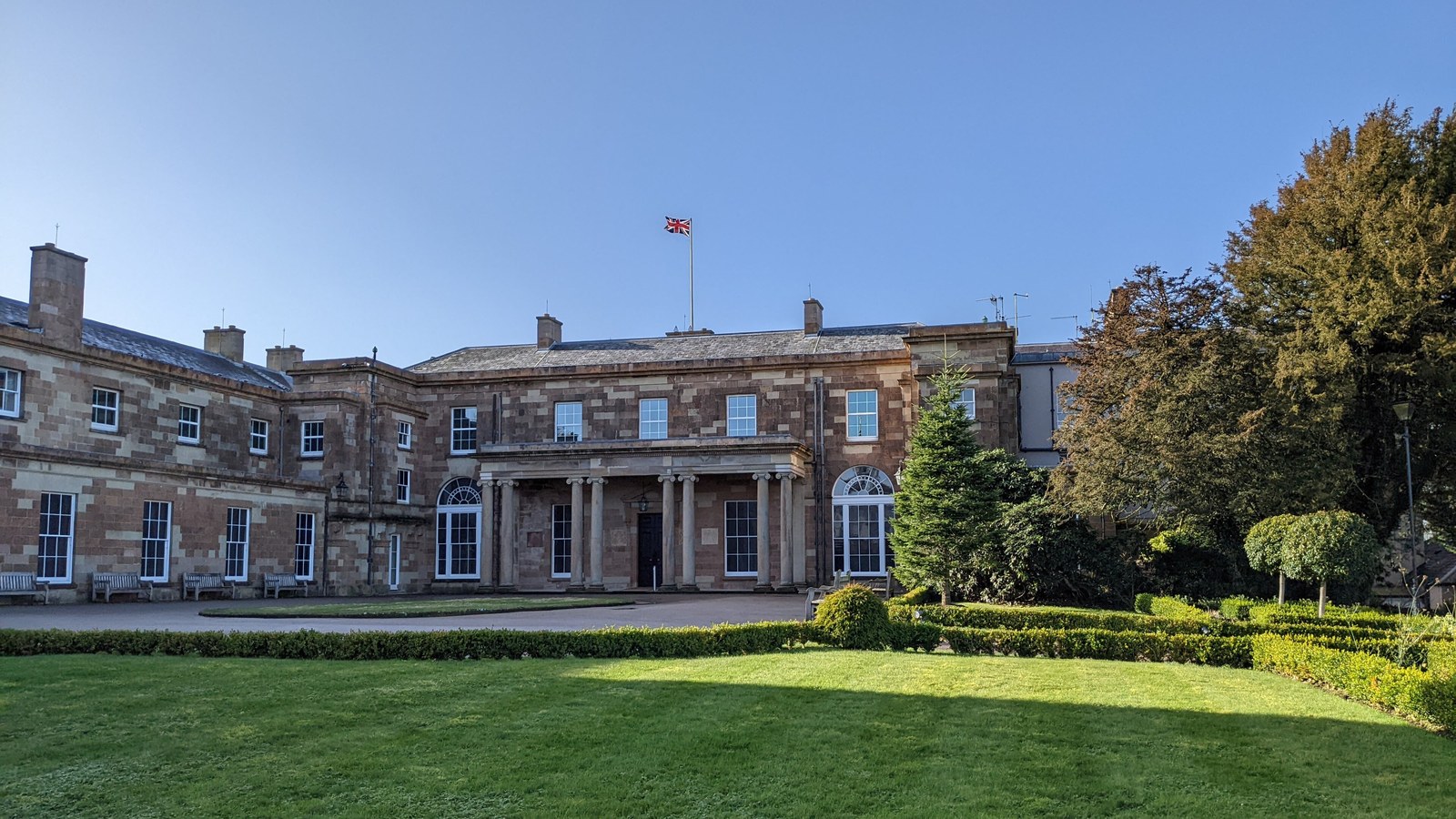
On 15 November 1985, at Hillsborough Castle in Northern Ireland, Margaret Thatcher and Garret FitzGerald sign the Anglo-Irish Agreement. The text is in two originals. In Irish the taoiseach is Gearoid Mac Gearailt. The aim: to lessen the divisions in the province and to close the Troubles. No referendum in Northern Ireland. No transfer of sovereignty.
Article 1: any change in the status of Northern Ireland would come about only with the consent of a majority of its people. The governments recognise that, for now, a majority wants no change. If, in future, a majority clearly wishes for a united Ireland, the two parliaments will legislate. That is the consent principle, later restated at Belfast.
Article 2 establishes the Intergovernmental Conference, within the Anglo-Irish Intergovernmental Council of 6 November 1981. Ireland may put forward views on political, security, legal and cross-border matters where there is no devolved administration. There is no derogation from sovereignty. Each government keeps responsibility for decisions in its own jurisdiction. Article 3: joint chairs, the Permanent Irish Ministerial Representative and the Secretary of State for Northern Ireland. A standing secretariat. Maryfield, near Belfast, will house officials from Dublin.
Articles 5 and 6: rights, identities, discrimination, flags, a possible Bill of Rights, the composition of bodies appointed by the Secretary of State. Article 7: policing, prisons, nationalist acceptance of the RUC. Article 8: criminal-law alignment, possible mixed courts, extradition. Article 9: the Garda Síochána and the RUC cooperate; the Conference has no operational duties. Article 10: development in areas hit by violence, with international support. Article 13: the Agreement enters into force on the exchange of notifications of acceptance.
The House of Commons approves the motion by 473 votes to 47, the largest majority of Thatcher’s premiership. Dáil Éireann: 88–75. Seanad: 37–16. Fianna Fáil, under Charles Haughey, rejects the text: it would recognise British jurisdiction, against Articles 2 and 3 of the Irish Constitution. In the province only the SDLP and Alliance support it. Sinn Féin, through Gerry Adams, calls it formal recognition of partition.
Unionists walk out. The UUP and DUP organise a petition of 400,000 signatures. At Belfast City Hall, on 23 November, the “Ulster Says No” rally; estimates run from 35,000 to hundreds of thousands. The 15 unionist MPs resign. In the by-elections of 23 January 1986, 14 return; Newry and Armagh goes to the SDLP. The Day of Action on 3 March 1986 shuts workplaces and transport. The McGimpsey brothers challenge the Agreement in Dublin, citing the same Articles 2 and 3; the High Court and Supreme Court dismiss the case. Thatcher later said the unionist reaction was worse than anyone had predicted to her.
The Agreement does not immediately stop the violence and does not bring devolution. It does bring London closer to Dublin. The Maryfield secretariat closes in December 1998, after the Good Friday Agreement, when the British–Irish Intergovernmental Conference replaces the Anglo-Irish one. CAIN, at Ulster University, keeps the full text.
Image: Xandered811, Hillsborough Castle, 6 February 2022, CC BY-SA 4.0, Wikimedia Commons. Cropped to 16:9.
Source consulted: Anglo-Irish Agreement. Treaty text: Anglo-Irish Agreement 1985 between the Government of Ireland and the Government of the United Kingdom.











0 Comments
No comments on this article yet. Be the first!