


On 13 February 2004, at London, the diplomatic conference of the International Maritime Organization adopted the International Convention for the Control and Management of Ships' Ballast Water and Sediments. The instrument is done at London; Article 17 opens it for signature at IMO Headquarters only from 1 June 2004 to 31 May 2005, and thereafter for accession. The Wikipedia infobox puts “Signed” on the adoption day; the depositary is the Secretary-General of IMO, not of the United Nations. Authentic texts: Arabic, Chinese, English, French, Russian, Spanish. The instruments DONE formula is not copied.
Article 18: entry into force twelve months after not less than thirty States, the combined merchant fleets of which constitute not less than 35 per cent of the gross tonnage of the world's merchant shipping, have signed without reservation as to ratification or have deposited an instrument. Finland acceded on 8 September 2016 and triggered the threshold; the Convention entered into force on 8 September 2017. UNTC: registration by IMO on 24 December 2018, No. 55544, volume 3281. Article 21: deposit with the Secretary-General of the Organization, who transmits the text to the United Nations Secretariat for registration under Article 102 of the Charter.
The preamble invokes Article 196(1) of UNCLOS: measures against the introduction of alien or new species that may cause significant and harmful changes to the marine environment. The 1992 Rio Conference had asked IMO for rules on ballast-water discharge. Article 16: the Convention does not prejudice rights and obligations under customary international law as reflected in UNCLOS. Article 2: the Parties undertake to give full effect to the Convention and the annex, in order to prevent, minimize and ultimately eliminate the transfer of harmful aquatic organisms and pathogens through ships' ballast water and sediments.
Article 3: it applies to ships entitled to fly the flag of a Party or operating under its authority; it does not apply to ships not designed to carry ballast water, certain domestic trades, warships and State ships on non-commercial service, or permanent ballast in sealed tanks. Ships of non-Parties shall be given no more favourable treatment. Article 4: each Party shall require its ships to comply with the annex and shall develop national policies, according to its conditions. This is not an exchange or on-board treatment handbook.
The annex, an integral part, contains sequential management standards; later implementation calendars belong to the Marine Environment Protection Committee, not to the adoption day. Article 5: in ports designated for the cleaning or repair of ballast tanks, Parties shall ensure sediment reception facilities, without undue delay to ships. Article 7: survey and certification in accordance with the annex. Article 19: amendments through the Committee, by a two-thirds majority of the Parties present and voting, or by a conference.
Article 2(3) allows more stringent measures, consistent with international law. Article 2(7): management practices must not cause greater harm than they prevent. The British print UKTS 84 (2024) is an edition with later amendments; the substantive articles cited are those of the 2004 Convention.
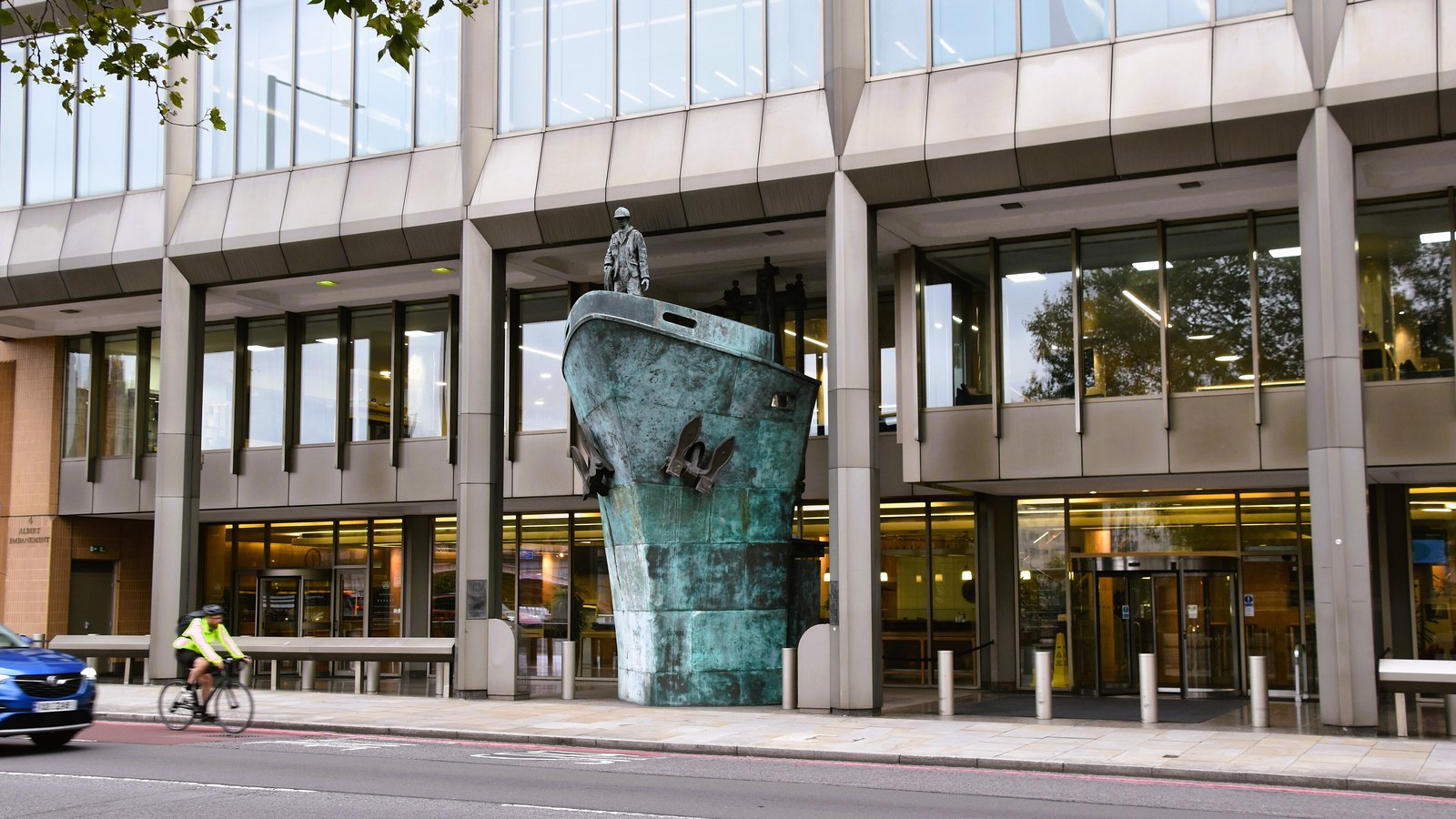
Cover: IMO headquarters on the Thames in London, the place of the conference — the photograph is of the building, not the hall. Wikimedia Commons, free licence.
For context: Ballast Water Management Convention. The text: International Convention for the Control and Management of Ships’ Ballast Water and Sediments, 2004 (UK Treaty Series).











0 Comments
No comments on this article yet. Be the first!