


The Belfast Agreement, also known as the Good Friday Agreement, was concluded in Belfast on 10 April 1998. It consists of two corresponding texts: the Multi-Party Agreement, among the British Government, the Irish Government and the Northern Ireland parties that accepted the document, and the British-Irish Agreement, a bilateral treaty between the two states. Signatories of the interstate text: Tony Blair, Bertie Ahern, Mo Mowlam and David Andrews. It replaces the Anglo-Irish Agreement of 15 November 1985. Authentic language: English. The British-Irish Agreement entered into force on 2 December 1999.
Under Constitutional Issues, the participants recognise the principle of consent: Northern Ireland remains part of the United Kingdom for as long as a majority of people there so wish, and a united Ireland may be brought about only with the free and concurrent agreement of majorities in both North and South. The birthright to identify as British, Irish or both, with dual citizenship recognised by both governments, stands irrespective of any future change of status. Ireland undertook to amend Articles 2 and 3 of its Constitution; the United Kingdom, to replace the formula in the Government of Ireland Act 1920.
Strand One establishes the Northern Ireland Assembly, elected by proportional representation, and a power-sharing Executive with a First Minister and a Deputy First Minister drawn from the two traditions. Transferred matters cover most domestic business; reserved and excepted matters remain at Westminster. Strand Two establishes the North-South Ministerial Council and implementation bodies in areas of common interest, interdependent with the Assembly. Strand Three establishes the British-Irish Council and the British-Irish Intergovernmental Conference for East-West relations.
The rights chapter provides for parity of esteem, protection against discrimination and a human-rights framework, including incorporation of the European Convention. The chapters on decommissioning, security, policing and justice, and prisoners remain principle-level commitments of the peace process; they are not transcribed here as procedure. Validation required simultaneous referendums: in Northern Ireland on the Multi-Party Agreement; in the Republic on the necessary constitutional changes. Both were held on 22 May 1998; both majorities were affirmative.
The talks were chaired by George J. Mitchell, United States special envoy. The document is not the 1921 Anglo-Irish Treaty and is not the St Andrews Agreement of 13 October 2006, which later restored the institutions after subsequent crises. Implementation ran through the Northern Ireland Act 1998 and the Nineteenth Amendment of the Constitution of Ireland.
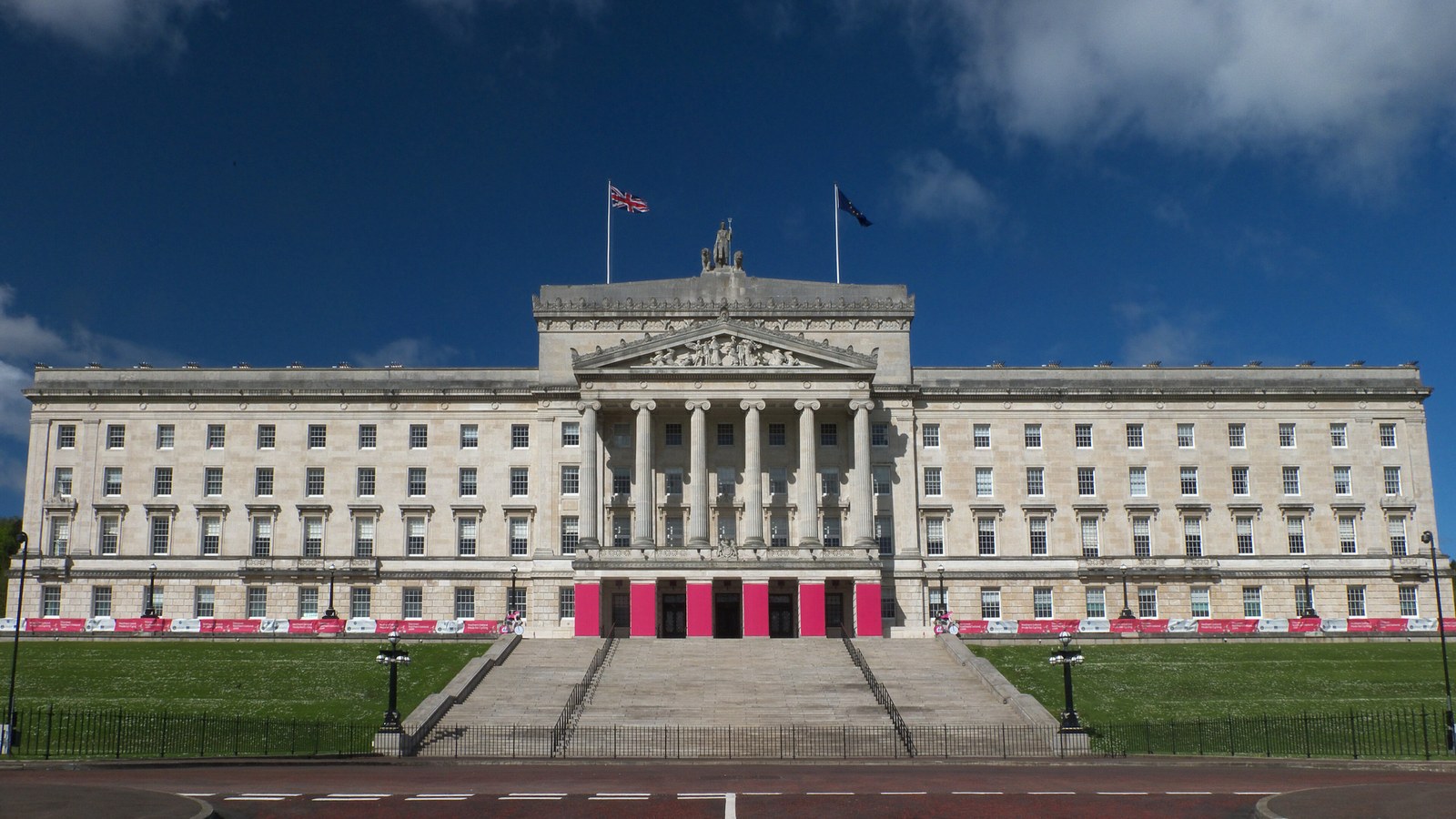
Cover: Parliament Buildings on the Stormont Estate in Belfast; the talks were held at Castle Buildings on the same estate. Wikimedia Commons, free licence.
Sources consulted: Good Friday Agreement; The Belfast Agreement.











0 Comments
No comments on this article yet. Be the first!