


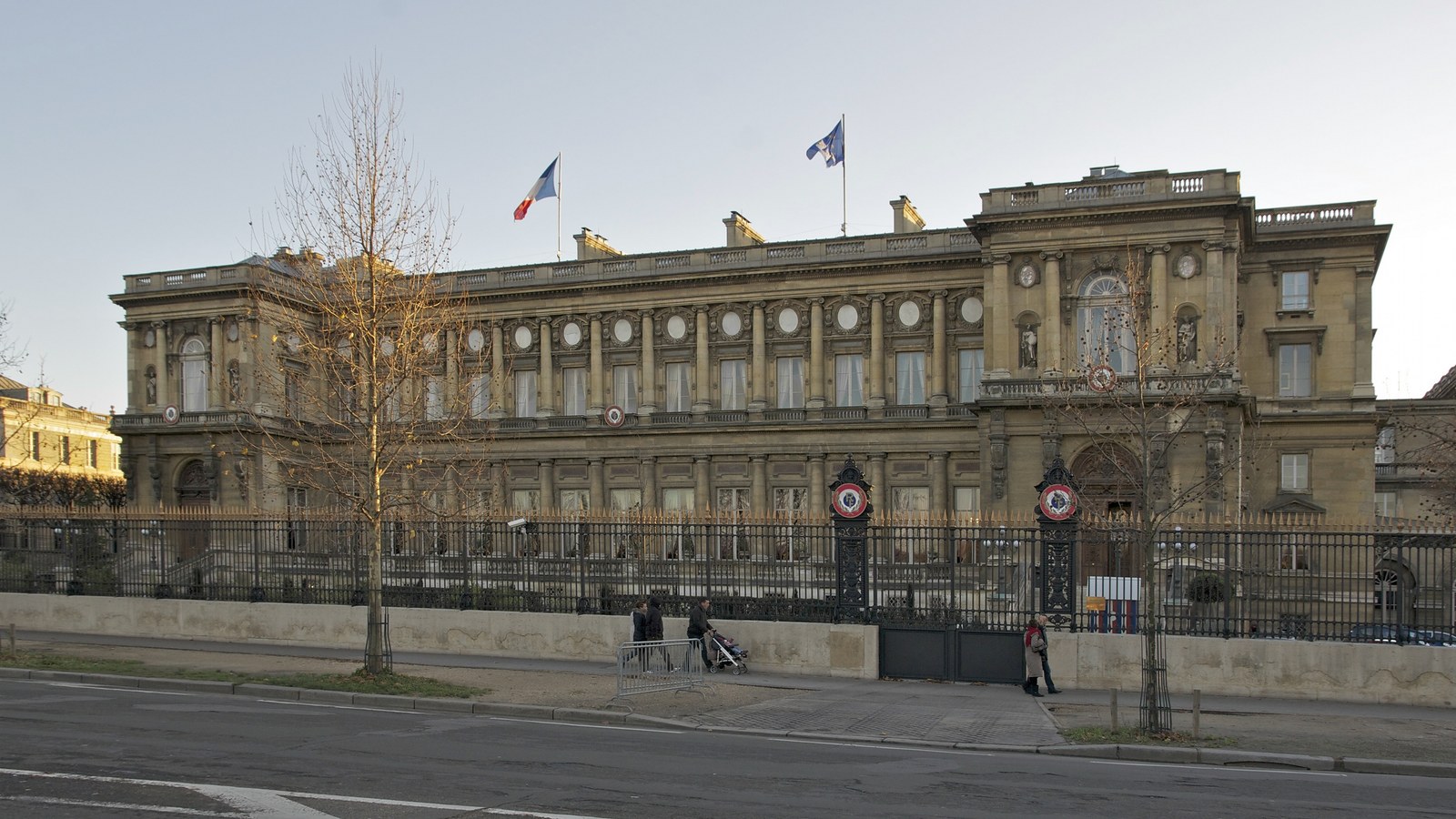
On 23 October 1954, at the Quai d’Orsay in Paris, the United States, the United Kingdom, France and the Federal Republic of Germany signed the Protocol on the Termination of the Occupation Regime in the Federal Republic of Germany. The instrument, equally authentic in English, French and German and deposited with the Federal Government, amends the Bonn conventions of 26 May 1952, which had not entered into force after the European Defence Community failed, and brings them into force with it. The four were the only parties; this is not the NATO protocol signed the same afternoon at the Palais de Chaillot.
Article 1 of the Protocol lists the texts to be amended: the Convention on Relations between the Three Powers and the Federal Republic, the Convention on the Rights and Obligations of Foreign Forces and their Members, the Finance Convention, the Convention on the Settlement of Matters Arising out of the War and the Occupation, the correcting Protocol of 27 June 1952, and the Tax Treatment Agreement of 26 May 1952 as amended on 26 July 1952. Five Schedules carry the amendments. Subsidiary documents agreed by the Signatory States enter into force with the Protocol.
Schedule I rewrites Article 1 of the Convention on Relations: on entry into force the Three Powers terminate the occupation regime in the Federal Republic, revoke the Occupation Statute and abolish the Allied High Commission and the Offices of the Land Commissioners. The Federal Republic shall accordingly have the full authority of a sovereign State over its internal and external affairs. The 1952 wording had given full authority “except as provided in the present Convention”; the Paris text drops that reservation from Article 1.
Article 2 of the same Convention, also in Schedule I, keeps the Three Powers’ rights and responsibilities relating to Berlin and to Germany as a whole, including reunification and a peace settlement, in view of the international situation which had so far prevented both. Rights relating to the stationing of armed forces and the protection of their security are dealt with in Articles 4 and 5. Pending the German defence contribution, the forces remain; thereafter they stay with Bonn’s agreement, without losing the rights needed for Berlin.
Article 2 of the Protocol, pending those same defence arrangements, retains the Three Powers’ rights in disarmament and demilitarisation. On entry into force the Military Security Board is abolished, without prejudice to acts already taken; controls then pass to a Joint Four-Power Commission, one representative each, deciding by majority vote. An administrative agreement is to organise its staff.
Article 3 requires ratification or approval under each State’s constitutional procedures. Instruments are deposited with the Federal Government. The Protocol and its subsidiary documents enter into force when all Signatory States have deposited. The archives remain in Bonn, which issues certified copies and notifies the date of entry into force. The United States and the Federal Republic ratified on 20 April 1955; France and the United Kingdom on 5 May 1955, the day the conventions took effect, at the last meeting of the Allied High Commission.
Article 10 of the Convention on Relations, as amended, provides for a review of its terms if Germany is reunified, if an international arrangement on unity is concluded, or if a European federation is created. Allied rights over Berlin and Germany as a whole are not wound up here; the Two Plus Four Treaty of 1990 is a later instrument. The Protocol is not a peace treaty.
Image: Quai d'Orsay, Paris, place of signature of the protocol; Jebulon, 2011; CC0, Wikimedia Commons. Cropped to 16:9.
Source consulted: Bonn–Paris conventions. Treaty text: Protocol on the Termination of the Occupation Regime in the Federal Republic of Germany, Paris, 23 October 1954.











0 Comments
No comments on this article yet. Be the first!