
Salk Institute researchers have published in Nature Aging an atlas of microproteins in the human frontal cortex, with and without Alzheimer’s disease. They identified 1,067 microproteins absent from the reviewed UniProtKB catalogue, with spectral support. Some are expressed differently in disease-associated samples. The resource is public, as a starting point for other laboratories, not as a diagnostic test.
Microproteins are short molecules, often under 150 amino acids, produced from small open reading frames that older methods overlooked. Small size does not mean a lack of function. The team followed a 63-amino-acid microprotein from the MKKS locus, reduced in Alzheimer’s; in experiments its loss impaired mitochondrial respiration in microglia, the brain’s immune cells.
The findings are not a treatment and do not yet show clinical causation. The link must be checked in larger groups. The study’s importance is the expanded list of molecules research can test. It should not be confused with World Alzheimer’s Day, a separately scheduled awareness observance on 21 September.
The authors stress that the human genome is not a closed catalogue. The atlas fills in the protein map of the ageing brain and raises questions about microglial metabolism, not a new pill.
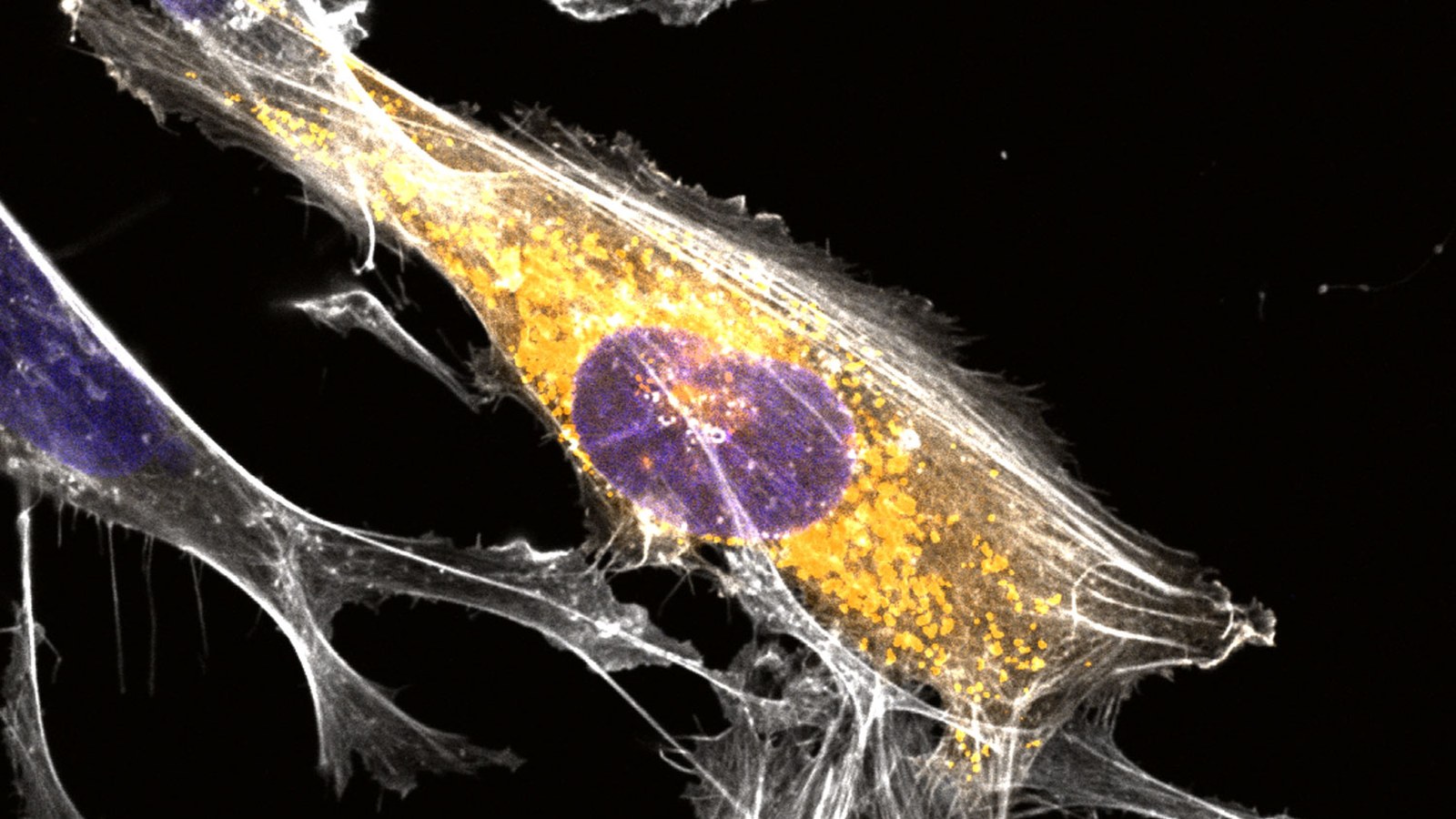
Photo: microglia microscopy from the Salk release. Credit Salk Institute, via Salk news release.
Source consulted: Salk Institute — microproteins and Alzheimer’s research; Nature Aging — microprotein atlas of the frontal cortex.









0 Comments
No comments on this article yet. Be the first!