


On 13 December 1988, in Brazzaville, delegations of the People’s Republic of Angola, the Republic of Cuba and the Republic of South Africa signed the Protocol of Brazzaville. Mediator: the Government of the United States. A note verbale from the United States Mission to the United Nations the following day transmitted the text to the Secretary-General as A/43/964 and S/20325; the original of the UN circulation is English. Signatories: António dos Santos França, Deputy Minister of Defence (Angola); Ricardo Alarcón de Quesada, Vice-Minister of Foreign Affairs (Cuba); Roelof F. Botha, Minister of Foreign Affairs (South Africa).
The preamble expresses deep appreciation to the President of the People’s Republic of the Congo, Colonel Denis Sassou-Nguesso, for his contribution to peace in southwestern Africa and for the hospitality extended to the delegations. The parties confirm their commitment to act in accordance with the Principles for a Peaceful Settlement in Southwestern Africa, initialled at New York on 13 July 1988 and approved by their Governments on 20 July 1988; with the understandings reached at Geneva on 5 August 1988 that are not superseded by this document; and with the agreement reached at Geneva on 15 November 1988 for the redeployment to the north and the staged and total withdrawal of Cuban troops from Angola. They urge the international community to provide economic and financial support for implementation.
Point 1: the parties agree to recommend to the Secretary-General of the United Nations that 1 April 1989 be established as the date for implementation of Security Council resolution 435 (1978). Point 2: they agree to meet on 22 December 1988 in New York for signature of the tripartite agreement and for signature by Angola and Cuba of their bilateral agreement; by that date Angola and Cuba shall have reached agreement with the Secretary-General on verification arrangements to be approved by the Security Council.
Point 3: the parties agree to exchange prisoners of war upon signature of the tripartite agreement. Point 4: they agree to establish a Joint Commission in accordance with the annex. Annex, item 1: the Commission shall begin its work upon signature of the tripartite agreement, as a forum for discussion and resolution of issues of interpretation and implementation. Item 3: the United States and the Union of Soviet Socialist Republics are invited as observers; upon the independence of Namibia, the Namibian Government should be included as a full member, with a formal invitation on the date of independence.
Annex, item 4: the Commission shall be constituted within thirty days of the signing of the tripartite agreement and shall establish its own regulations and rules of procedure. Item 5: a party’s decision to discuss or seek resolution of an issue in the Commission shall not prejudice its right to raise the issue, as it deems appropriate, before the Security Council or to pursue other means of dispute resolution available under international law. Item 6: the Commission shall in no way function as a substitute for UNTAG, including UNTAG’s monitoring role outside Namibia, or for the United Nations entity performing verification in Angola.
The New York agreements of 22 December 1988, scheduled in point 2, are separate instruments. Wikipedia sometimes conflates this protocol with the Angola–Cuba bilateral agreement signed that day at United Nations Headquarters; the UN text is the tripartite protocol signed at Brazzaville.
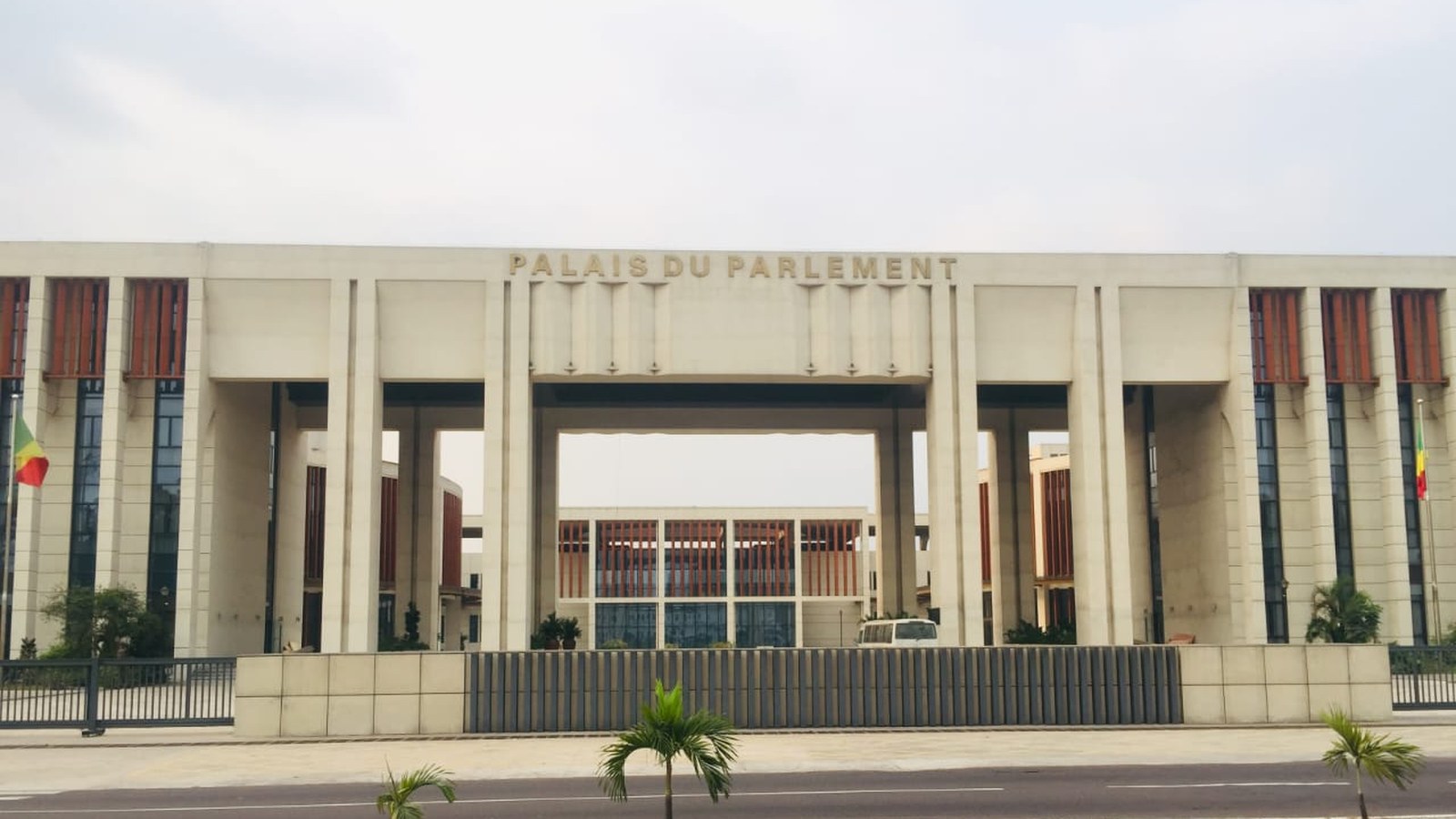
Palais du Peuple, Brazzaville, the presidential palace of the host State, not the signing room. Wikimedia Commons, free licence.
For context: Brazzaville Protocol. The text: United Nations, A/43/964–S/20325.











0 Comments
No comments on this article yet. Be the first!