


On 5 December 1994, in Budapest, during the summit of the Conference on Security and Co-operation in Europe, the Memorandum on Security Assurances in connection with Ukraine accession to the Treaty on the Non-Proliferation of Nuclear Weapons was signed. Signatories: Leonid Kuchma, Boris Yeltsin, John Major and Bill Clinton. It is not the 1992 Lisbon Protocol and not the 2001 Budapest Convention on Cybercrime.
The preamble welcomes Ukraine accession to the Treaty as a non-nuclear-weapon State, takes into account the commitment to eliminate all nuclear weapons from its territory within a specified period of time, and notes changes in the world-wide security situation, including the end of the Cold War, which have brought about conditions for deep reductions in nuclear forces. The parties then confirm six points.
Point 1: the Russian Federation, the United Kingdom and the United States reaffirm their commitment to Ukraine, in accordance with the principles of the CSCE Final Act, to respect the independence and sovereignty and the existing borders of Ukraine. Point 2: they reaffirm their obligation to refrain from the threat or use of force against the territorial integrity or political independence of Ukraine, and that none of their weapons will ever be used against Ukraine except in self-defence or otherwise in accordance with the Charter of the United Nations. Point 3: they reaffirm their commitment, again in accordance with the Final Act, to refrain from economic coercion designed to subordinate to their own interest the exercise by Ukraine of the rights inherent in its sovereignty and thus to secure advantages of any kind.
Point 4: they reaffirm their commitment to seek immediate United Nations Security Council action to provide assistance to Ukraine, as a non-nuclear-weapon State party to the Treaty, if Ukraine should become a victim of an act of aggression or an object of a threat of aggression in which nuclear weapons are used. Point 5: they reaffirm, in the case of Ukraine, their commitment not to use nuclear weapons against any non-nuclear-weapon State party to the Treaty, except in the case of an attack on themselves, their territories or dependent territories, their armed forces, or their allies, by such a State in association or alliance with a nuclear-weapon State. Point 6: Ukraine, the Russian Federation, the United Kingdom and the United States will consult in the event a situation arises which raises a question concerning these commitments.
The Memorandum becomes applicable upon signature. It is signed in four copies having equal validity in the Ukrainian, English and Russian languages. The authentic English title speaks of security assurances, not of an automatic military-assistance clause. Later registration with the United Nations Secretariat is number 52241.
On the same day parallel memoranda were signed for Belarus and Kazakhstan, again with the Russian Federation, the United Kingdom and the United States. France and China issued separate statements; they are not signatories of this instrument. It is not the Trilateral Statement signed in Moscow on 14 January 1994.
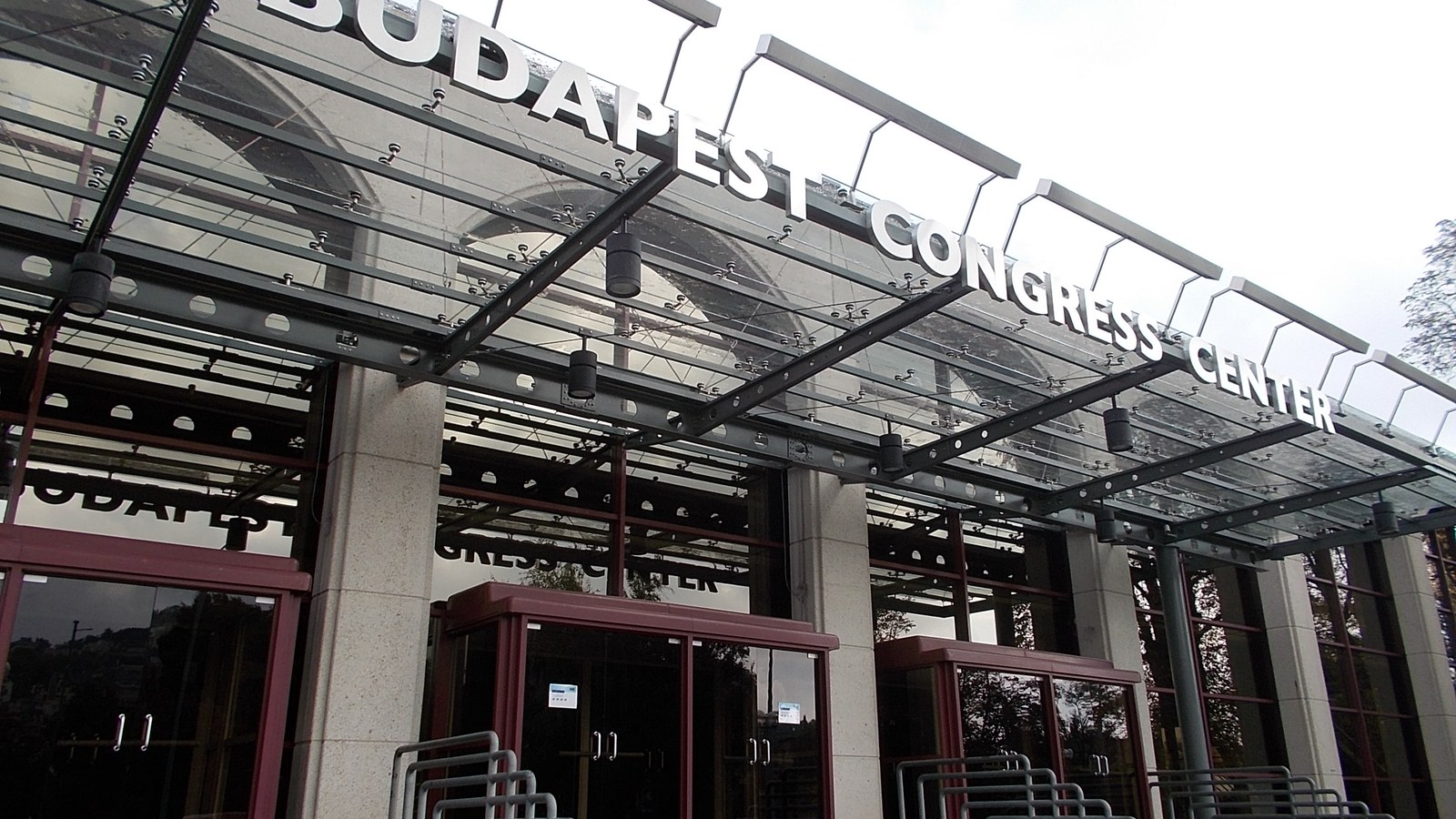
The meeting took place at the Budapest Congress Centre. The CSCE Budapest documents published in the following days prepared the renaming of the conference as the OSCE from 1 January 1995; that package is not this memorandum.
Image: Budapest Congress Centre (Jozsef Finta, 1984); Globetrotter19, 2015; CC BY-SA 3.0, Wikimedia Commons. Cropped to 16:9.
Source consulted: Budapest Memorandum. Treaty text: Memorandum on Security Assurances, Ukraine NPT accession, Budapest, 5 December 1994.











0 Comments
No comments on this article yet. Be the first!