


The International Convention on Civil Liability for Bunker Oil Pollution Damage was done at London on 23 March 2001 by the International Maritime Organization diplomatic conference. A single original in Arabic, Chinese, English, French, Russian and Spanish, each text equally authentic. Depositary: the Secretary-General of IMO. Wikipedia lists “Signed” and English only; the official formula is DONE, and Article 12 opened the instrument for signature at IMO Headquarters only from 1 October 2001 to 30 September 2002, thereafter for accession. Entry into force: 21 November 2008, one year after eighteen States, including five each with ships whose combined gross tonnage is not less than one million (Article 14).
It is a free-standing instrument modelled on the 1969/1992 Civil Liability Convention, but for hydrocarbon mineral oil used or intended for the operation or propulsion of the ship, including lubricating oil and residues, not for persistent oil carried in bulk as cargo. Article 4 excludes pollution damage as defined in the Civil Liability Convention, whether or not compensation is payable under that convention. It complements CLC/FUND and sits beside HNS 1996; it does not replace MARPOL.
Article 3: the shipowner at the time of the incident — including the registered owner, bareboat charterer, manager and operator — is liable for pollution damage caused by any bunker oil on board or originating from the ship. Liability is joint and several where more than one person is liable. Defences, at principle level: act of war, exceptional natural phenomenon, intentional act of a third party, negligence of a lights authority. Article 5: incidents involving two or more ships, joint and several liability for damage that is not reasonably separable.
Article 6 leaves untouched the right to limit liability under any applicable national or international regime, such as the Convention on Limitation of Liability for Maritime Claims, 1976, as amended; limitation figures are not reproduced. Article 7: the registered owner of a ship of more than 1,000 gross tonnage registered in a State Party must maintain insurance or other financial security, with a model certificate in the annex, and a direct action against the insurer. States Parties must require the same cover of any such ship, wherever registered, entering their ports. Article 8: action within three years of the damage, and in no case more than six years from the incident.
Articles 9–10: exclusive jurisdiction of the courts of the States Parties where the damage occurred or preventive measures were taken; recognition of judgments, except for fraud or lack of a fair hearing. Article 11: the convention supersedes earlier instruments only to the extent of conflict. Article 16: a revision conference at the request of not less than one-third of the States Parties. The United States is not a party; it has distinct domestic legislation (the Oil Pollution Act). This is not a spill-response handbook.
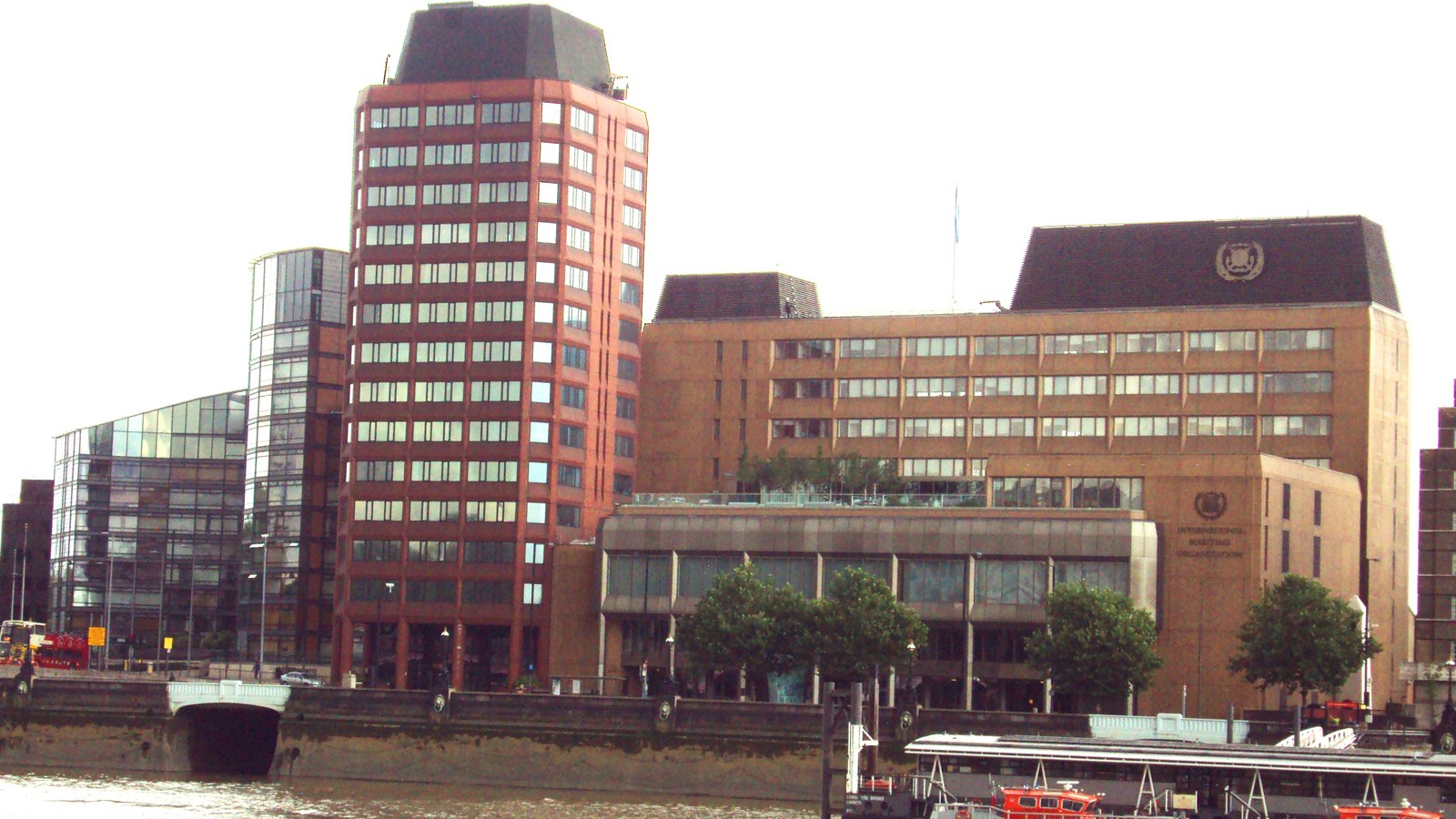
Cover: IMO headquarters on Albert Embankment, London; not the diplomatic-conference hall. Wikimedia Commons, free licence.
Sources consulted: International Convention on Civil Liability for Bunker Oil Pollution Damage; International Convention on Civil Liability for Bunker Oil Pollution Damage, 2001 (UK Treaty Series No. 47).











0 Comments
No comments on this article yet. Be the first!