


On 26 January 2008, in Davos, the Free Trade Agreement between Canada and the States of the European Free Trade Association — Iceland, Liechtenstein, Norway and the Swiss Confederation — was signed. Signatories, according to the EFTA release: David Emerson, Canadian Minister of International Trade; Ingibjörg Sólrún Gísladóttir (Iceland); Rita Kieber-Beck (Liechtenstein); Annelene Svingen, Deputy Minister of Trade and Industry (Norway); Doris Leuthard, Federal Councillor (Switzerland). Authentic languages: English and French, in duplicate. One original is deposited by the EFTA States with the Depositary. Article 43: the Kingdom of Norway acts as Depositary. Article 1: the Parties establish a free trade area.
Negotiations were launched in 1998 and concluded in June 2007 after eleven rounds; Canada announced the conclusion on 7 June 2007. The preamble recalls the Arrangements on Trade and Economic Co-operation between Canada and Norway (3 December 1997), Canada and Switzerland (9 December 1997), and Canada and Iceland (24 March 1998). The Agreement builds on rights and obligations under the Marrakesh Agreement Establishing the World Trade Organization, done on 15 April 1994.
Article 3: the Agreement applies to trade in goods, except as otherwise provided in the text and in the bilateral Agreements on trade in agricultural products. Those agreements, signed at the same time with Iceland, Norway and Switzerland (Switzerland covering Liechtenstein), form part of the instruments establishing the free trade area, but remain distinct texts. Article 10: from entry into force, customs duties are prohibited on originating products in the industrial chapters of the Harmonized System, subject to Annexes E and F, plus processed agricultural products (Annex G) and fish (Annex H). This is not a tariff-line list.
Article 12: services and investment are not liberalised here; the Parties review the subject in the Joint Committee no later than three years after entry into force, with due regard to Article V of GATS. Article 13: facilitation of temporary entry for intra-corporate transferees and business visitors, in accordance with domestic law. Chapter IV sets competition principles. Article 20: public procurement, with a review likewise within three years.
Article 26: the Canada-EFTA Joint Committee, composed of representatives of the Parties, decides by consensus, normally meets once a year, and is chaired jointly by Canada and one of the EFTA States. Article 29: binding arbitration, with a choice of forum vis-à-vis the WTO (Article 27). Annex K describes the arbitral tribunal. Article 40: withdrawal by written notification to the Depositary, taking effect on the first day of the sixth month.
Article 42: ratification, acceptance or approval. The Agreement enters into force on the first day of the third month following deposit by Canada and at least two EFTA States, provided those same Parties have exchanged instruments on the relevant bilateral agricultural agreement. For the other EFTA States, it enters into force on the date of deposit of their instruments, subject to the same agricultural condition. The WTO (RTAIS) and EFTA record 1 July 2009. Article 41 allowed provisional application where domestic requirements permitted.
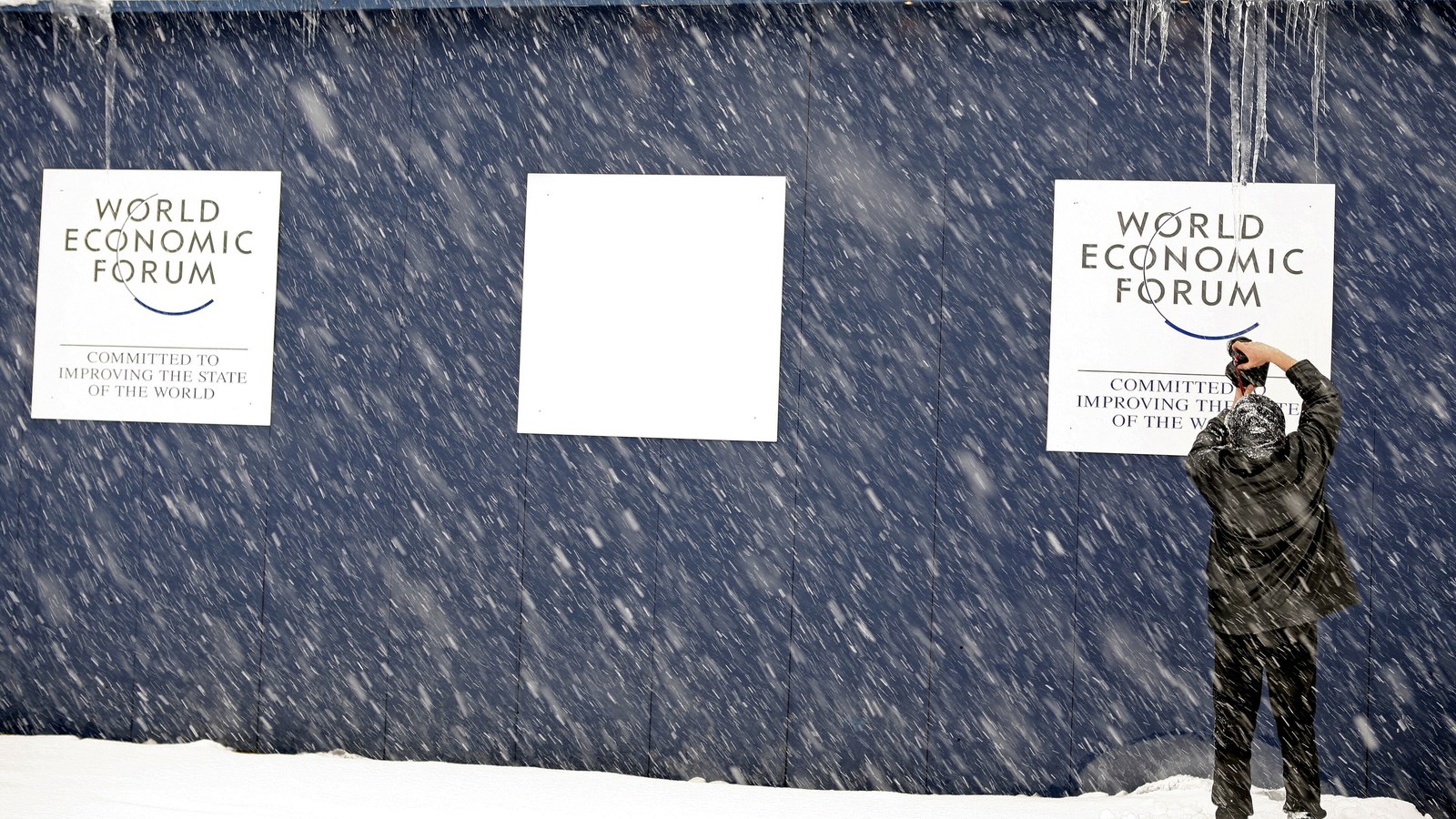
Cover: the World Economic Forum in Davos, in the year of signature — the Agreement was signed on the margins of the meeting; this is not the signing room. Wikimedia Commons, free licence.
For context: Canada–European Free Trade Association Free Trade Agreement. The text: Free Trade Agreement between Canada and the States of the European Free Trade Association.











0 Comments
No comments on this article yet. Be the first!