


On 21 January 1944, in Canberra, the Agreement between Australia and New Zealand was signed, known as the Canberra Pact or ANZAC Pact. The conference opened on 17 January. Signatories for the Commonwealth of Australia: John Curtin, F. M. Forde, J. B. Chifley, H. V. Evatt, John A. Beasley, Norman J. O. Makin, Arthur S. Drakeford, John J. Dedman, Ed. J. Ward, Tom D'Alton. For the Dominion of New Zealand: Peter Fraser, F. Jones, P. C. Webb, C. A. Berendsen. The U.S. minister in Canberra, Johnson, telegraphed the next day the text minus the preamble, signed at noon, subject to early ratification. Clause 44: the official title is the Australian-New Zealand Agreement 1944. It is not the 1951 ANZUS alliance.
Clauses 1–5: exchange of information and views before they are expressed elsewhere; the maximum degree of unity in presenting the two countries’ positions; continuous consultation; action together in matters of common concern in the South West and South Pacific. Clause 6: coordination of the war effort, so far as compatible with separate military commands, without describing operations here. Clauses 7–11: a vital interest in any armistice and subsequent arrangements; representation at the highest level; armistice and post-hostilities planning committees in both capitals, coordinated.
Clause 13: within a general system of world security, a regional zone of defence comprising the South West and South Pacific, based on Australia and New Zealand, stretching through the arc of islands north and north-east of Australia to Western Samoa and the Cook Islands. Clause 14: both should be associated in the planning and establishment of the general international organisation referred to in the Moscow Declaration of October 1943. Clause 15: pending a general security system, Australia and New Zealand may assume full responsibility for policing, or sharing in policing, such areas as may be agreed. Clause 16: wartime construction and use of naval, military or air installations in another Power’s territory do not, in themselves, afford a basis for territorial claims after hostilities.
Clauses 17–23: civil aviation — an International Air Transport Authority for trunk routes; failing a satisfactory international agreement, support for a British Commonwealth government-owned system. Clauses 24–27: regular exchange on Pacific islands; Australia’s intention to resume administration of unoccupied territories; interim administration and ultimate disposal of enemy territories, and any change in sovereignty or control of Pacific islands, only with the agreement of both. Clauses 28–31: the doctrine of trusteeship, already applicable to their mandated territories, is applicable in broad principle to all colonial territories in the Pacific; the main purpose is the welfare of the native peoples; an advisory South Seas Regional Commission, with the United Kingdom, the United States and the French Committee of National Liberation, to promote self-government in the form most suited to circumstances. This is not a colonial administration handbook.
Clauses 32–33: each government’s right to control immigration and emigration; collaboration on migration. Clause 34: a conference of governments with territorial interests (including the Netherlands and Portugal), to be called by Australia. Clause 35: defence cooperation through consultation, a common doctrine and joint planning; commerce and full employment; missionary and other welfare work. Clauses 37–42: ministerial conferences alternately in Canberra and Wellington, at least twice a year; a permanent Australian-New Zealand Affairs Secretariat in each External Affairs ministry, with the High Commissioners.
Clause 43: subject to ratification; it comes into force as soon as both Governments have ratified and notified each other. New Zealand notified on 1 February; the Australian Treaty Series records entry into force on 21 June. Registered as 18 UNTS 357. The 1947 South Pacific Commission is a later instrument, not this Agreement.
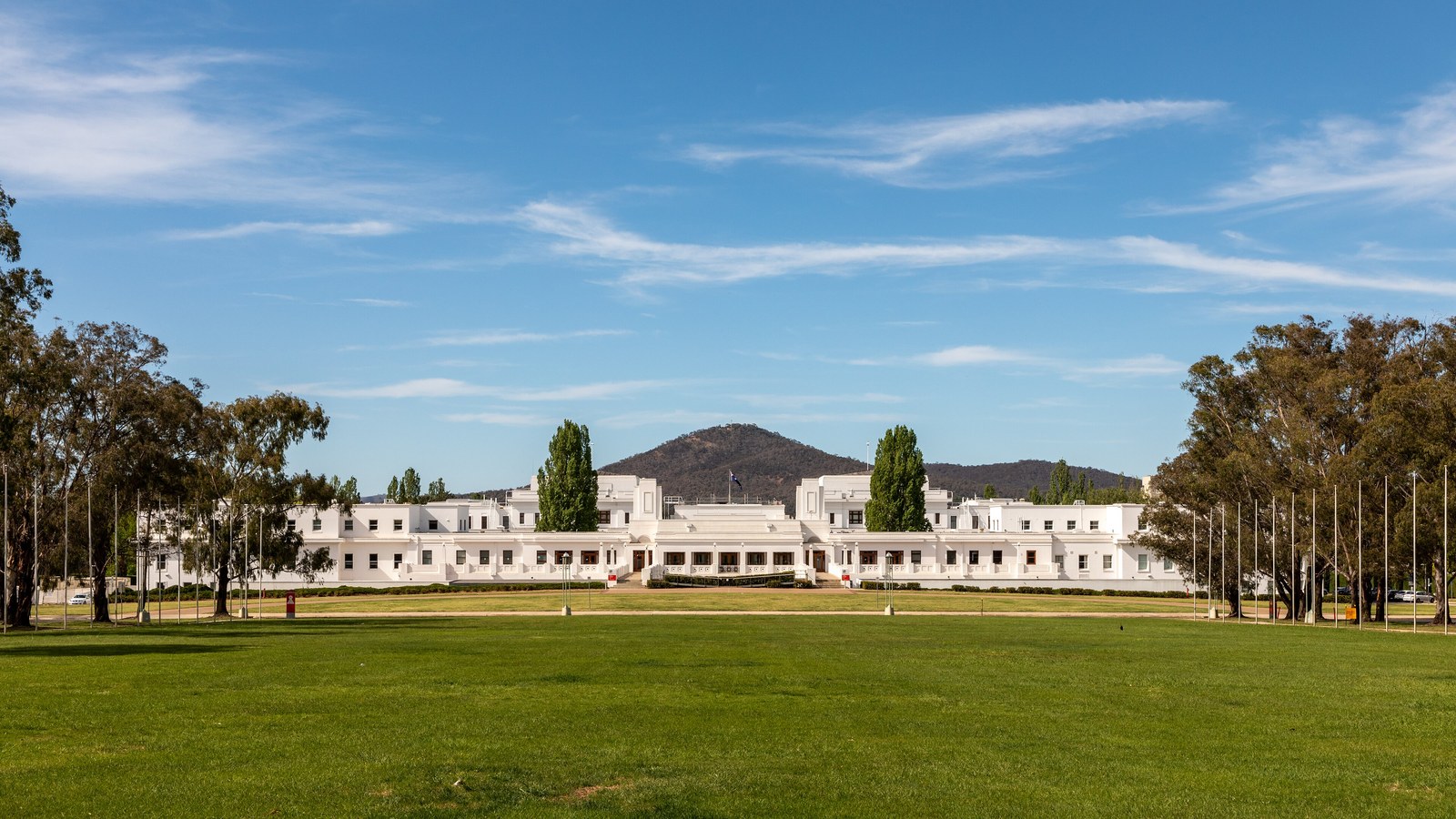
Old Parliament House, Canberra, the capital of the conference. Wikimedia Commons, free licence.
For context: Canberra Pact. The text: Australian-New Zealand Agreement 1944.











0 Comments
No comments on this article yet. Be the first!