


On Thursday China and North Korea formally opened the new road bridge over the Yalu River, between Dandong in Liaoning province and Sinuiju in North Pyongan. It runs about three kilometres and is meant to become the main overland trade route between the two countries. In a video address, Chinese premier Li Qiang called it a new landmark of “traditional friendship” and said the neighbours were opening a new chapter.
The crossing was supposed to open in 2014. North Korea then halted work on its roads and customs yards, in the years when ties with Beijing turned cold. The new span is an alternative to the old Sino-Korean Friendship Bridge, built between 1937 and 1943 during Japan’s occupation of the region. Dandong remains China’s largest border-trade port with the Democratic People’s Republic of Korea.
Foreign ministry spokesperson Mao Ning said on Wednesday that the bridge was an important piece of connectivity and would ease trade and people-to-people exchanges. China is already North Korea’s largest trading partner and a lifeline against international sanctions tied to Pyongyang’s nuclear programme.
Bilateral trade reached $2.7 billion last year, a return to pre-pandemic levels, driven mostly by Chinese exports. A sudden surge across the new bridge is unlikely, says Kang Jun-young, a professor of Chinese studies at Hankuk University of Foreign Studies, while UN sanctions remain in force. Pyongyang also fears a flood of Chinese imports that would widen Beijing’s hold on its domestic market. China knows that, Kang adds: if trade grows, it will grow gradually.
The two capitals are allies under a mutual defence treaty — the only one China has with any country. The relationship is often described as close as “lips and teeth”, a phrase attributed to Mao Zedong. In the 2010s, though, Beijing’s patience wore thin: Kim Jong Un staged a nuclear test in 2017 and has since stepped up tests of banned ballistic missiles. Edward Howell, of the University of Oxford, notes that a decade ago China still called openly for denuclearisation; today it says little, if anything, on the subject.
Observers also tie the shift to Pyongyang’s closer turn toward Russia over the war in Ukraine. At least 2,300 North Korean soldiers are believed to have died fighting for Russia; last month the two countries opened their first road bridge. Beijing is trying to reassert its sway: Air China resumed direct flights in March, passenger trains restarted the same month, and in June Xi Jinping made his first state visit of the year to Pyongyang. The bridge opening shows, says Leif-Eric Easley of Seoul’s Ewha University, that the June visit was more than symbolic — and, at the same time, how difficult a partner Pyongyang can be.
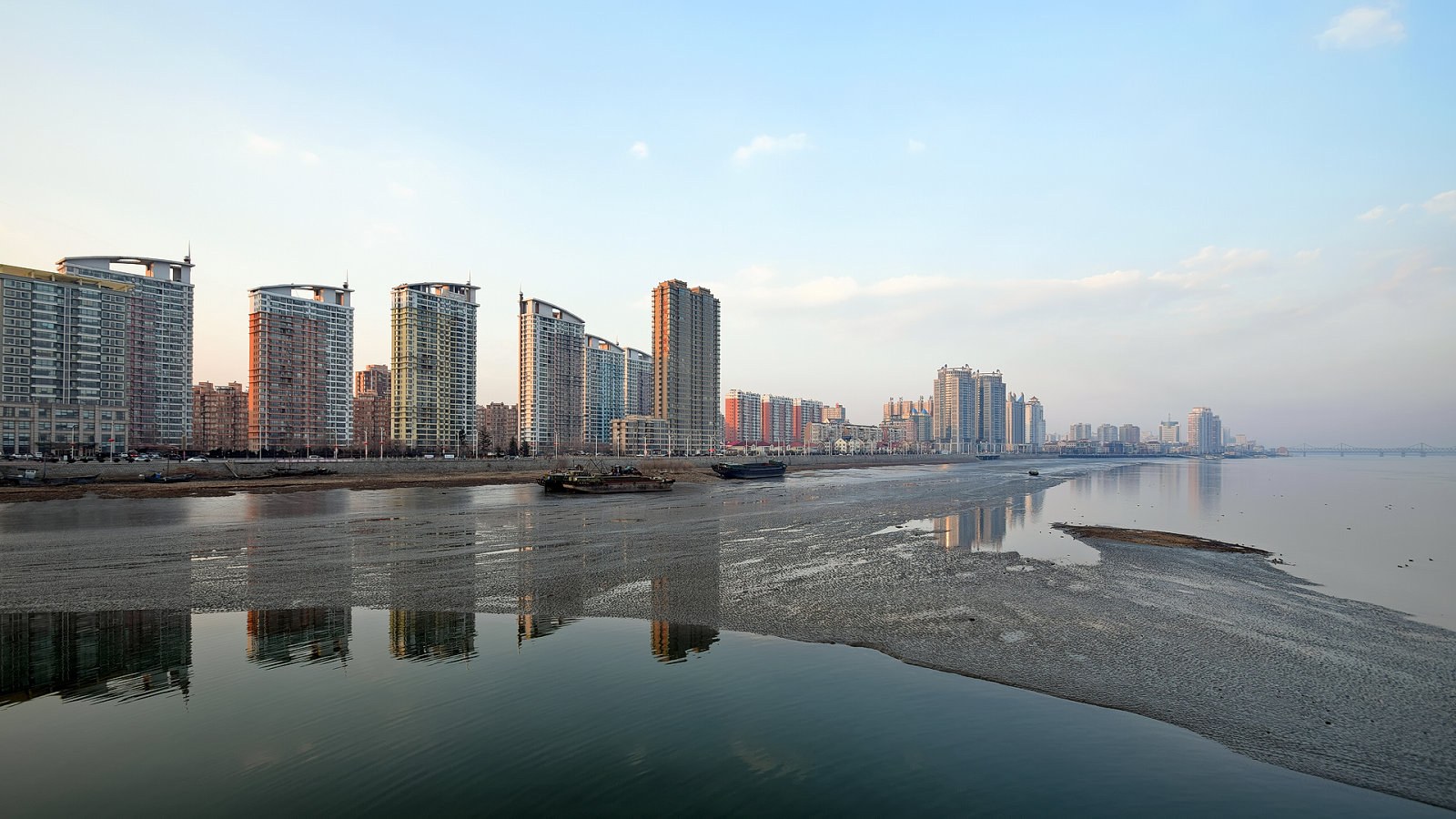
Image: Baycrest, Dandong and the Yalu River, 2017, CC BY-SA 2.5, Wikimedia Commons. The photograph shows the border city, not the 15 October 2026 opening ceremony.
Sources consulted: China, North Korea open long-delayed trade bridge — France 24; North Korea and China open new bridge after 12-year delay — BBC; New China-DPRK border bridge over Yalu River opens to traffic — CGTN.











0 Comments
No comments on this article yet. Be the first!