


Outside the walls of Worms, papal and imperial delegates promulgate two charters: the privilege of Pope Callixtus II and the edict of Emperor Henry V. The date of the instruments is 23 September 1122. It is not the Dictatus papae of 1075, it is not the agreement of Sutri of 1111, and it is not the Diet of Worms of 1521.
The charters are not signed. The papal delegation is led by Cardinal-Bishop Lamberto Scannabecchi of Ostia, the future Honorius II. He gives the emperor the kiss of peace and says Mass. The week of talks was held at Mainz; Worms had no room for the crowd.
Henry’s edict: in the name of the holy and indivisible Trinity, the emperor remits to God, to the apostles Peter and Paul and to the Catholic Church all investiture through ring and staff. In the churches of his kingdom or empire, canonical election and free consecration.
Henry restores the possessions and regalia of St Peter taken from the beginning of the discord, in his father’s time or in his own; what he does not hold, he will aid to restore. The same promise, by counsel of the princes or by justice, for the other churches, princes, clerks and laymen. True peace to Pope Callixtus and those on his side. Among the witnesses: Adalbert of Mainz, Frederick of Cologne, Otto of Bamberg, the abbot of Fulda.
Callixtus’s privilege: elections of bishops and abbots of the German kingdom, who belong to that kingdom, take place in the emperor’s presence, without simony and without violence. If discord arises, the emperor, by counsel of the metropolitan and the co-provincials, aids the party with the more right. The elect receives the regalia by the sceptre, without exaction, and does unto the emperor what he rightfully should.
He who is consecrated in the other parts of the empire — Burgundy and Italy — receives the regalia by the sceptre within six months, without exaction, excepting what belongs to the Roman church. Callixtus gives true peace to Henry and those on his side.
It is not the London Accord of 1107, though the ring-and-staff formula is close. It is not the failed meeting at Mouzon in 1119. Confirmation at the Lateran, in March 1123, is a later council, not this pact.
Callixtus is not in Rome when the charters arrive; Henry gathers at Bamberg the princes who had not been at Worms. The charters stay short: they do not define “regalia” and they avoid the word homage.
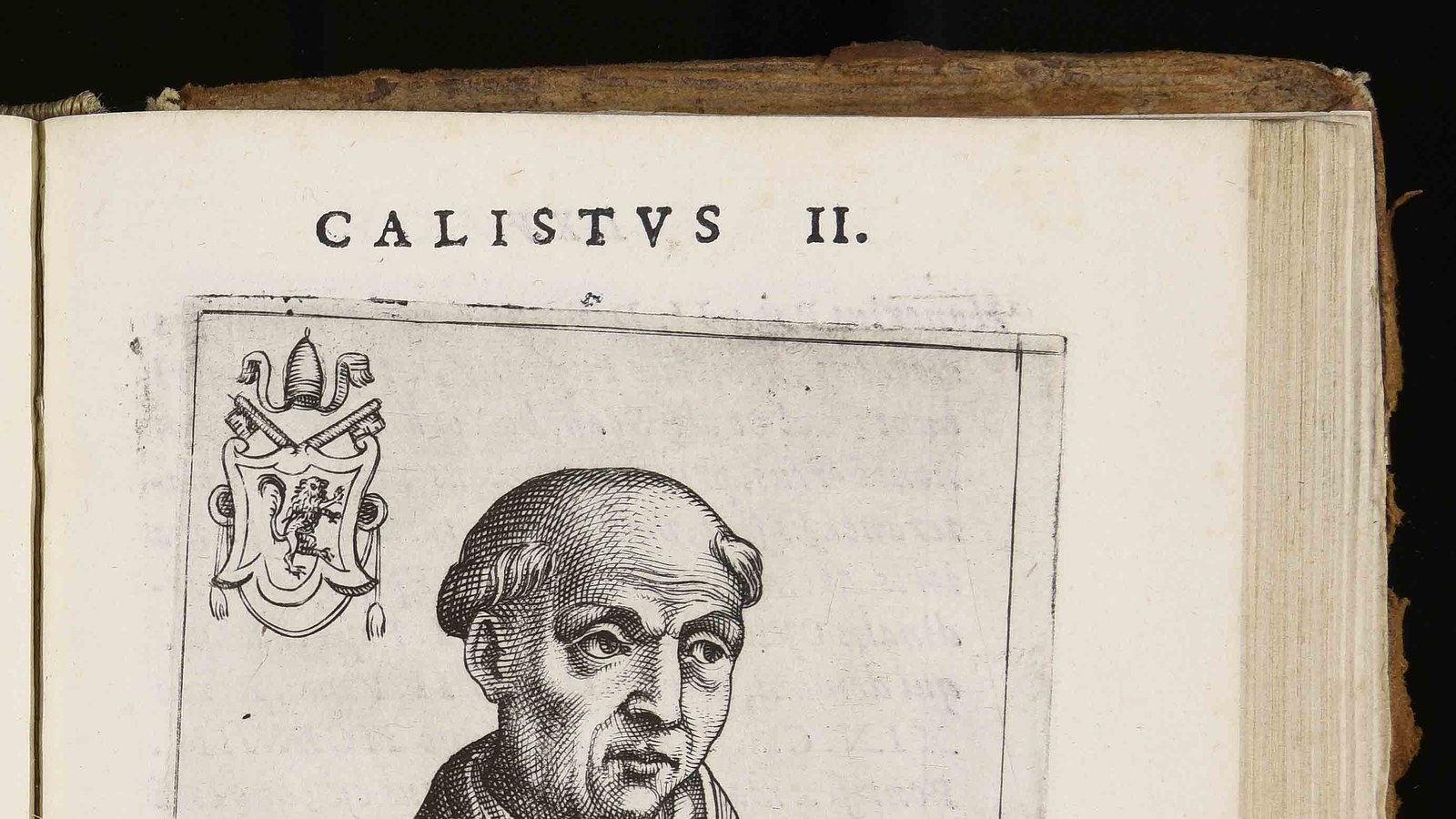
Image: Pope Callixtus II; Giovanni Battista de' Cavalieri, Pontificum Romanorum effigies, Rome, 1580; CC0, Wikimedia Commons. Cropped to 16:9.
Source consulted: Concordat of Worms. Treaty text: Concordat of Worms, 23 September 1122 (Avalon, Henderson).











0 Comments
No comments on this article yet. Be the first!