


At Lausanne, on 30 January 1923, the Government of the Grand National Assembly of Turkey and the Greek Government sign the Convention Concerning the Exchange of Greek and Turkish Populations. The plenipotentiaries, after finding their full powers in good and due form, sign in three copies: one for the Greek Government, one for the Turkish Government, and the third deposited in the archives of the Government of the French Republic, which shall deliver certified copies to the other Powers signatory of the Treaty of Peace with Turkey. The signatories are E. K. Venizelos, D. Caclamanos, Ismet, Dr. Riza Nur and Hassan.
Article 1 provides that, as from 1 May 1923, there shall take place a compulsory exchange of Turkish nationals of the Greek Orthodox religion established in Turkish territory, and of Greek nationals of the Moslem religion established in Greek territory. These persons shall not return to live in Turkey or Greece respectively without the authorisation of the Turkish Government or of the Greek Government respectively.
Article 2 excludes from the exchange the Greek inhabitants of Constantinople and the Moslem inhabitants of Western Thrace. Greeks already established before 30 October 1918 within the areas under the Prefecture of the City of Constantinople, as defined by the law of 1912, are treated as Greek inhabitants of Constantinople. Moslems established in the region to the east of the frontier line laid down in 1918 by the Treaty of Bucharest are treated as Moslem inhabitants of Western Thrace.
Article 3 includes in the exchange those Greeks and Moslems who have already, since 18 October 1912, left the territories whose inhabitants are to be exchanged; “emigrant” covers all physical and juridical persons obliged to emigrate or who have emigrated since that date. Article 4 provides that all able-bodied men of the Greek population whose families have already left Turkish territory, and who are now detained in Turkey, shall constitute the first instalment of Greeks sent to Greece. Article 5, subject to Articles 9 and 10, protects the property rights and monetary assets of Greeks in Turkey or Moslems in Greece.
Article 6 forbids any obstacle to departure; an emigrant under sentence or criminal proceedings shall be handed over to the authorities of the country of destination to serve the sentence or stand trial. Article 7 provides that emigrants lose the nationality of the country they leave and acquire that of the country of destination upon arrival; those who have already left without yet acquiring their new nationality acquire it on the date of signature of the Convention. Article 8 frees emigrants to take away or arrange transport of movable property of every kind without export duty, with the same facilities for community property (mosques, churches, schools, hospitals and other foundations); property left behind is inventoried and valued in procès-verbaux in four copies.
Articles 9–10 regulate liquidation of immovable and movable property left behind, including for persons already departed, independently of confiscations or forced sales since 18 October 1912, with fresh valuations and compensation fixed by the Mixed Commission. Article 11 sets up, within one month of the Convention’s coming into force, a Mixed Commission of four members representing each High Contracting Party and three neutral members chosen from nationals of Powers which did not take part in the war of 1914–1918; the presidency is exercised in turn by each neutral member. The Commission supervises emigration, carries out liquidation, decides by majority and may create Sub-Commissions.
Later articles govern valuation in gold currency, declarations of sums due, government accounts and balances, advances of funds, notifications and ports of embarkation, the ban on pressure to force departure before the fixed date, the Commission’s expenses and the adaptation of domestic law. The Convention shall have the same force and effect as if it formed part of the Treaty of Peace to be concluded with Turkey, and shall come into force immediately after ratification of that Treaty by the two High Contracting Parties. An annexed Protocol, signed the same day by the Turkish plenipotentiaries, provides that, without waiting for the Convention to come into force, the Turkish Government will, on the signature of the Treaty of Peace, release the able-bodied men referred to in Article 4 and provide for their departure.
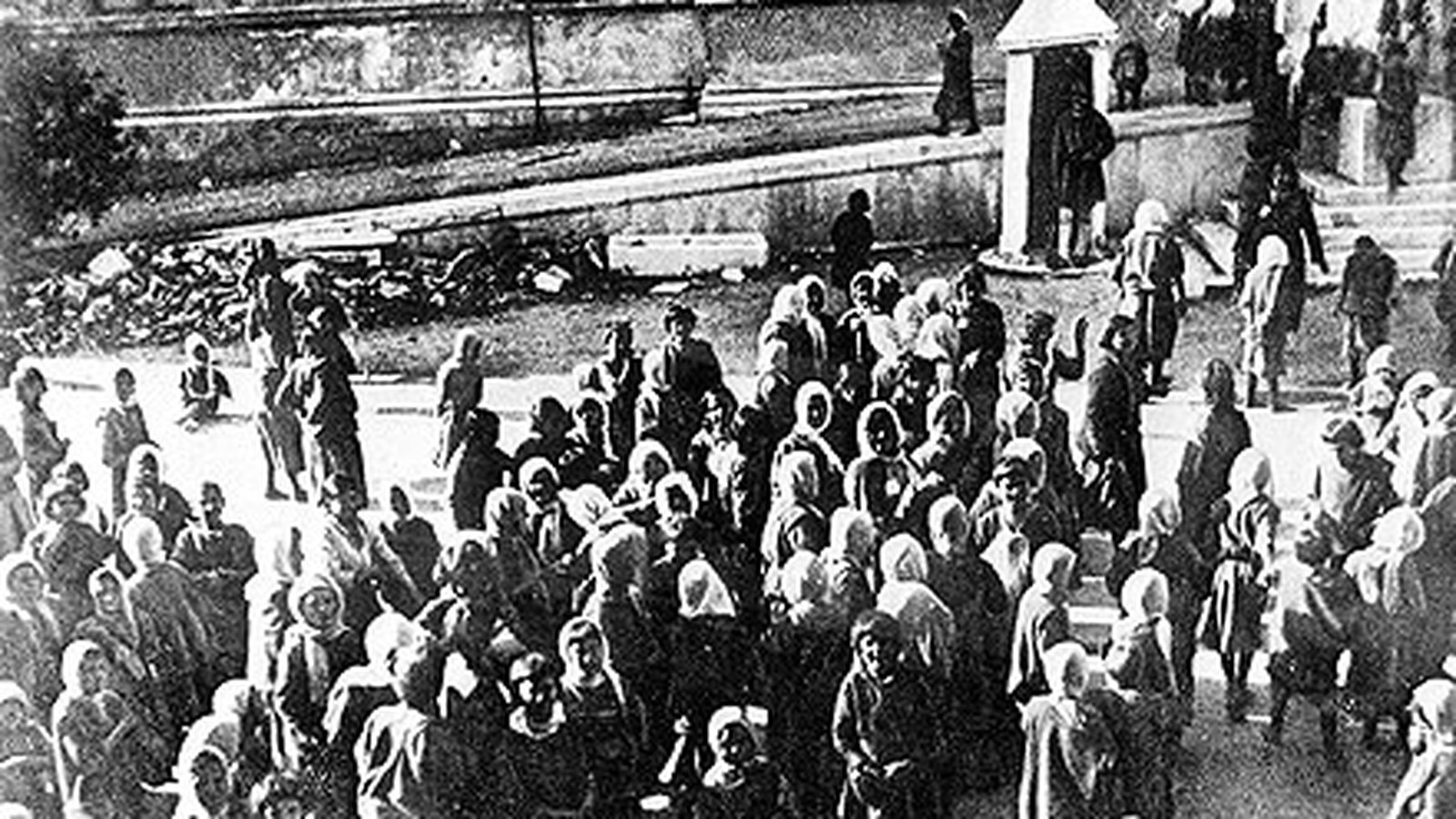
Image: Muslim refugee in the context of the compulsory population exchange; public domain, Wikimedia Commons. Cropped to 16:9.
Source consulted: Convention Concerning the Exchange of Greek and Turkish Populations. Treaty text: Convention Concerning the Exchange of Greek and Turkish Populations, Lausanne, 30 January 1923, MFA of Türkiye.








0 Comments
No comments on this article yet. Be the first!