


The Convention on Fishing and Conservation of the Living Resources of the High Seas was opened for signature at Geneva on 29 April 1958, at the close of the first United Nations Conference on the Law of the Sea. The original is deposited with the Secretary-General of the United Nations. Authentic texts: Chinese, English, French, Russian and Spanish. The DONE formula is not transcribed. It is neither the Convention on the High Seas nor the Convention on the Continental Shelf, opened at the same conference.
The preamble records that modern techniques for exploiting the living resources of the sea, against the world’s expanding need for food, have exposed some of those resources to the danger of being over-exploited. The problems of conservation are such that they should, whenever possible, be solved through international cooperation and the concerted action of the States concerned.
Article 1: all States have the right for their nationals to engage in fishing on the high seas, subject to their treaty obligations, to the interests and rights of coastal States as provided in the Convention, and to the following articles on conservation; all States have the duty to adopt, or to cooperate with other States in adopting, such measures for their respective nationals as may be necessary for conservation. Article 2: conservation means the aggregate of the measures rendering possible the optimum sustainable yield from those resources so as to secure a maximum supply of food and other marine products, with programmes formulated first of all to secure a supply of food for human consumption. Catch regulations are not transcribed.
Articles 3–5: a State whose nationals fish a stock in a high-seas area where nationals of other States are not so engaged shall adopt conservation measures for its own nationals; if nationals of two or more States fish the same stock, those States shall, at the request of any of them, enter into negotiations with a view to prescribing the necessary measures for their nationals. States that later enter the fishery shall apply the measures notified to the Director-General of the Food and Agriculture Organization, which shall not be discriminatory in form or in fact. Disagreement may open the procedure in article 9. An operational protocol is not transcribed.
Article 6 recognises a coastal State’s special interest in the productivity of the living resources in any high-seas area adjacent to its territorial sea and its right to take part on an equal footing in any system of research and regulation, even if its nationals do not fish there. Article 7 allows, after negotiations have not led to agreement within six months, unilateral conservation measures only if there is a need for urgent application in the light of existing knowledge of the fishery, the measures are based on appropriate scientific findings, and they do not discriminate in form or in fact against foreign fishermen. Zone maps and enforcement guidance are not transcribed.
Articles 9–12: disputes between States may, at the request of any of the parties, be submitted to a special commission of five members, named by the States in dispute or, failing agreement, by the Secretary-General of the United Nations in consultation with the President of the International Court of Justice and the Director-General of FAO. The commission is to have regard, as a matter of principle, to the need for conservation, to scientific findings and to non-discrimination. Article 13 addresses fisheries conducted by means of equipment embedded in the floor of the sea, without affecting the general status of the areas as high seas. Article 14: “nationals” means fishing boats or craft having the nationality of the State concerned, irrespective of the nationality of their crews.
Article 15: the Convention remained open for signature until 31 October 1958 by all States Members of the United Nations or of any of the specialized agencies, and by any other State invited by the General Assembly. Ratification and accession are deposited with the Secretary-General. Article 18: entry into force on the thirtieth day following deposit of the twenty-second instrument; for the United Nations, 20 March 1966. Reservations may be made other than to articles 6, 7, 9, 10, 11 and 12. After five years from entry into force, any contracting party may request revision.
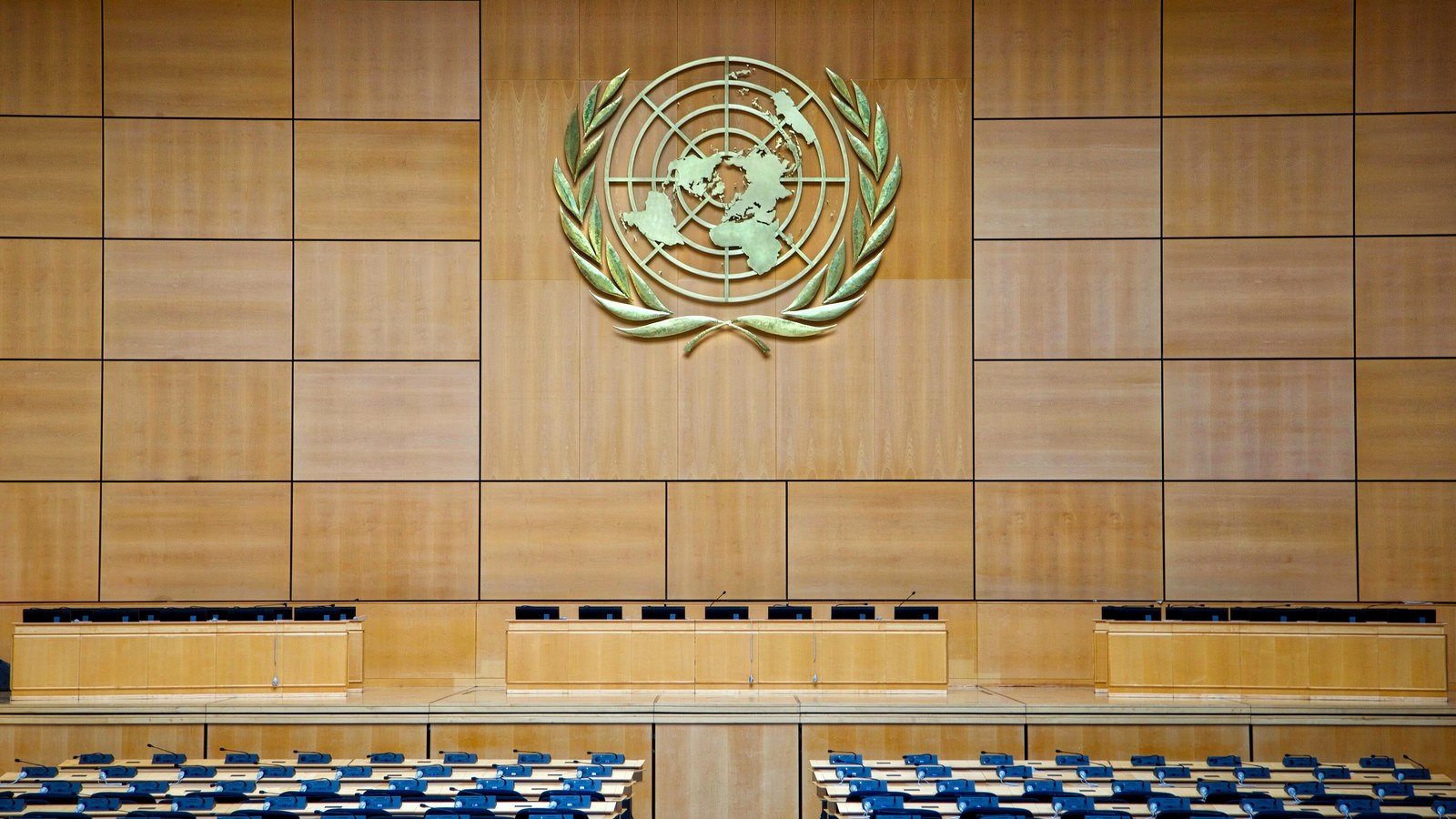
Cover: the Assembly Hall at the Palais des Nations in Geneva, the conference venue; the photograph is later, and no claim is made to the hall on the opening day. Wikimedia Commons, free licence.
Sources consulted: Convention on Fishing and Conservation of the Living Resources of the High Seas; Convention on Fishing and Conservation of the Living Resources of the High Seas.











0 Comments
No comments on this article yet. Be the first!