


In Dublin, after a ten-day diplomatic conference, 107 states adopted the Convention on Cluster Munitions on 30 May 2008. The Oslo Process had begun in February 2007, after the Geneva forum stalled; the declaration in the Norwegian capital called for a legally binding instrument by 2008. Lima, Vienna and Wellington followed. The 2006 Lebanon war gave the campaign momentum: the United Nations estimated that up to 40 percent of Israeli submunitions failed to explode on impact.
Article 1: each State Party undertakes never under any circumstances to use, develop, produce, otherwise acquire, stockpile, retain or transfer, directly or indirectly, cluster munitions, or to assist, encourage or induce anyone to do so. The same regime applies, mutatis mutandis, to explosive bomblets dispersed from dispensers affixed to aircraft. The convention does not apply to mines.
Article 2: a conventional munition designed to disperse explosive submunitions each weighing less than 20 kilograms. It does not cover flares, smoke, chaff, air-defence munitions, electronic-effect munitions, or systems with fewer than ten submunitions, each weighing more than four kilograms, designed to detect and engage a single target, with electronic self-destruction and self-deactivation. The depositary is the UN Secretary-General. The Arabic, Chinese, English, French, Russian and Spanish texts are equally authentic.
Article 3: stockpiles are to be destroyed as soon as possible and no later than eight years after entry into force for that state, with extensions of up to four years. Article 4: remnants in contaminated areas are to be cleared within ten years. Article 5: victim assistance, including medical care, rehabilitation, psychological support and social and economic inclusion. A limited number of items may be retained for training in detection, clearance and destruction.
Article 15: opened for signature in Oslo on 3 December 2008, then at UN Headquarters in New York until entry into force. Article 17: the first day of the sixth month after the thirtieth instrument of ratification; the thirtieth came in February 2010, so 1 August 2010. Article 21: military cooperation with states not party remains permitted; it does not authorise a State Party itself to use, stockpile or expressly request cluster munitions where the choice of munitions is within its exclusive control. Gordon Brown announced in Dublin that Britain would withdraw its stocks. China, Russia, the United States, India, Israel, Pakistan and Brazil opposed the treaty.
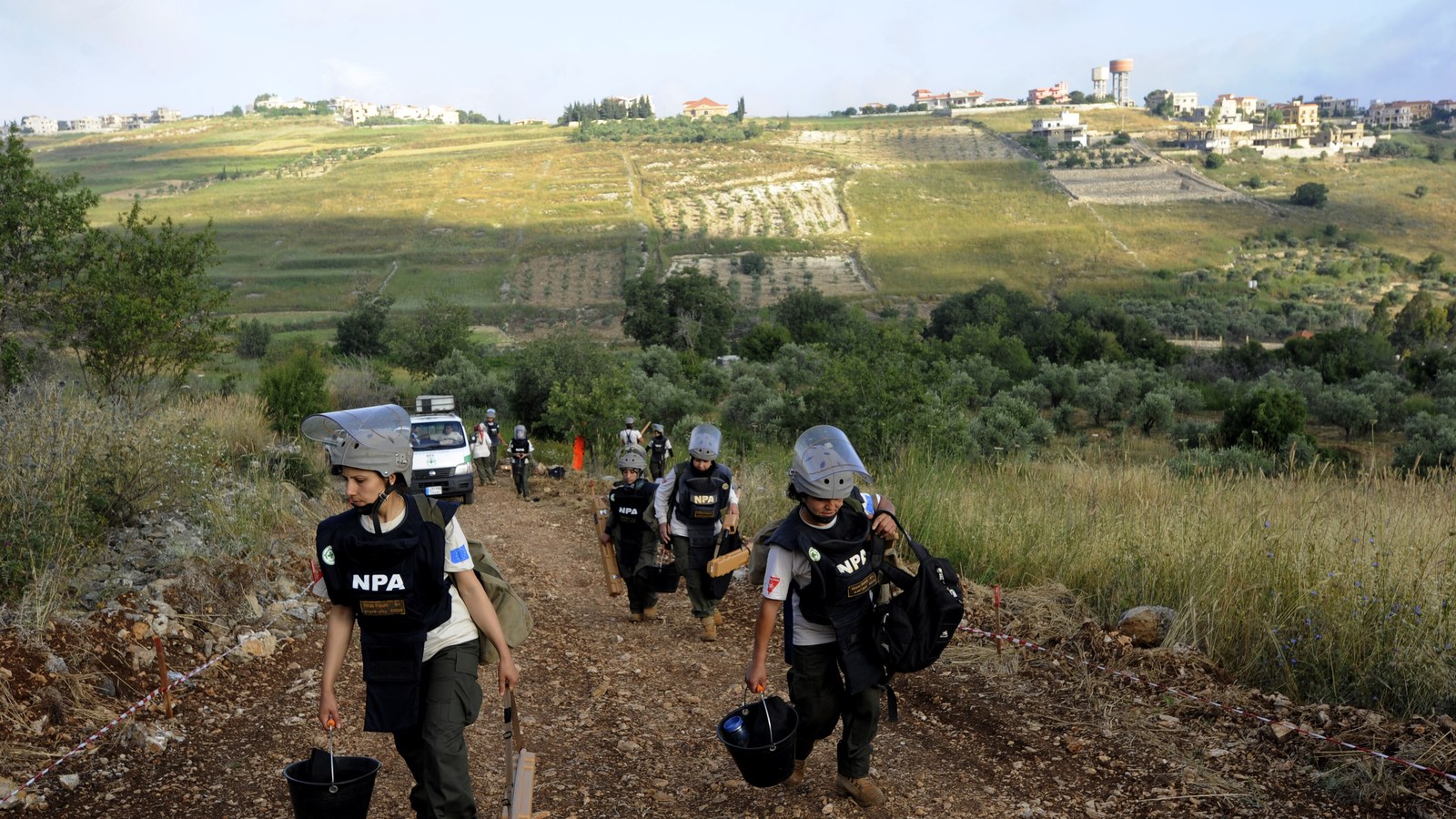
This is not the 1997 Ottawa Treaty on anti-personnel mines. The cover shows an NPA clearance team in southern Lebanon; the May Dublin demonstration photograph is too small for the frame.
Sources: Convention on Cluster Munitions; Convention on Cluster Munitions (as adopted, Dublin, 30 May 2008).











0 Comments
No comments on this article yet. Be the first!