


The Convention on the High Seas was opened for signature at Geneva on 29 April 1958, at the close of the United Nations Conference on the Law of the Sea, held from 24 February to 27 April. The original is deposited with the Secretary-General of the United Nations. Authentic texts: Chinese, English, French, Russian and Spanish. The DONE formula is not transcribed. It is neither the 1982 United Nations Convention on the Law of the Sea nor the 2023 Agreement on biodiversity beyond national jurisdiction.
The preamble records that the Conference adopted the provisions as generally declaratory of established principles of international law. Article 1: the term “high seas” means all parts of the sea that are not included in the territorial sea or in the internal waters of a State. Article 2: the high seas being open to all nations, no State may validly purport to subject any part of them to its sovereignty. Freedom of the high seas comprises, inter alia, for coastal and non-coastal States: freedom of navigation, of fishing, to lay submarine cables and pipelines, and to fly over the high seas, exercised with reasonable regard to the interests of other States.
Article 3: States having no sea coast should have free access to the sea, on a basis of reciprocity, through free transit and equal treatment in ports, by agreement with the States situated between them and the sea. Article 4: every State, whether coastal or not, has the right to sail ships under its flag on the high seas. Articles 5–6: each State fixes the conditions for nationality, registration and the right to fly its flag; there must exist a genuine link, and the State must effectively exercise its jurisdiction and control; ships shall sail under the flag of one State only and, on the high seas, shall be subject, as a principle, to its exclusive jurisdiction.
Articles 8–9: warships and State-owned ships used only on government non-commercial service have, on the high seas, complete immunity from the jurisdiction of any State other than the flag State. The definition of a warship is a status rule, not an operational catalogue. Article 10: every State shall take such measures for ships under its flag as are necessary to ensure safety at sea with regard to signals, manning and seaworthiness, conforming to generally accepted international standards. Article 11 reserves, after a collision, penal or disciplinary proceedings to the flag State or the State of nationality. Article 12 states, as a principle, the duty to render assistance to persons in danger at sea. Collision and rescue regulations are not transcribed.
Article 13 requires States to adopt measures against the transport of slaves in ships authorized to fly their flag. Articles 14–21 provide for cooperation in the repression of piracy on the high seas, a legal definition of piratical acts, and the rule that a seizure on that account may be carried out only by warships, military aircraft, or other ships or aircraft on government service and authorized; boarding procedure is not transcribed. Article 22 limits, again as a jurisdictional exception, the right to verify the flag in stated cases. Article 23 recognises hot pursuit as a coastal-State right, which ceases as soon as the ship pursued enters the territorial sea of its own country or of a third State; a pursuit handbook is not transcribed.
Articles 24–25 require regulations to prevent pollution of the seas by the discharge of oil from ships or pipelines and measures against the dumping of radioactive waste, taking account of competent standards. Articles 26–29 address, as a principle, the laying and repair of submarine cables and pipelines and indemnification where fishing gear is sacrificed to avoid injuring a cable. Article 30 leaves unaffected conventions already in force as between their parties.
Article 31: the Convention remained open for signature until 31 October 1958 by all States Members of the United Nations or of any of the specialized agencies, and by any other State invited by the General Assembly. Ratification and accession are deposited with the Secretary-General. Article 34: entry into force on the thirtieth day following deposit of the twenty-second instrument; for the United Nations, 30 September 1962. After five years, any Contracting Party may request revision.
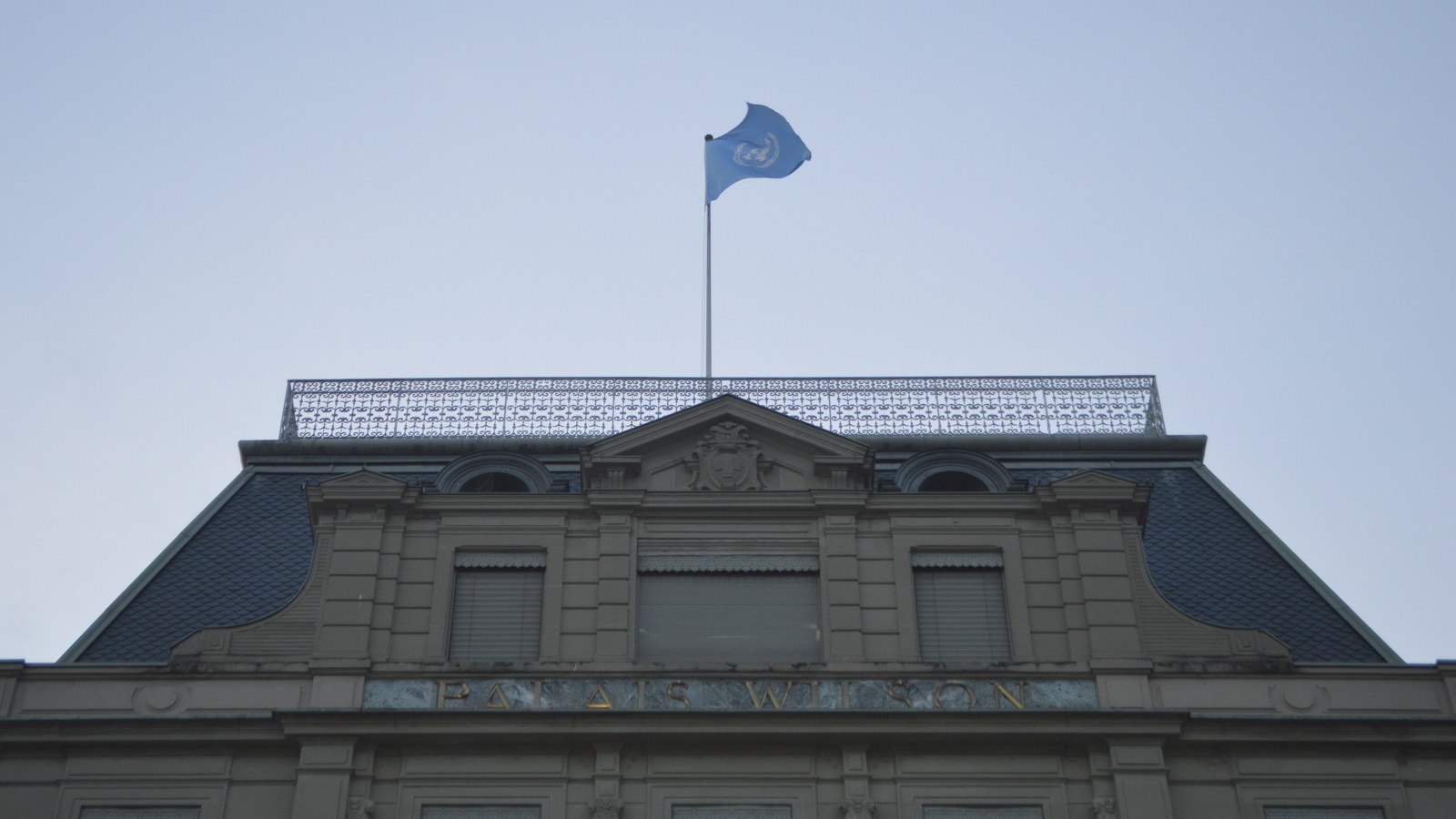
Cover: the Palais des Nations seen from the Woodrow Wilson monument in Geneva, the conference venue; the photograph is later, and no claim is made to the hall. Wikimedia Commons, free licence.
Sources consulted: Convention on the High Seas; Convention on the High Seas.











0 Comments
No comments on this article yet. Be the first!