


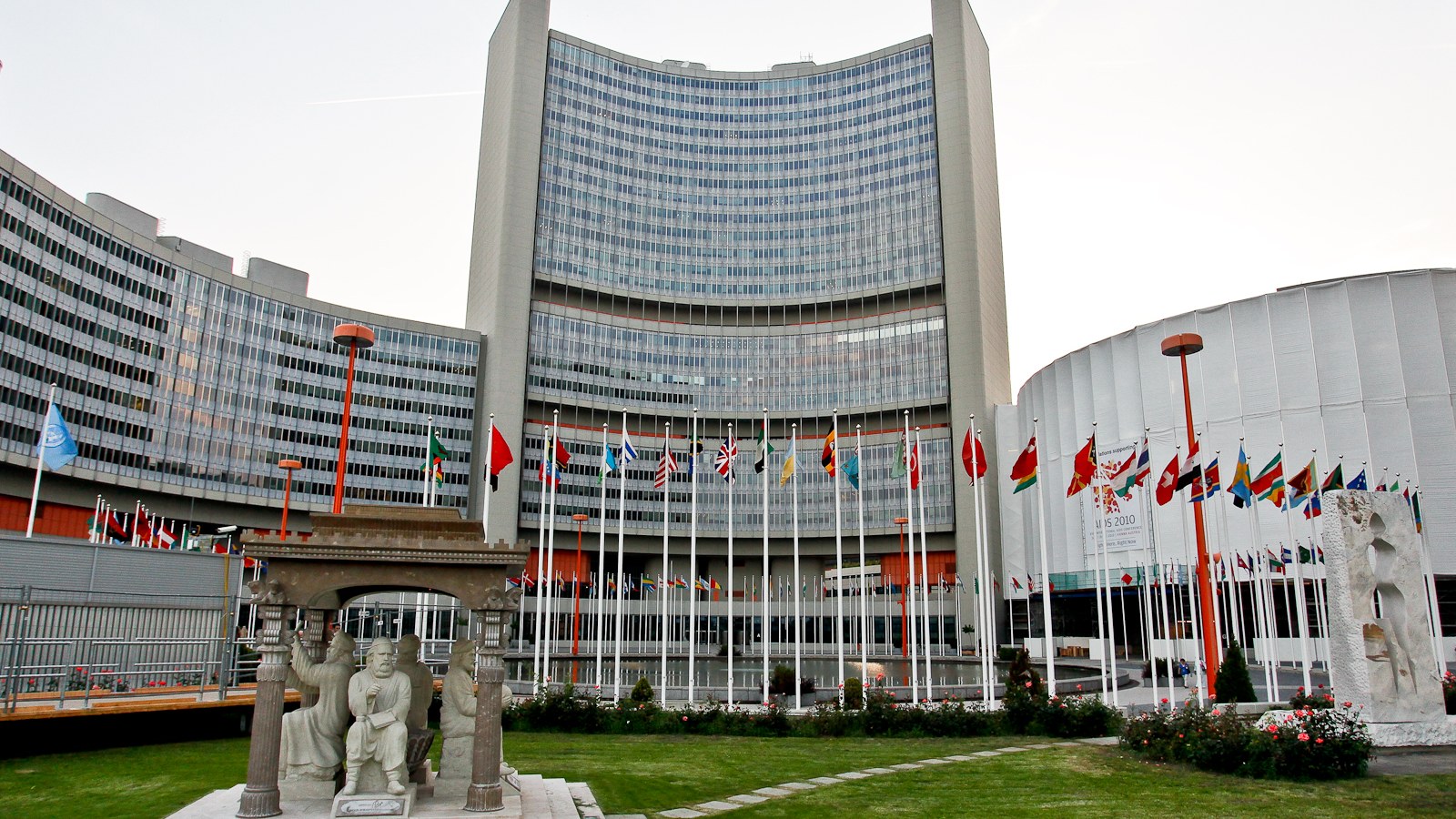
On 26 October 1979, at the headquarters of the International Atomic Energy Agency in Vienna, the Meeting of Governmental Representatives completed the text of the Convention on the Physical Protection of Nuclear Material. The Final Act bears the signature of the chairman, Ambassador D. L. Siazon Jr. (Philippines). It is not the opening of signatures: Article 18 opens them only on 3 March 1980, in Vienna and New York, until entry into force. It is not the Amendment of 8 July 2005, which added nuclear facilities and renamed the instrument. Fifty-eight States and the European Atomic Energy Community took part; observers were Iran, Lebanon, Malaysia, Thailand and the OECD Nuclear Energy Agency.
Nuclear material, Article 1: plutonium (except that with more than 80 per cent plutonium-238), uranium-233, uranium enriched in 235 or 233, natural uranium other than ore or ore-residue, and any material containing one or more of the foregoing. International nuclear transport: from the shipper’s facility to the receiver’s facility in the State of ultimate destination. Article 2: the Convention applies to peaceful nuclear material in international transport; with the exception of Articles 3 and 4 and Article 5(3), also to peaceful material in domestic use, storage and transport. Sovereign rights over domestic use remain intact aside from the express undertakings. The preamble recognises the stringent protection of military material without bringing it into the operative obligations.
Article 3: during international transport, within the territory or on a ship or aircraft under jurisdiction, protection at the levels in Annex I. Article 4: export, import from a non-party and transit by land or through ports and airports only with assurances that the material is protected at those levels; the same levels apply to transport from one part of a State to another through international waters or airspace. Annex I: Category III — an area to which access is controlled; II — constant surveillance and a physical barrier; I — plus access restricted to persons whose trustworthiness has been determined, and guards in close communication with response forces. In transport, Categories II and III require prior arrangements among sender, receiver and carrier; Category I, constant escort as well. Annex II ranks quantities (unirradiated plutonium: Category I from 2 kg).
Article 5: a central authority and point of contact, made known directly or through the IAEA; co-operation in theft, robbery or other unlawful taking, including return of the material. Article 6: confidentiality of information. Article 7: each Party shall make a punishable offence of the intentional receipt, possession, use, transfer, alteration, disposal or dispersal of nuclear material without lawful authority which causes or is likely to cause death, serious injury or substantial property damage; theft or robbery; embezzlement; a demand by threat; a threat to use the material; attempt and participation. Penalties shall take into account the grave nature of the offences. Articles 8–11: territorial, flag and nationality jurisdiction, plus aut dedere aut judicare; the offences are deemed extraditable.
Depositary: the Director General of the IAEA. Six equally authentic texts: Arabic, Chinese, English, French, Russian and Spanish. Article 19: it enters into force on the thirtieth day after the twenty-first instrument of ratification, acceptance or approval — 8 February 1987 (1456 UNTS 24631). Integration organisations, including Euratom, may sign or accede, without a vote additional to those of their member States. A review conference five years after entry into force. Romania sat in the drafting meeting; it became a party later. The 2005 Amendment entered into force on 8 May 2016; it does not change what was done in 1979.
The Vienna International Centre, IAEA headquarters. The complex, not the meeting room. Wikimedia Commons, IAEA Imagebank.
For context: Convention on the Physical Protection of Nuclear Material. The text: INFCIRC/274/Rev.1 (IAEA).











0 Comments
No comments on this article yet. Be the first!