


The Treaty of Relations between the United States of America and the Republic of Cuba was signed in Washington on 29 May 1934 by Cordell Hull and Sumner Welles for the United States and Ambassador Manuel Márquez Sterling for Cuba, in duplicate, the English and Spanish texts being equally authentic. It is not the Treaty of Relations of 22 May 1903, which Article I abrogates, and it is not the February 1903 lease of lands for naval stations. Ratifications were exchanged in Washington on 9 June, when it entered into force.
The preamble seeks to fortify friendship and to modify the relations established in 1903. Article I: the 1903 treaty ceases to be in force and is abrogated from the date on which the present treaty goes into effect. The Platt Amendment intervention clause thus disappears, in the line of the Good Neighbor policy. Article II: all acts effected in Cuba by the United States during its military occupation of the island, up to 20 May 1902, the date on which the Republic of Cuba was established, have been ratified and held as valid, and rights legally acquired by virtue of those acts shall be maintained and protected. An occupation protocol is not transcribed.
Article III: until the parties agree to the modification or abrogation of the February 1903 lease agreement, its stipulations with regard to the naval station of Guantanamo continue in effect, as does the supplementary agreement of 2 July 1903. So long as the United States does not abandon the station or the two governments do not agree to a modification of its present limits, the station shall continue to have the territorial area that it has on the date of signature of this treaty. A base-operations protocol is not set out here.
Article IV: if a situation arises that appears to point to an outbreak of contagious disease in the territory of either party, either government may, for its own protection and without its act being considered unfriendly, freely suspend communications between those of its ports that it may designate and all or part of the territory of the other, for the period it considers advisable. It is a sanitary clause, not a quarantine regulation.
Article V: ratification according to each party's constitutional methods; the treaty goes into effect on the date of the exchange of ratifications, which shall take place in Washington as soon as possible. The United States Senate advised ratification on 31 May; President Roosevelt ratified on 5 June, Cuba on 4 June. It is not the Hay–Quesada Treaty of 1926 on the Isle of Pines.
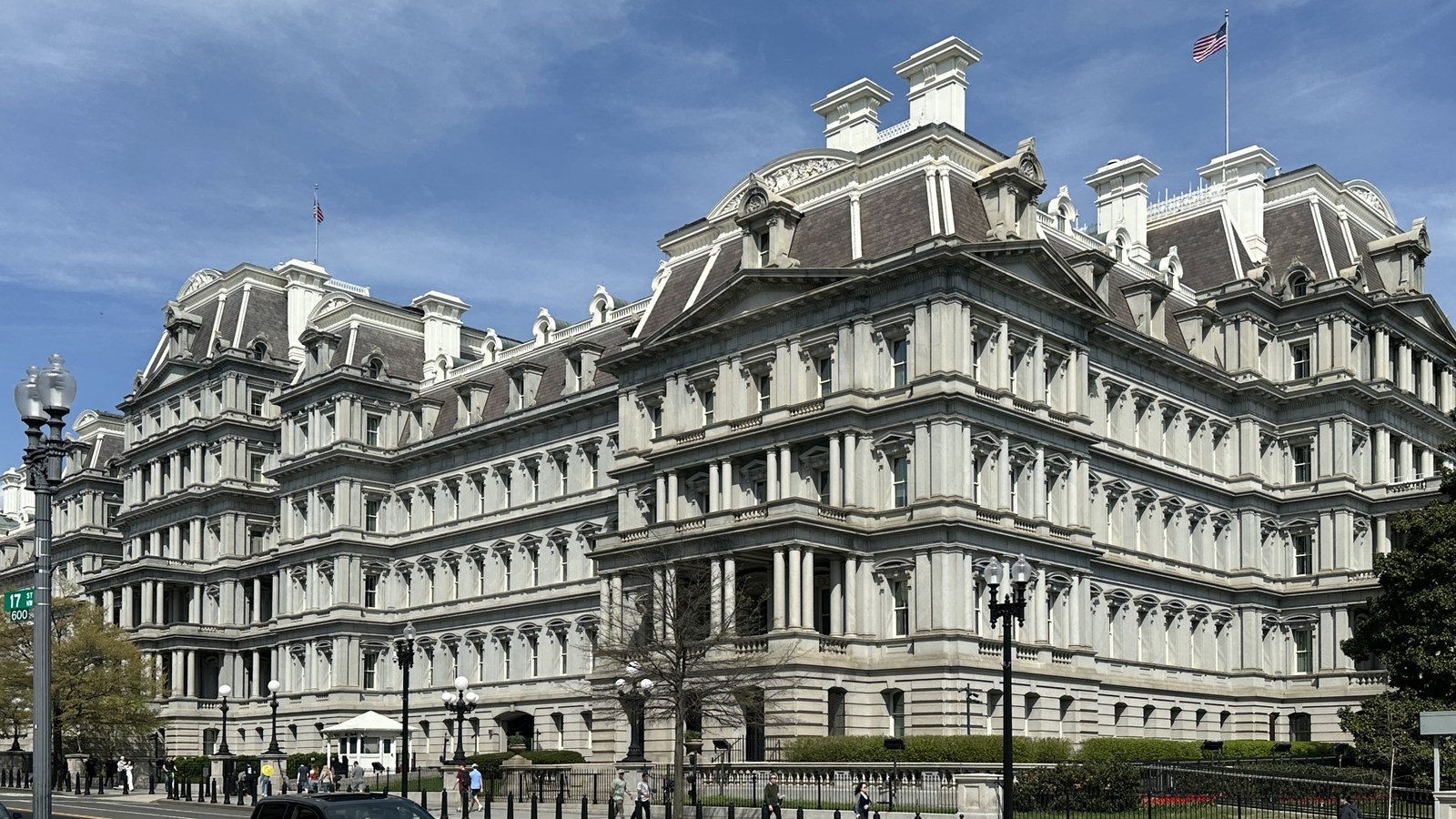
Cover: the Eisenhower Executive Office Building in Washington, then the seat of the Department of State; we do not claim the room. Wikimedia Commons, free licence.
Sources consulted: Cuban–American Treaty of Relations (1934); Treaty Between the United States of America and Cuba (Avalon Project).











0 Comments
No comments on this article yet. Be the first!