


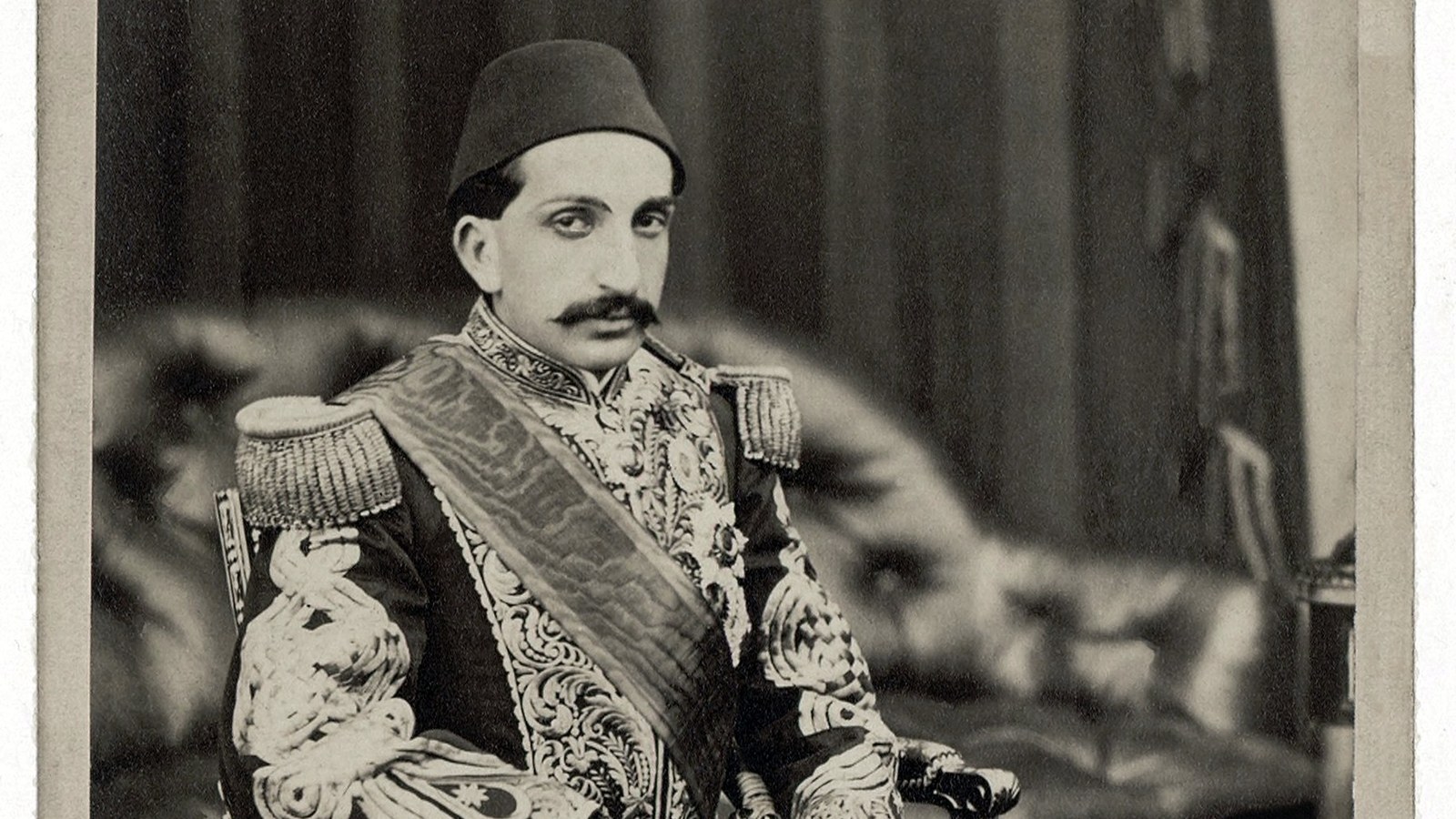
At Constantinople, not Berlin, Austen Henry Layard and Safvet Pasha signed the Convention of Defensive Alliance on 4 June 1878. Article I: if Russia retains Batoum, Ardahan or Kars, and attempts any further Asian territories of the Sultan, England engages to defend them by force of arms. In return, Abdul Hamid II promises reforms, to be agreed later, in the government and for the protection of Christian and other subjects of the Porte in those territories. In order to enable England to execute her engagement, the Sultan consents to assign the Island of Cyprus to be occupied and administered by England. Article II: ratifications within one month. The Congress of Berlin opened on 13 June. The island had been offered to Britain three times, in 1833, 1841 and 1845.
The annex, still at Constantinople, on 1 July, after Safvet had become Grand Vizier. A Mussulman religious tribunal (Mehkeméi Shéri) shall continue, for religious matters of the Mussulman population only. A Mussulman resident, named by the Evkaf, with a British delegate, shall superintend mosques, cemeteries and schools. England will pay the Porte the present excess of revenue over expenditure, the average of the last five years, 22,336 purses, to be duly verified, excluding produce of state and crown lands let or sold in that period. The Porte may freely sell and lease Arazii Miriye and Emlaki Houmayoun. The English Government may purchase compulsorily, at a fair price, land for public works or uncultivated land. Annex Article VI: if Russia restores to Turkey Kars and the other conquests in Armenia, Cyprus will be evacuated and the June convention will be at an end.
The annual sum, later fixed, was 92,799 pounds, 11 shillings and 3 pence. The money never reached the Ottomans: it was deposited at the Bank of England against the Ottoman Crimean War loans, guaranteed by Britain and France. Ronald Storrs later wrote that the calculation was made with all that scrupulous exactitude characteristic of faked accounts. Cypriots also covered the costs of the new administration.
The first High Commissioner was Garnet Wolseley. At Larnaca the bishop of Kition asked for enosis, as with the Ionian Islands. Gladstone opposed the convention; back in office, he did not return the island. In 1906 a new harbour at Famagusta strengthened the post on the route to Suez. On 5 November 1914, after the Ottoman Empire entered the war with the Central Powers, Britain annexed Cyprus. The convention fell.
This is not the Treaty of Berlin of 13 July 1878, and not Lausanne 1923. The cover is Abdul Hamid II, the sultan who assigned the administration; the 1878 British consulate photograph at Larnaca is too small for the frame.
Sources: Cyprus Convention; Convention of Defensive Alliance between Great Britain and Turkey (4 June 1878).











0 Comments
No comments on this article yet. Be the first!