


In Chongqing, on the National Day of the Republic of China, representatives of the Government and of the Chinese Communist Party sign the Summary of Conversations. The date of the instrument is 10 October 1945. The signatories are Wang Shijie, Zhang Zhizhong, Shao Lizi, Zhou Enlai and Wang Ruofei; space is left for Zhang Qun to countersign. Mao Zedong arrived on 28 August, at Chiang Kai-shek’s invitation. It is not the Wuchang uprising of 1911, which falls on the same calendar day.
Point 1: the war against Japan has been won; the stage of peaceful reconstruction must begin on the basis of peace, democracy, unity, under the leadership of President Chiang, without civil war, carrying out the Three People’s Principles; political democratization, nationalization of the army and equal legality of parties. Point 2: an early end to political tutelage and a Political Consultative Conference of the parties and non-party figures.
Point 3: there is no agreement on the National Assembly — the Communists ask for new elections, a delay and revision of the 5 May draft constitution; the Government holds the deputies already chosen, with a reasonable increase of seats; the question goes to the Conference. Point 4: freedoms of the person, belief, speech, the press, assembly and association; existing laws to be repealed or amended on this principle. Point 5: the Government now recognizes the equality of parties before the law.
Point 6: only the judiciary and the police may arrest, interrogate and punish; other organs are forbidden. Point 7: political prisoners, other than traitors, are to be released; the Government will proceed of its own motion, and the Communists may submit lists. Point 8: local self-government and elections from below, without obstructing the National Assembly.
Point 9: the Communists offer to reduce their resistance armies to 24 divisions, at least 20, to withdraw them from eight regions south of the Longhai and to concentrate them north of that railway and in northern Jiangsu and Anhui; a three-man group (Board of Military Operations, Ministry of War, Eighteenth Group Army) is to plan the details. The Government may consider the figure of 20 divisions if the other questions are settled as a whole.
Point 10, on the administration of the liberated areas, remains without agreement; talks continue. Point 11: punishment of traitors and disbandment of puppet troops, in principle, according to law. Point 12: participation in receiving the Japanese surrender, after central orders have been accepted.
It is not the Sino-Soviet treaty of 14 August 1945. It is not the Marshall Mission of December. It is not the Political Consultative Conference of January 1946. Hurley accompanies Mao; he does not sign. Mao returns to Yan’an the next day; Zhou remains in Chongqing.
The Shangdang fighting, begun in September, is not a clause of the Summary. The later civil war and the proclamation of the People’s Republic in 1949 do not change the twelve points signed in Chongqing.
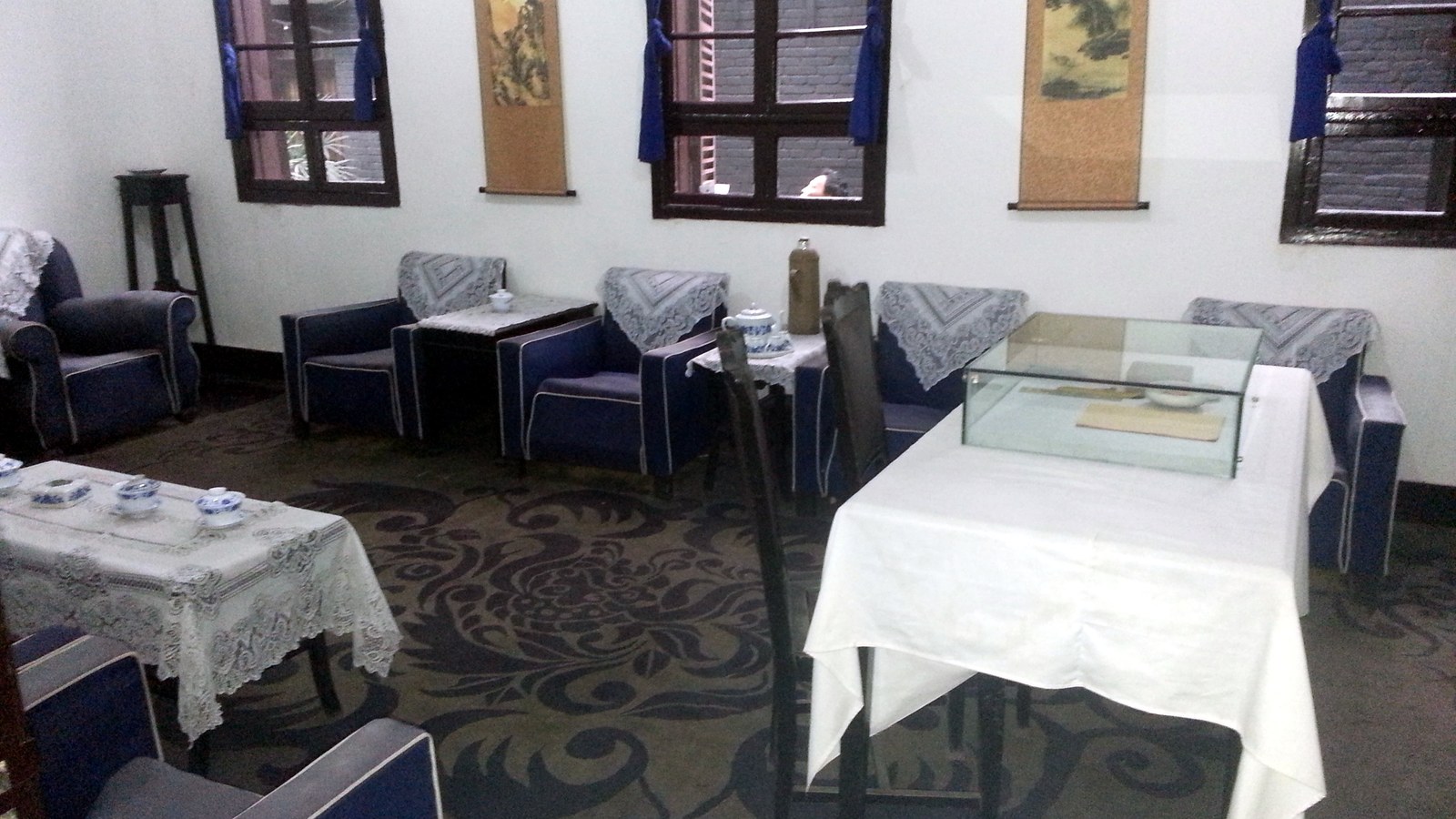
Image: signing room of the summary of conversations, Chongqing; Rolfmueller, 2014; CC BY-SA 3.0, Wikimedia Commons. Cropped to 16:9.
Source consulted: Double Tenth Agreement. Treaty text: Summary of Conversations between the Government and CCP representatives (Wikisource).











0 Comments
No comments on this article yet. Be the first!