
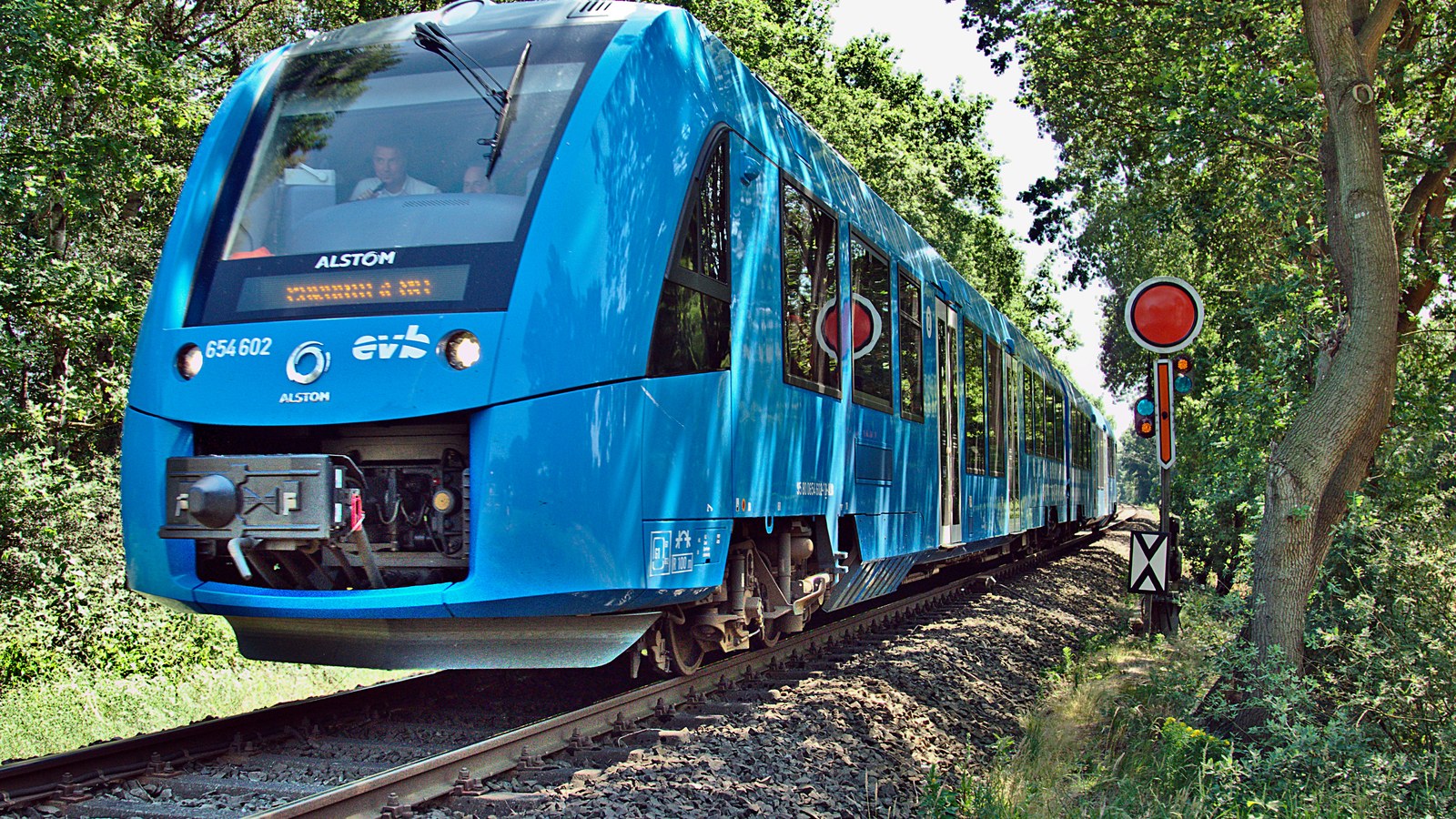
17 September 2026 marks eight years since the first hydrogen-powered passenger trains entered commercial service in Germany. Two Coradia iLint units built by Alstom began carrying passengers on a regional route in Lower Saxony on 17 September 2018, linking towns including Cuxhaven, Bremerhaven, Bremervörde and Buxtehude.
The trains use fuel cells that combine hydrogen with oxygen from the air to generate electricity. The power drives the motors, while a battery stores energy and recovers part of the energy from braking. At the point of use, the main products of the reaction are water and heat. The technology can therefore remove diesel exhaust from the routes on which the trains operate.
The overall climate impact depends on how the hydrogen is produced. Upstream emissions remain significant when fossil fuels supply the energy. Hydrogen produced with renewable electricity has a different profile. The train should not be described as “zero-emission” without the qualification “at the point of use”.
The solution was proposed mainly for non-electrified routes where overhead wires would be difficult or too expensive to install. It is not automatically the best option for every line. After the original project, the technology was tested or ordered in several regions. Battery trains also emerged as an alternative over certain distances.
Commercial experience showed both opportunities and limits: refuelling infrastructure, hydrogen costs, maintenance and fleet availability all matter in everyday operation.
Eight years after the first journeys, Coradia iLint remains a landmark in the rail industry’s effort to replace diesel on non-electrified regional lines. The date marks the start of passenger service, not a generalisation of the technology across every European network.
Photo: Jacek Rużyczka / Wikimedia Commons. Coradia iLint evb, demonstration run near Sandkrug, Lower Saxony, 2019. CC BY-SA 4.0. Cropped to 16:9.
Source consulted: World premiere: first hydrogen trains enter passenger service | Alstom; Alternative fuels | European Commission; CC BY-SA 4.0.


0 Comments
No comments on this article yet. Be the first!