


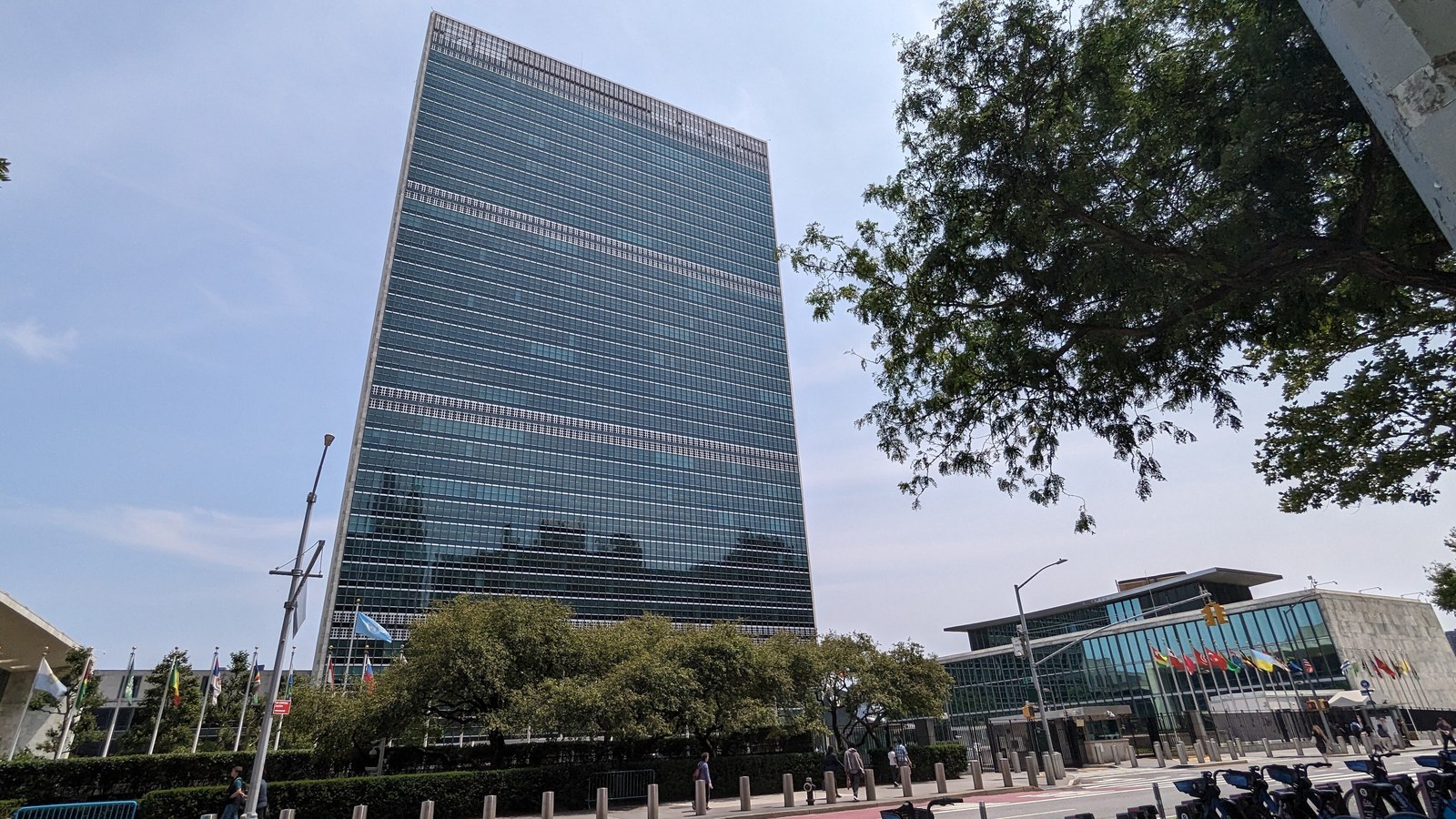
The Regional Agreement on Access to Information, Public Participation and Justice in Environmental Matters in Latin America and the Caribbean was opened for signature at United Nations Headquarters in New York on 27 September 2018, remaining open until 26 September 2020 for the countries listed in annex 1. It had been adopted at Escazú, Costa Rica, on 4 March, at the ninth meeting of the negotiating committee. The Spanish and English texts are equally authentic. Depositary: the Secretary-General of the United Nations. It is not the 1998 Aarhus Convention, although it pursues the same three access rights, under Principle 10 of the Rio Declaration.
Article 1: the object is the full and effective implementation, in the region, of the rights of access to environmental information, public participation in environmental decision-making and access to justice, together with capacity-building and co-operation, contributing to the right of every person of present and future generations to live in a healthy environment and to sustainable development. Article 2 defines access rights, competent authority, environmental information, the public, and persons or groups in vulnerable situations. Article 3: guiding principles, including transparency, non-regression, precaution, intergenerational equity, maximum disclosure and pro persona.
Article 4 guarantees the right to a healthy environment. Articles 5 and 6: access to environmental information held by authorities, with time limits and exceptions under domestic law, plus generation and dissemination of data, as a framework, without a transparency handbook. Article 7: public participation in environmental decision-making, in a timely manner and with clear information. Article 8: access to justice, including technical and legal assistance for persons in vulnerable situations, as appropriate, and alternative dispute-resolution. Article 9: a safe and enabling environment for human-rights defenders in environmental matters; adequate measures to recognize, protect and investigate attacks, still as a framework, without an operational protocol.
Articles 10 to 13: capacity-building, co-operation, a clearing house at the ECLAC secretariat and national implementation. Article 14: a voluntary fund. Article 15: a Conference of the Parties. Article 19: settlement of disputes. Article 21: signature, ratification, then accession after signature closes. Article 22: entry into force on the ninetieth day after the eleventh instrument — 22 April 2021. Article 23: no reservations. Article 24: withdrawal after three years in force for that Party, effective after one year.
The text consulted is the United Nations certified copy (XXVII-18). The instrument is the first regional environmental treaty of Latin America and the Caribbean, and the first treaty to set out, at treaty level, the rights of environmental defenders.
Cover: United Nations Headquarters in New York, the place where signature opened; we do not claim the hall. Wikimedia Commons, free licence.
Sources consulted: Escazú Agreement; Regional Agreement on Access to Information, Public Participation and Justice in Environmental Matters in Latin America and the Caribbean (UN certified text).











0 Comments
No comments on this article yet. Be the first!